














Paris-Henry County Heritage Center
Menu
  • External link opens in new tab or window

To expand and read, click on the white arrows


Paris - Through the Years

The Barton Collection


Cavitt Place Family, Collection and History

The Bartons of 614 North Poplar Street

Cavitt Place Mansion

Cavitt Place Mansion

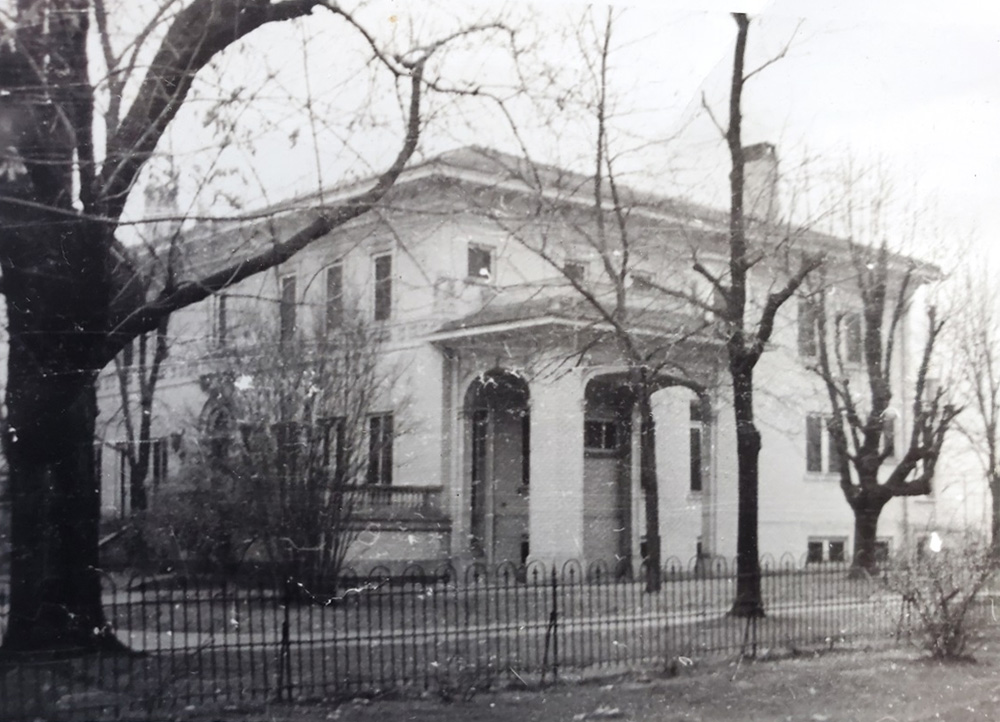
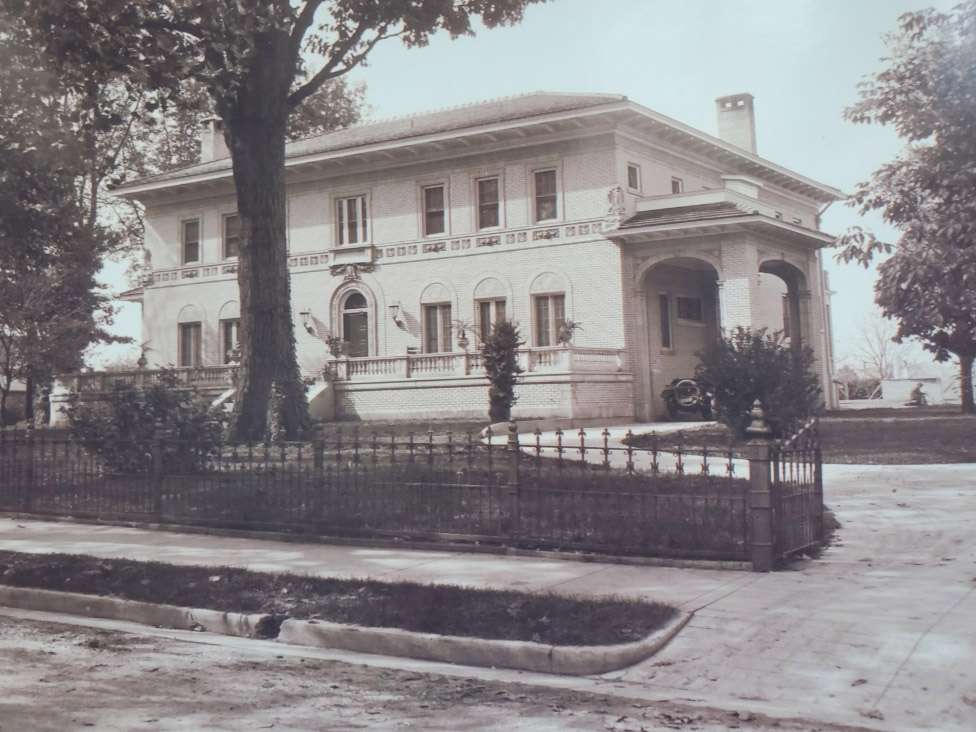
The Italian Renaissance house at 614 North Poplar Street in Paris was built by Orion C. Barton, prominent businessman and philanthropist, and his wife Tillie Cavitt. Prominent Atlanta-based architect Brinton B. Davis was retained to design the villa style home. Graceful and elegant, upon its completion in 1916, the mansion was featured in American Architect Magazine where it was pictured and described as the “Crown Jewel of West Tennessee.” Grand-daughter Matilda Gibson heir to the mansion made the property available to Henry County in 1941 for a small sum of money. The mansion has since served the community for over eighty years. Cavitt Place provided army officer headquarters during WWII while Camp Tyson was being built outside of Paris. Cavitt Place was home to TVA for many years. Most memorably, the house served generations of residents as the Henry County Health Department. 8X10 photograph, accession #2022-34-01.


Old Cavitt Residence


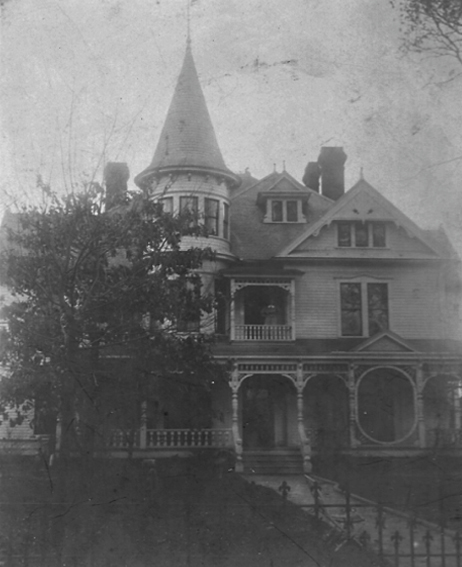
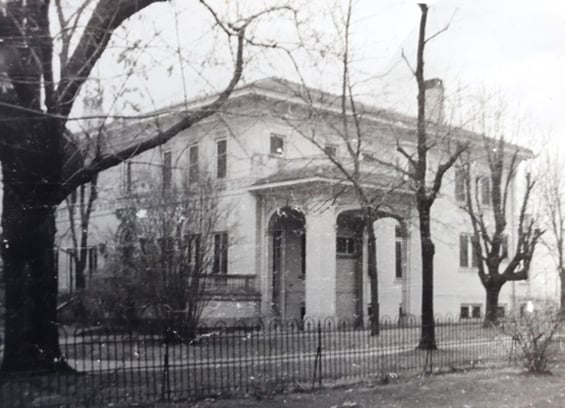
Prior to the building of the Italian Renaissance mansion, The Bartons were at home with their two daughters in a rambling two story Queen Ann Victorian residence sprawled on a beautiful expanse of Cavitt property on North Poplar Street. The Queen Anne Victorian was dismantled, torn down, reportedly after a fire in the house in and around 1911. The wrought iron picket fence remains today from the old house at 614 north Poplar, nothing more. Much of the fine hardwood and decorative trim from the old house was repurposed to trim out several homes built down the hill on Poplar Street, homes still present today. Old Cavitt Place Property at 614 north Poplar Street photo, 1900’s, accession # 2022-34-02.


At home at the Old Cavitt House


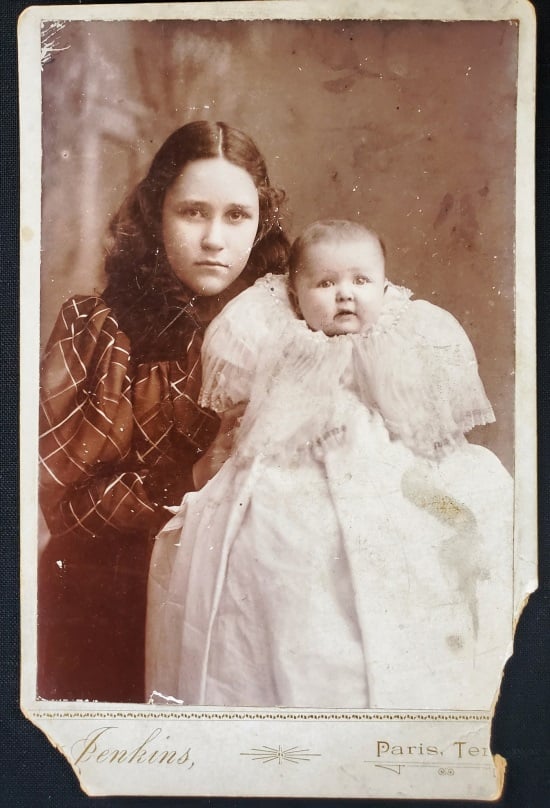
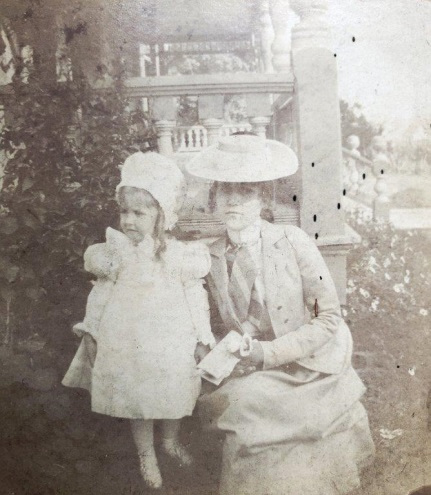
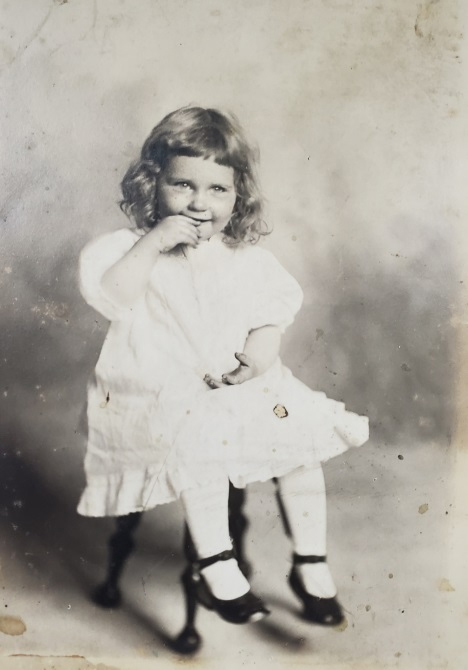
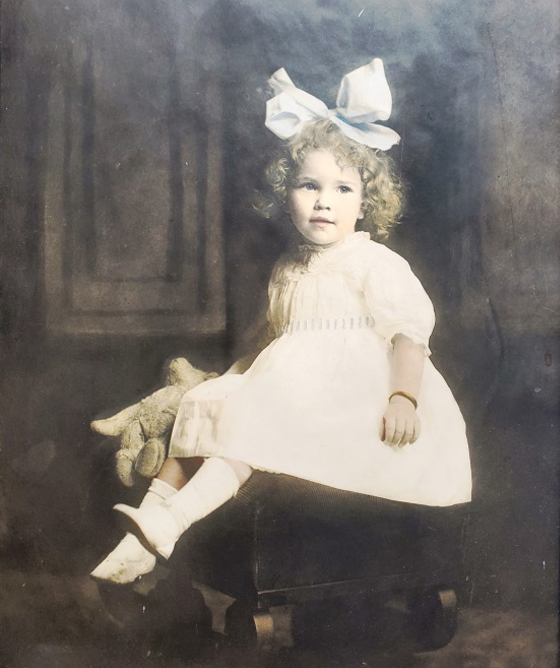
Portrait of the Barton daughters, Woodie and big sister Anne, early 1900’s, accession # 2022-34-03.


Woodie and Anne, side yard of the old Cavitt property, small portrait, accession # 2022-34-04.


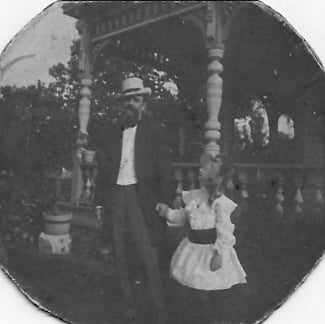
Front yard Pose


Mr. Barton and Woodie in the front yard, about 1904, photo 3X4, accession #2022-34-05.


The New Barton Mansion Claims the Property at 614 North Poplar Street


8X10 Photo, from the American Architect Trade Publication, 1916, accession # 2022-34-06.


Soon after the old Cavitt property house was destroyed, building of the New Cavitt Place commenced in and around 1911. The house was photographed upon completion in 1916 as pictured here for a feature layout in The American Architect Magazine; Architect, Brinton B. Davis designed the crème brick, terrazzo trim Italian Renaissance Revival style structure that became known as the Crown Jewel of West Tennessee.


Stepping Out


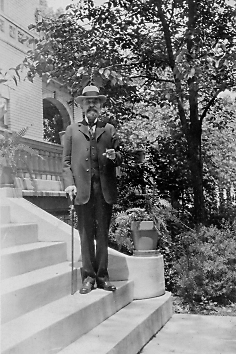
Orion C. Barton, Esquire of Cavitt Place, front steps, about 1920, 4X6 photo accession # 2022-34-07.


Millionaire, Philanthropist, Family Man


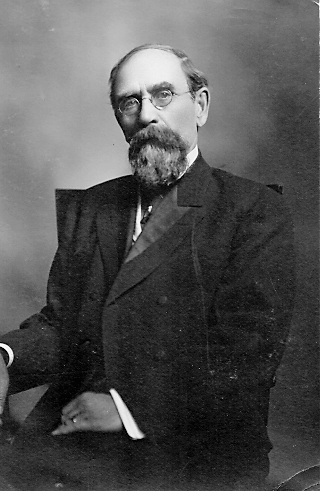
Barton was passionate about serving and interested in whatever uplifted Paris and gave generously during his lifetime. Mr. and Mrs. Barton built Cavitt Hall, the girl’s dorm at E.W. Grove High School; Barton Athletic Field at Grove High School; Barton Hall, at Union University, Jackson, TN; The Woodie Barton Gibson Settlement House, Nashville, TN; The Barton Building at Baptist Orphan’s Home, Franklin, TN. In addition, they gave a significant sum of money to build the First Baptist Church of Paris. Reportedly the first millionaire in Paris, Barton seemed to have a Midas touch for enterprise. 5X8 portrait, accession # 2022-34-08.

Ladies of the House


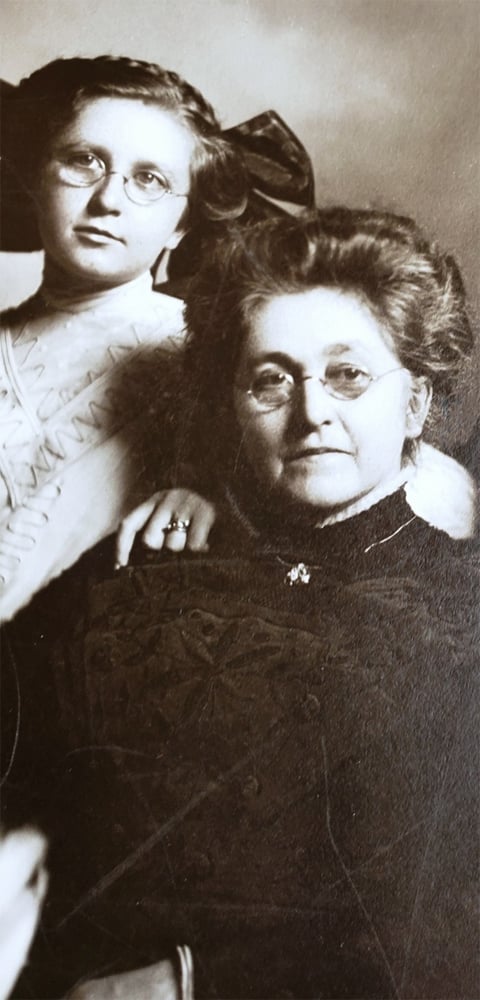
Woodie Cavitt Barton was the daughter of Tillie and Mr. Barton. The Bartons married in 1893. Detail from portrait of Woodie and her mother Tillie Cavitt Barton, second wife of Orion C. Barton early 1900’s, accession # 2022-34-09.


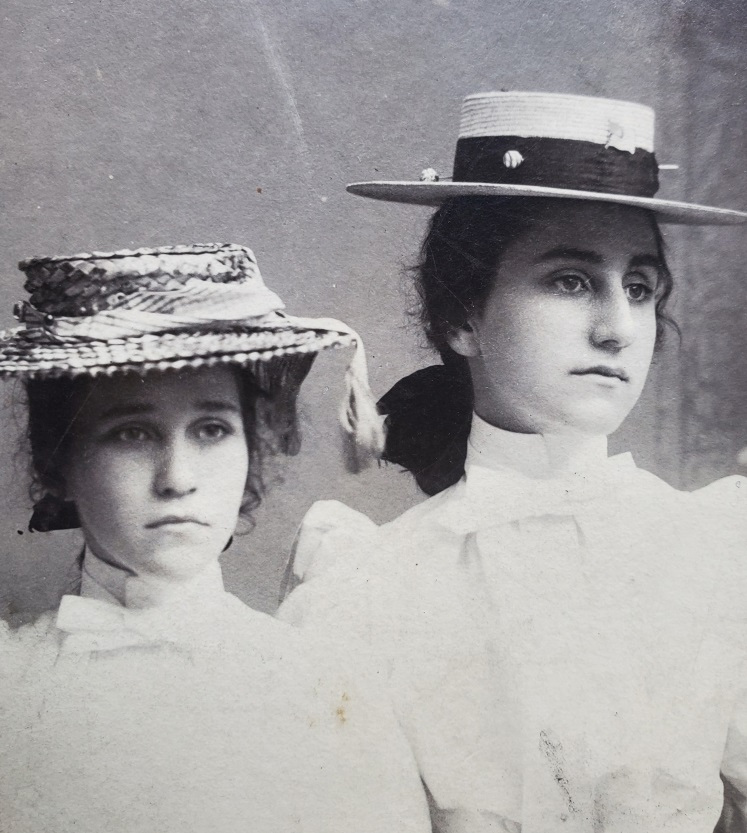
Anne Hardy Barton and Nelle Ross Barton, daughters of Tommie Crutchfield Barton, first wife of Orion C. Barton; Small portrait 2X3, early 1900’s, accession #2022-34-10.


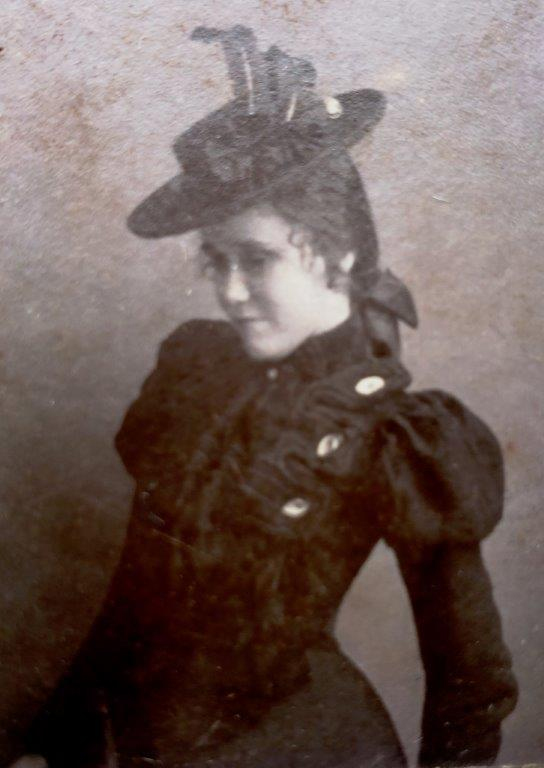
Tiny portrait of Anne, early 1900’s, accession #2022-34-14.


Grand Children, lived next door at 702 North Poplar Street


Granddaughters Nelle and Margaret, daughters of Ann Barton McSwain and Horace McSwain; Photo of Nelle Cavitt McSwain, accession # 2022-34-11; 8X10 portrait of Margaret McSwain, accession # 2022-34-12; Anne Hardy Barton married Horace A. McSwain in 1904 and they lived just next door to Cavitt Place. Doctor and Mrs. McSwain had also a son, named after his father and who became a doctor like his father (no picture available). Margaret never married and lived up the street on Poplar.


Grandchild and Cavitt Place Heiress


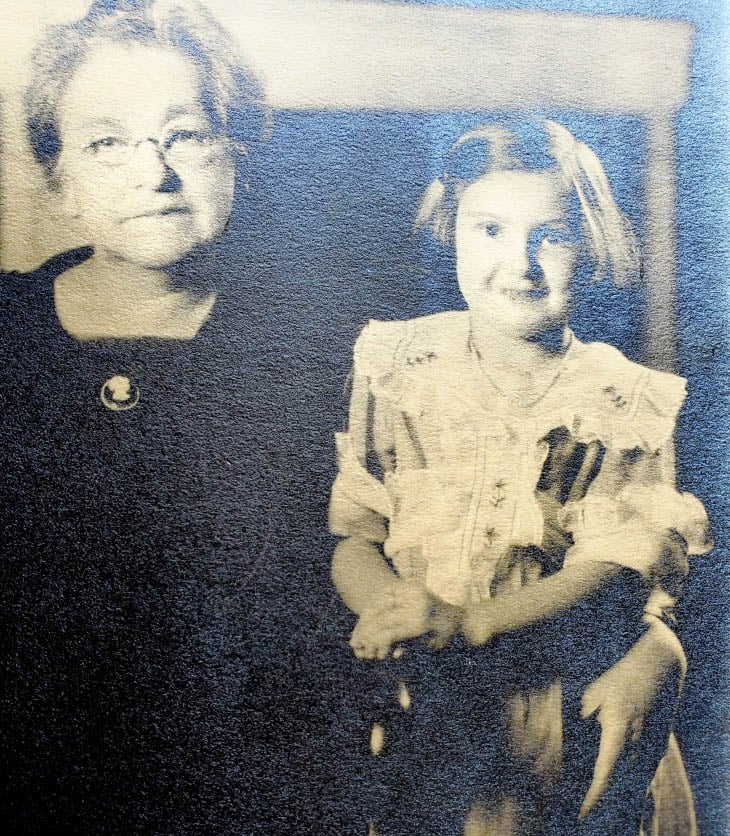
Granddaughter Matilda Barton Gibson and grandmother Tillie Barton, photo accession # 2022-34-13; Matilda was the daughter of Woodie Barton Gibson and Joseph Gibson Jr. of Belle-Meade, Nashville, TN. Woodie died in 1918 not long after giving birth to Matilda.


Mrs. Barton died in 1924 when Matilda was just six. Fourteen years later in 1938 at eighty eight Mr. Barton died. The house was only twenty two years old at the time.


Matilda Barton Gibson was twenty and was heiress to Cavitt Place and a substantial Trust in her name. In 1941, Matilda and her father Joseph Gibson of Belle-Meade, TN (Nashville) met with the city and county and with civic stakeholders to assess the best plan forward for Cavitt Place. The Gibsons, et al in agreement, decided to offer the property to the county for its use for less than $8,000.00. The Bartons had always been generous community supporters, Matilda and her father Joe Gibson followed suit. By all but giving the mansion to the County, Matilda had opened a window for Cavitt Place to provide a supporting accommodation to the county. At her death Matilda left the remainder of her Matilda Barton Trust to the Tennessee Baptist Convention and to three named persons, as was her grandfather’s wish. The church’s portion was $90,879.33.


Thanks to Matilda Barton Gibson, Cavitt Place at 614 North Poplar Street has served the community for more than eighty years in different supporting roles.


Read the expanded Story of the Family and of Cavitt Place Mansion on the front page


Cavitt Place Then and Now North Portico Views


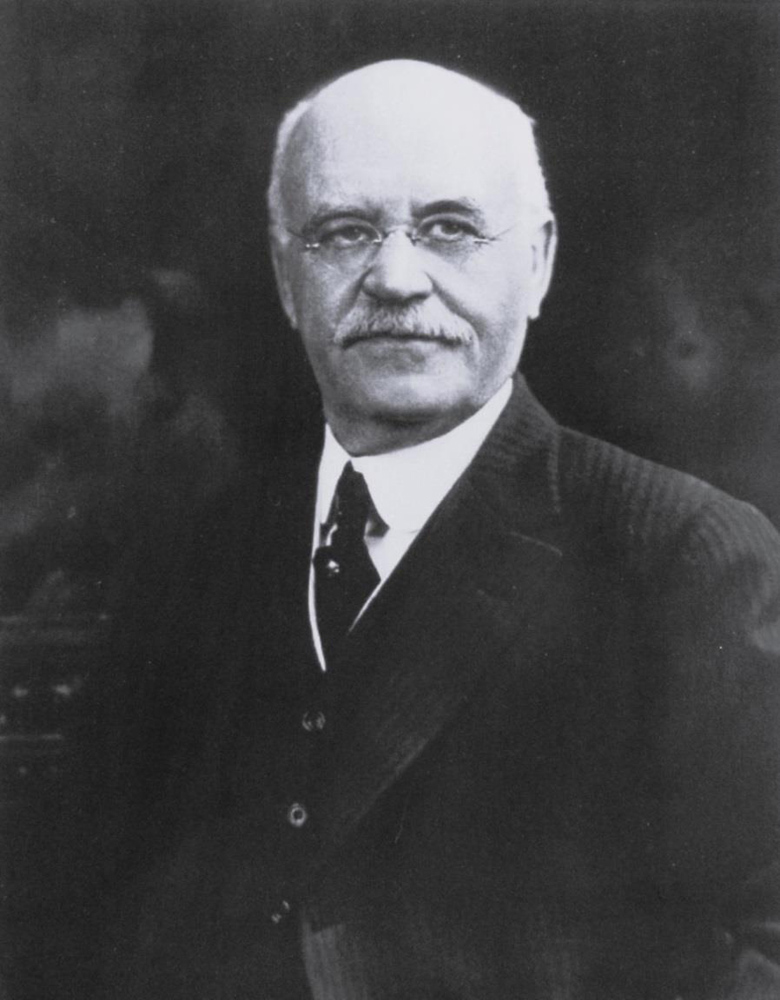
Edwin Wiley Grove (1850-1927)


Pharmacist, Inventor, Visionary, Developer, Businessman, and Philanthropist, Extraordinaire


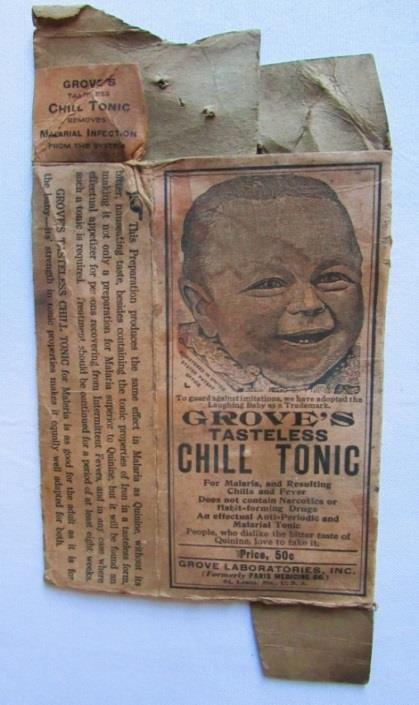
Edwin Wiley Grove (1850–1927) was a self-made millionaire and entrepreneur. He founded the Paris Medicine Company, creating and producing its most well-known patent medicine products, Grove’s Tasteless Chill Tonic for relief of malaria symptoms and Bromo Quinine laxative tablets. Grove in his success branched out to new interests, and invested in and developed properties in cities in the U.S. South, including Atlanta, Georgia, and Asheville, North Carolina.


Grove the Pharmacist


“I had a little drug business in Paris, Tennessee, just barely making a living, when I got up a real invention, tasteless quinine. As a poor man and a poor boy, I conceived the idea that whoever could produce a tasteless chill tonic, his fortune was made.”


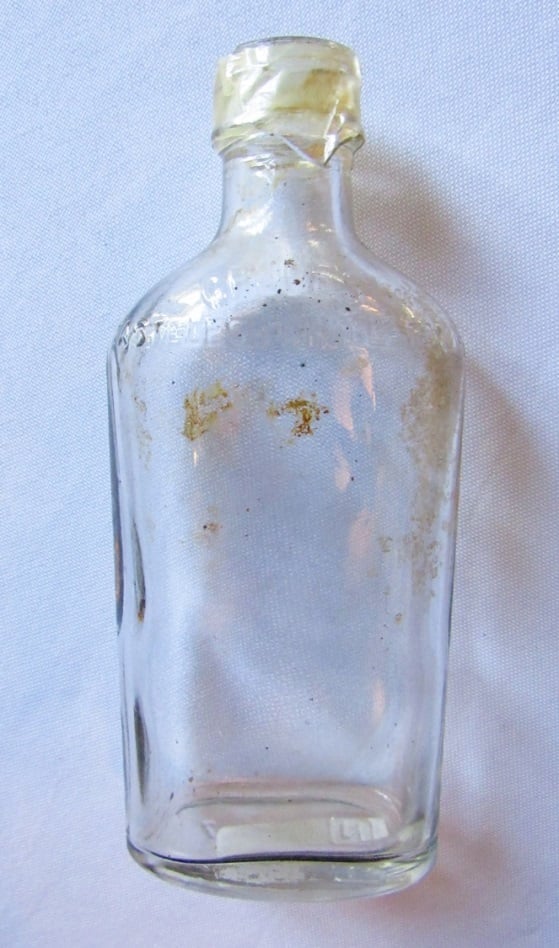
Grove’s Chill Tonic came onto the market in 1885 and was a sensation and a success for easing the chills of malaria that set Grove on a path to his success as an inventor, entrepreneur, and visionary businessman. The young pharmacist moved to Paris, Tennessee right out of pharmacy school, and launched a flourishing business from Paris. Grove’s pharmaceutical footprint and visionary enterprise, developments and buildings, stretch from Paris, Tennessee, to St. Louis, MO., across the Atlantic to London, to Ashville, N.C., and to Atlanta, GA. Grove


Chill Tonic Bottle and Packaging Box


Accession # 2002.040.4001


Accession # 2022.040.008


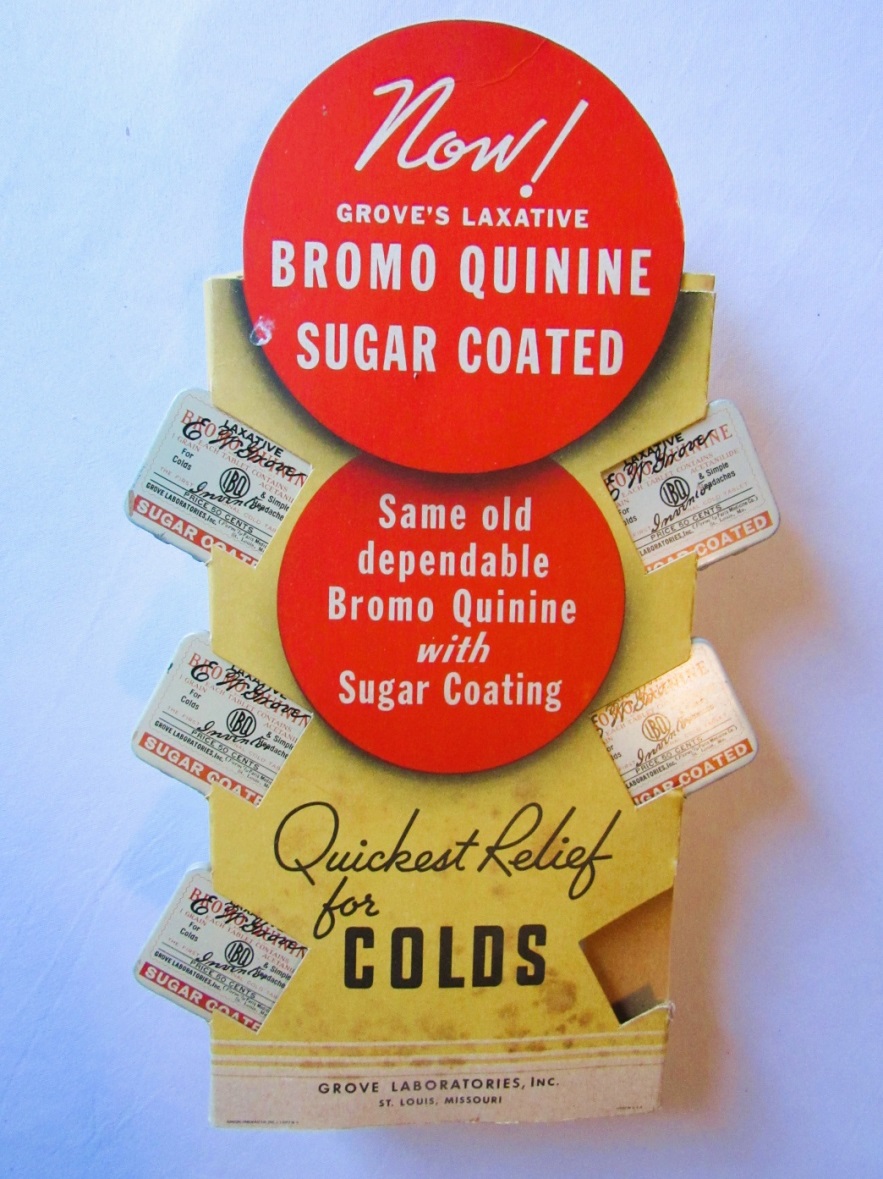
Bromo Quinine “Tablets”

Grove’s Laxative Bromo Quinine, which was first produced in 1896, was an early cold tablet that combined quinine with other ingredients thought to relieve cold symptoms, including bromide (a sedative) and a laxative. Grove introduced medicinal plant extracts into his medicines. The success of Grove’s products can be partly attributed to his talent for advertising. The Bromo Quinine cold tablets were sold in a package that bore the signature of E W Grove, ensuring the authenticity and quality of the product. Grove is said to be the first to package and sell medicine in tablet form.


Bromo Quinine Tablets

Edwin Wiley Grove was reported to be first to develop medicine in pill form. Bromo Quinine tablets packed in tins on a catchy counter top display, modern for the times. The Grove brand is on the tins, yet further assures the consumer of the product quality, with the famous Grove’s signature emblazoned on the tin.


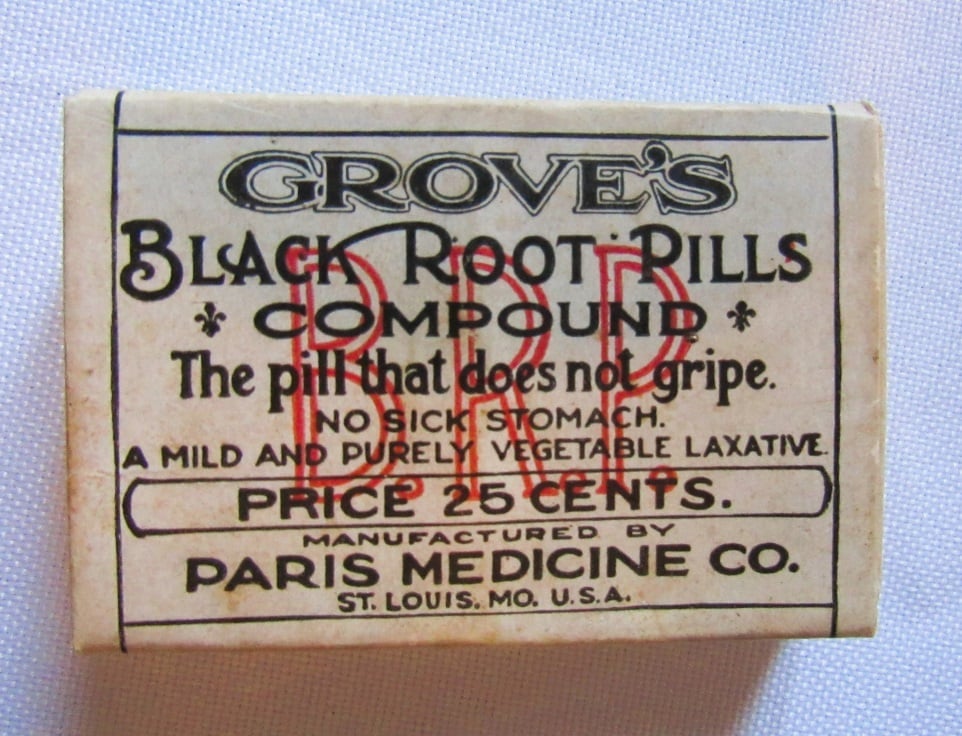
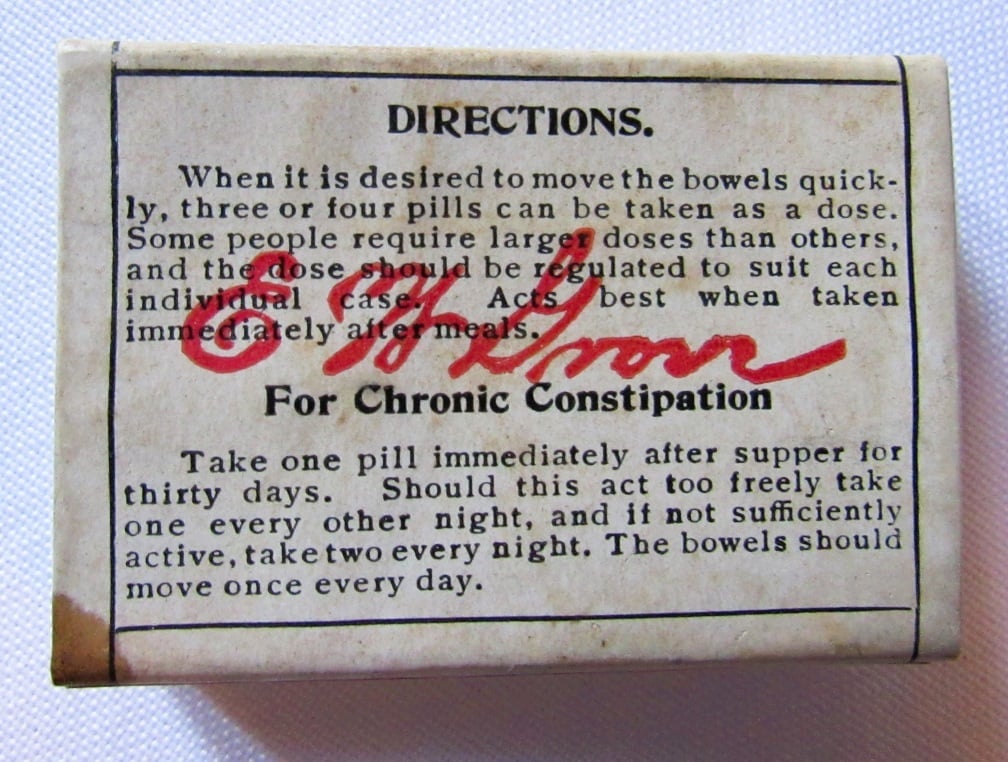
Black Root Pills


E.W. Grove’s Black Root Pills with back of package directions, and that famous

E.W. Grove signature of quality assurance; Box, front and back is with original tissue sleeves inside to keep the pills dry and fresh, Accession # 2004.047.015.


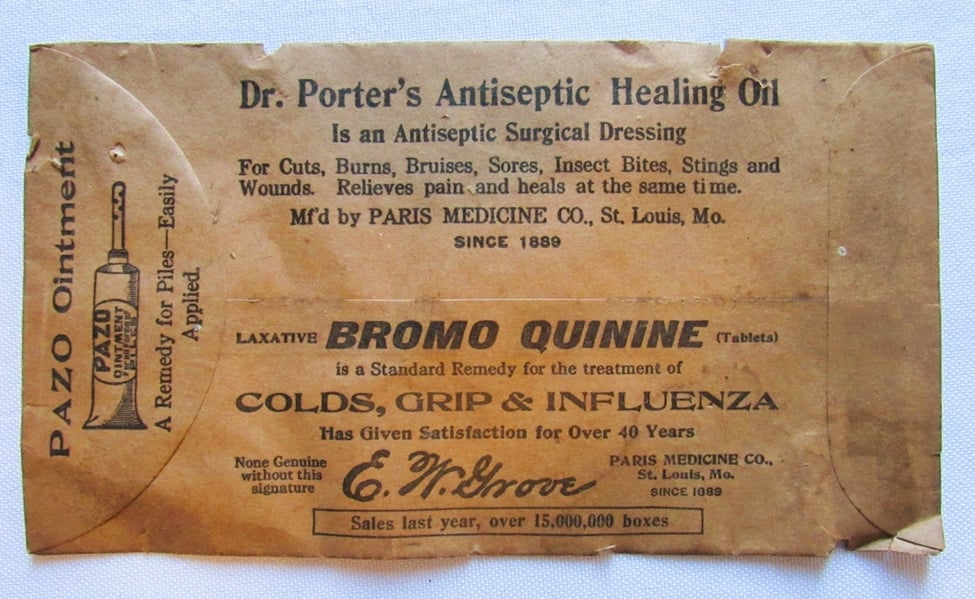
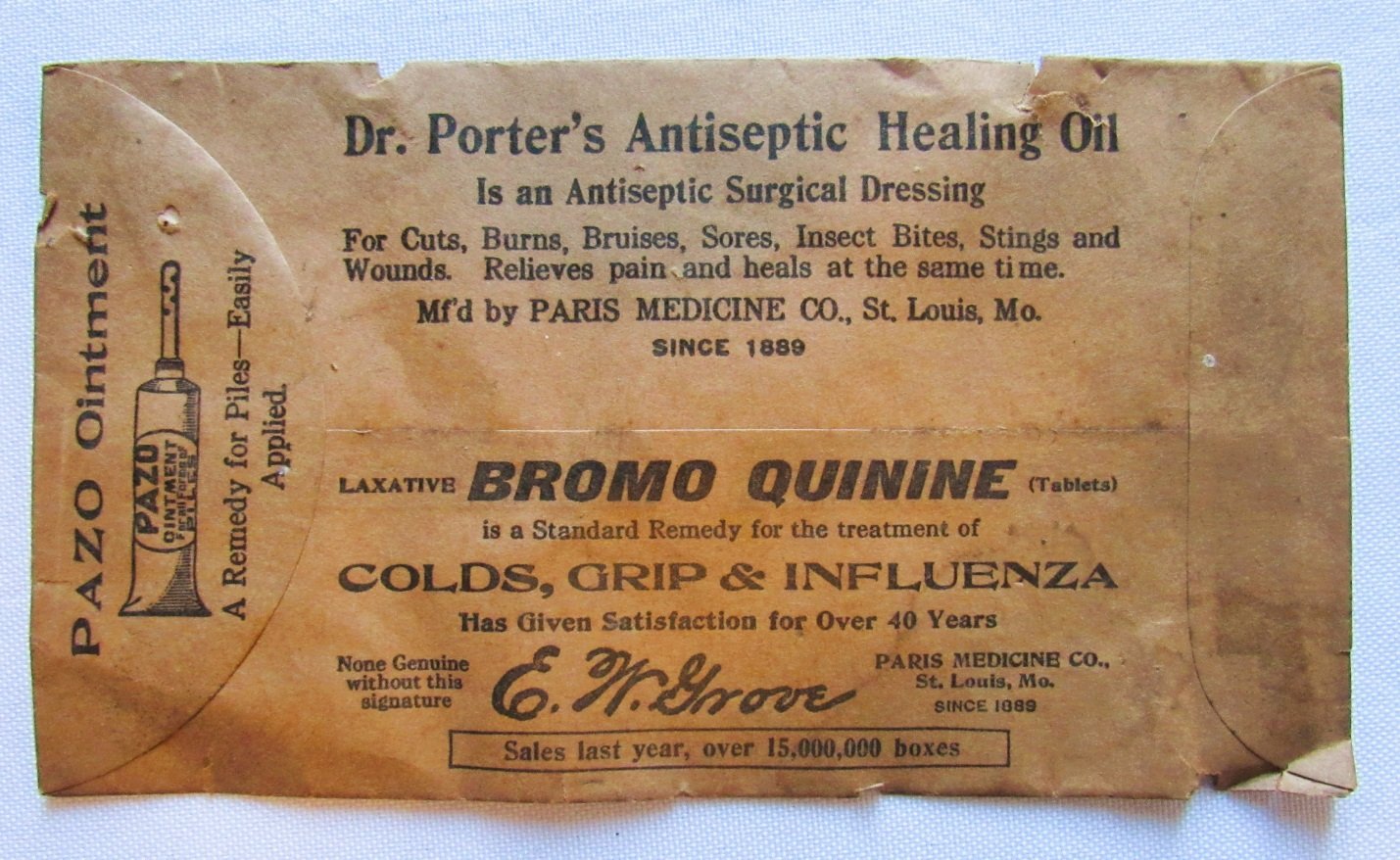
Pill Porting Envelope

Collaborative Marketing and Packaging


Pill & Powder Envelope, Accession # 2022.040.005


Porter and Grove collaborated on this production piece, shared advertising space and served to promote three products and one developed by Dr. Porter and manufactured by Grove. Plus they slipped in another product, not to waste any advertising-free space. Developed by Dr. Porter and manufactured by Grove. Doctor Felix Porter was a veteran of the Civil War and one of the Paris Blues. This healing ointment might have been one he developed in response to, or during the Civil War. Accession #


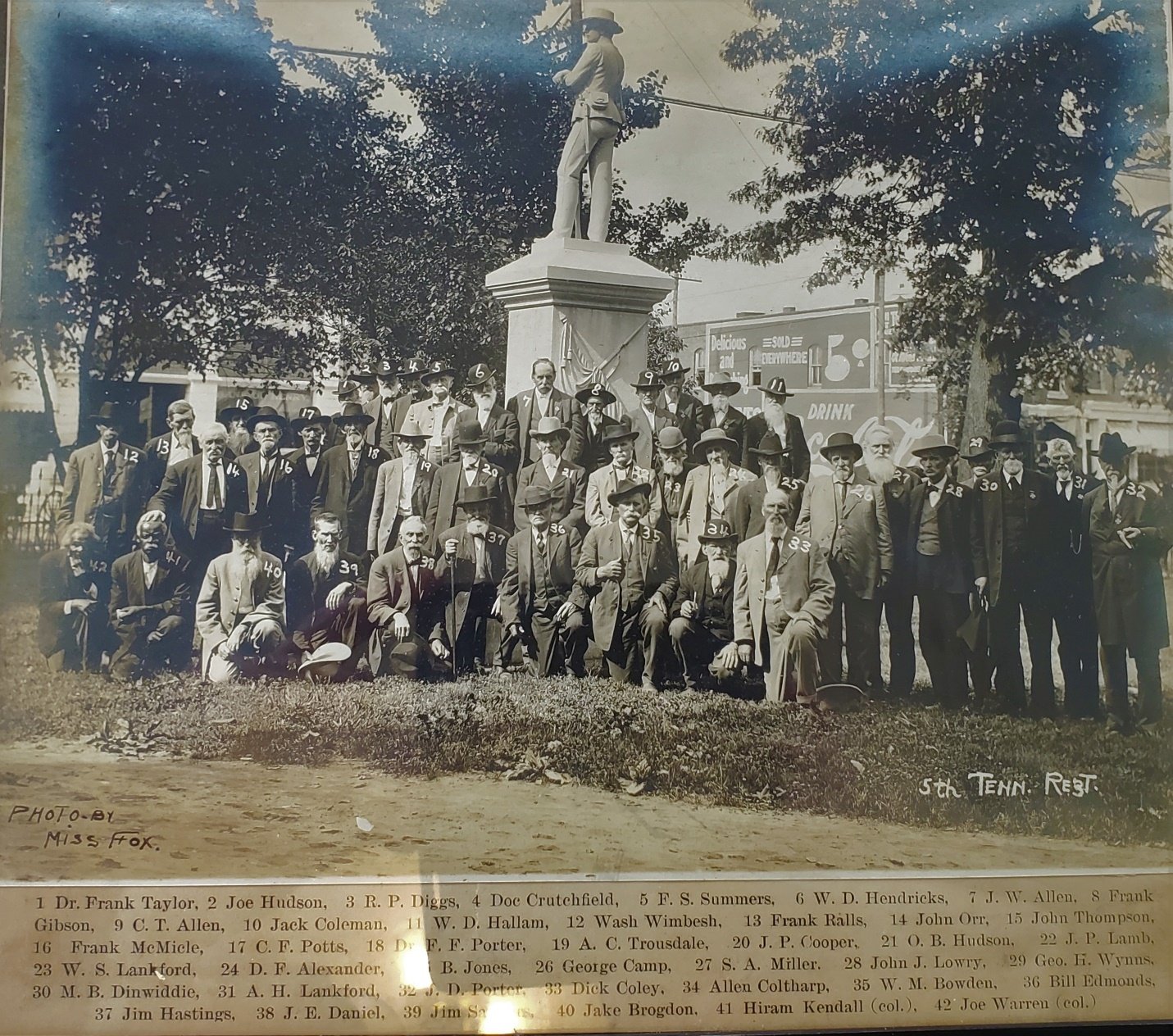
*note: Doctor Felix Porter was one of the small instrumental group of Paris men to commission and put up the money to create the confederate soldier sculpture at the Henry County Courthouse, on the grounds at Poplar & West Washington Street. Porter was one of the now famous “Paris Blues.”


Grove the Philanthropist

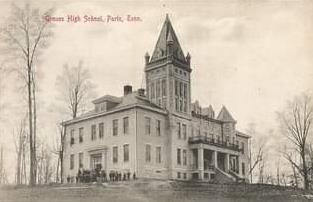
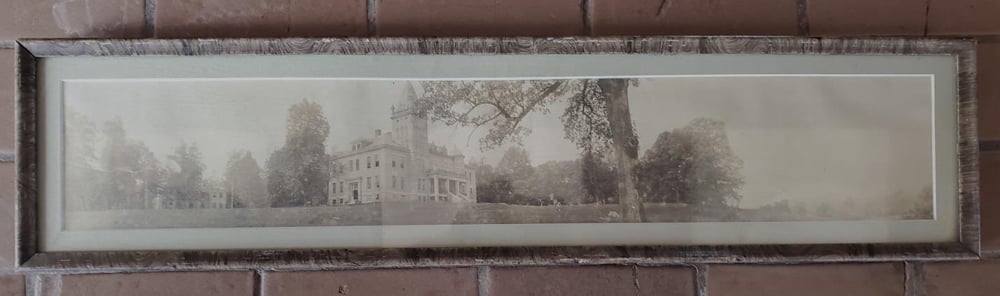
Grove High School, Paris, Tennessee

In Paris, Tennessee, Grove endowed a public high school, the E.W. Grove High School, serving Henry County that opened in 1906 and served as the county’s high school until 1970. The school offered a free first class education to anyone in the county, and was reportedly one of the first free public high schools in the country. E.W. Grove High School was the first to implement and teach Agriculture in the nation offering a life practical curriculum. Grove provided as a gift for the sanctuary of the First Presbyterian Church in Paris, TN on North Market Street -a splendid Pre-Raphaelite style stained glass triptych cathedral window with title, “Knock and the Door shall be Opened”. First Presbyterian was Grove’s Church. (no picture)


1909 framed Photograph of Grove high School shows Cavitt Place dormitory at left, Accession # 2023.040.010


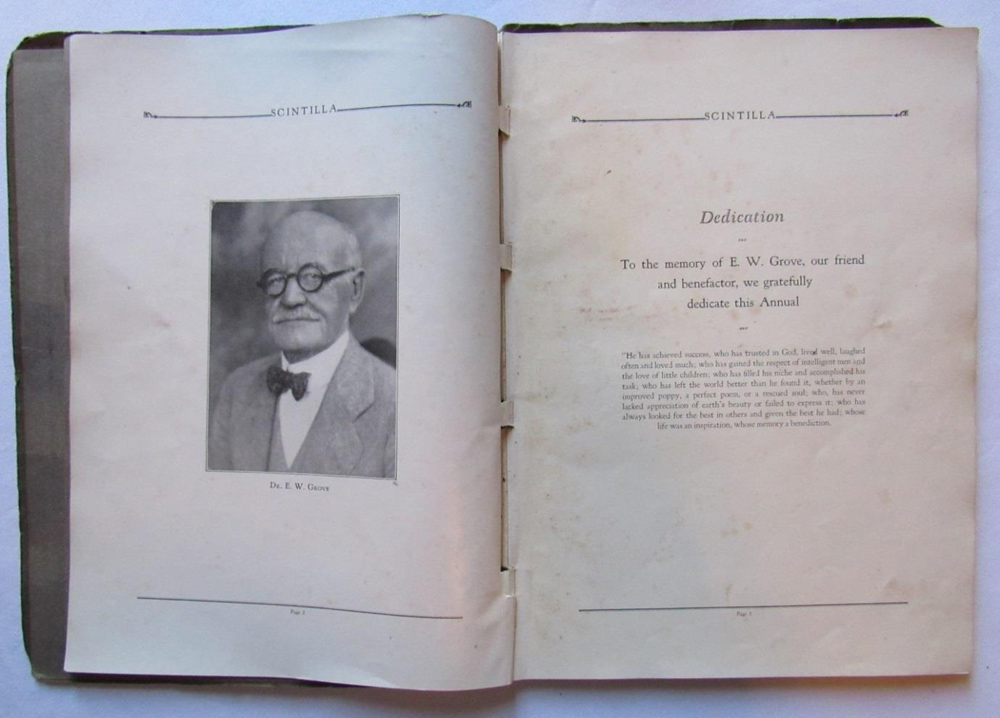
1927 Scintilla, Grove Dedicated Yearbook


Dedication Pages from the E.W. Grove High School Scintilla yearbook, 1927 honoring their Friend & Benefactor, who passed away in 1927 that year. Accession # 2001.047.015


Visionary Builder and Developer

In Atlanta, Georgia between 1902 and 1905, Grove bought land in Atlanta which he developed in 1912 as the streetcar suburb, Atkins Park, named after family friend and mentor Colonel John DeWitt Clinton Atkins of Paris Tennessee, distinguished Civil War veteran and United States Congressman during the Andrew Jackson Administration.


Atkins Park is west of Briarcliff Avenue and north of External link opens in new tab or windowPonce de Leon Avenue. It consists of just three streets - St. Louis Place, St. Charles Place, and St. Augustine Place - It was originally designed to give quicker access to the streetcar stop at Ponce.


Later he developed the Fortified Hills suburb in Atlanta, now the Grove Park neighborhood of Atlanta. In Asheville, North Carolina Grove built a summer home and later moved there permanently. In Ashville, North Carolina Grove developed the Grove Park residential area and designed and built the famous Grove Park Inn with his son-in-law Fred Loring Seely in 1913. Grove tore down the famous Victorian Battery Park Hotel to build the new Battery Park Hotel in downtown Asheville on the site of the former Queen Anne style hotel. Grove began construction of the Grove Arcade that was completed in 1929 after his death, possibly the first outdoor indoor mall. Grove died of pneumonia at his Battery Park Hotel in 1927 and is buried in Paris at the Paris City Cemetery just a stroll from his home former home on North Poplar Street in Paris, TN.


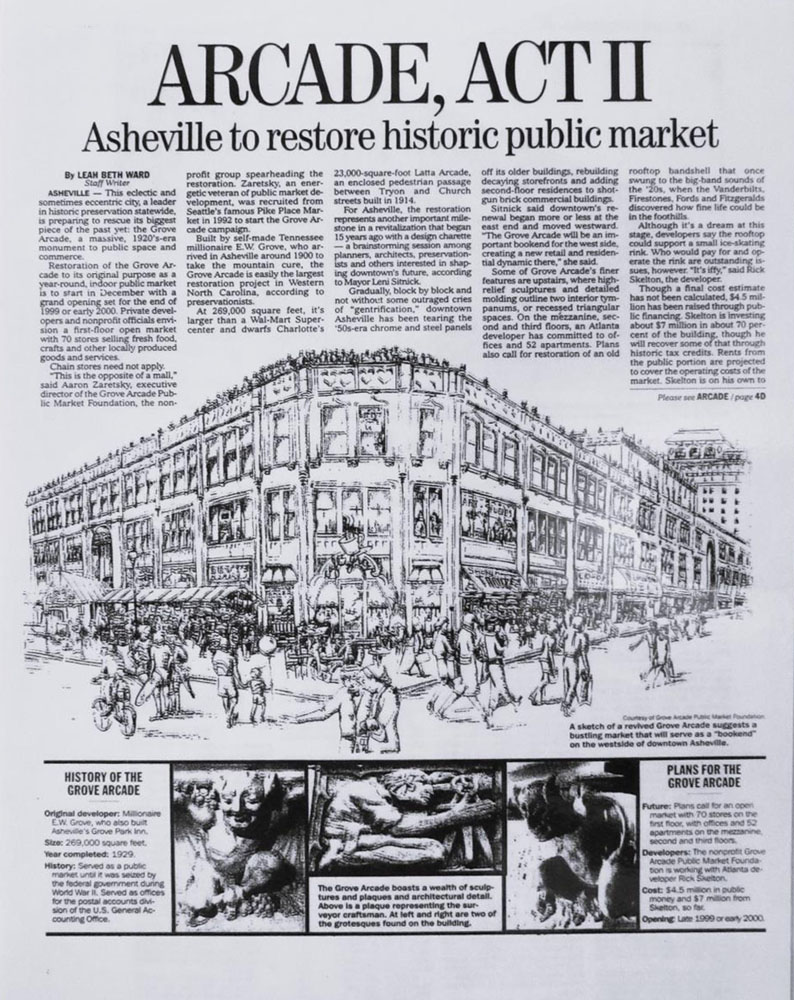
The Grove Arcade in Ashville, North Carolina


Grove’s shopping Arcade in Ashville, N.C., is just one example of Grove’s grand visions realized. This photograph is from an Ashville newspaper that dedicated an entire section to Grove’s accomplishments, giving him credit for the development of Ashville. Grove built the Grove Park Inn that is a unique, impressive resort popular and distinctive, built of the massive indigenous rock and wood.


The Grove Park Inn

Grove built the Grove Park Inn that is a unique, impressive resort popular and distinctive, built of the massive indigenous rock and wood and quite a popular resort today.


Tucked in the Blue Ridge Mountains pictured here with new addition, the original structure is with the red tile roof. A fabulous and immense spa is at center and issues forward from the central building at back all the way up to and just beyond the buildings running alongside the spa. This was Grove’s most spectacular feat and showplace. The hotel is one of the country’s foremost resort hotels. The Grove Park Inn, located just outside of Ashville, North Carolina.


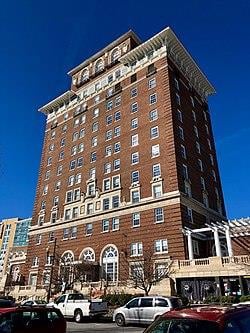
The New Battery Park Hotel


The Battery Park Hotel is the name given to two hotels in External link opens in new tab or windowAsheville, North Carolina. The one standing today is 14 stories tall and was built in 1924 during a time of increased tourism in the North Carolina Mountains. The name came from the fact that External link opens in new tab or windowConfederate forces used the site for batteries of artillery.


Grove favored the hotel and was living here when he died with pneumonia in 1927. Grove is buried at the Paris City Cemetery after having lived a highly productive, creative, successful and giving-back life.


Outlying Communities - Through the Years

The Wright Collection


James Brittain Wright Collection

Information given by Rosemary Papetti Leonard

My ancestors settled in Henry/Carroll County, TN in the early 1800s. My pioneer great-great grandfather was James Brittain Wright b. 1802 d. 1880, who was married to Martha "Patsy" Endsley b. 1803 d. 1892. They purchased a farm, which is located on what is now called Joy Sparks Rd, McKenzie, TN in the early 1850s. My grandfather was William Talmadge James Brittain Wright, b. 1892 d. 1971. (Yes, that was his complete name. He was named after his own father and grandfather, as well as a well-known minister who his mother admired.)

This property was still in our family until 2021. We have held on to many of the belongings of the Wright family and are happy to share them with the museum.

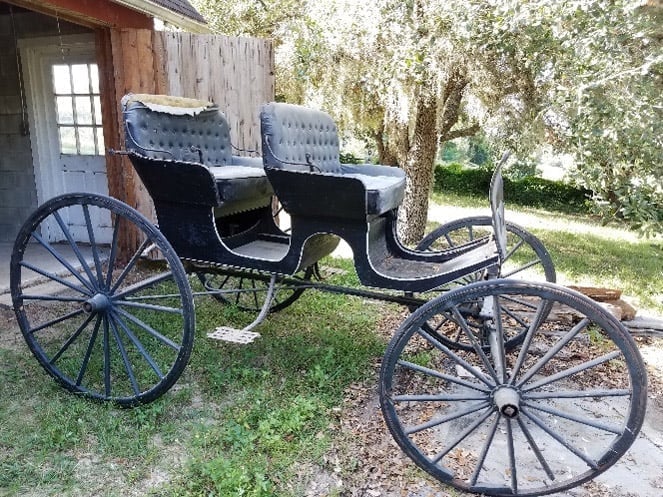
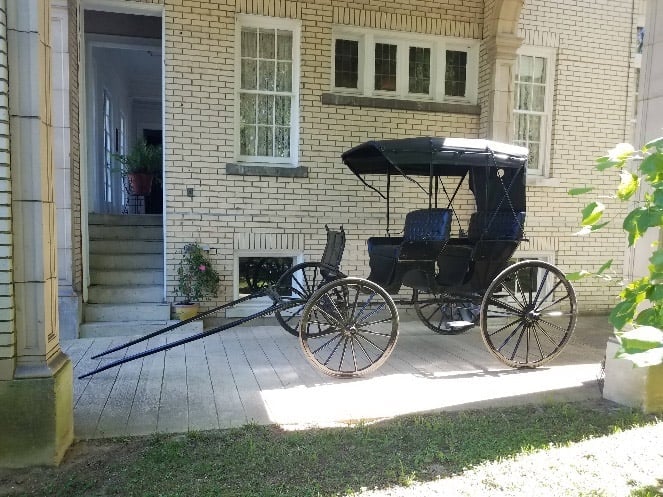
Surrey


Photo before repairs


Photo after repairs


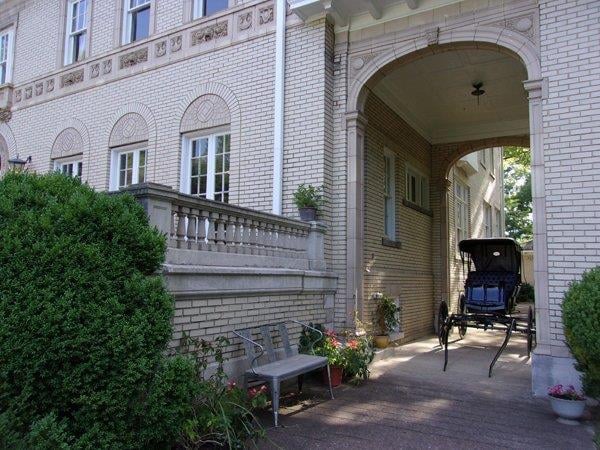
My mother, Barbara Jeanne Wright Papetti, b. 1926 d. 2017. The surrey was used by her family as transportation during her childhood. It was bought in the early 1900s, before she was born, and was not new at the time of purchase, so I do not know the exact age. A beautiful black horse pulled the surrey when it was first bought. When the family first obtained the surrey, their mode of transportation would have been horseback, surrey or wagon. They later acquired automobiles, and during that time, they still used the surrey, especially, during the Depression. My grandmother, whose name was Mary Lucy Welch Wright, was a teacher before she was married, and she had a Ford Model T. During the Great Depression, my grandfather used the engine from her Model T to power a  sawmill. He sold the lumber from this sawmill to help supplement their income, since times were so hard. They were especially glad to still have the surrey and wagon to use for transportation. Mother and her sister, Martha Elizabeth Wright Wharton, talked about taking the surrey to church every Sunday. They said that sometimes “preaching” would last all day, and when they came home late, they would have to use an attached lantern to light the way.


In regard to the family surrey that we donated to the museum - Repairs were done to the surrey, before we donated it. We found an Amish buggy maker in Ethridge, TN who agreed to make repairs and a replacement top. The wheels were repaired by an Amish wheelwright, who was also in the area of Ethridge, TN. The cost was over $2,300. My husband and I paid for the repairs and have donated the W.T. Wright family surrey to the Paris-Henry County Heritage Center where it is now at home at Cavitt Place under the tall stately portico, in Paris, TN. The slender and stylish surrey is a perfect fit for this property and home.

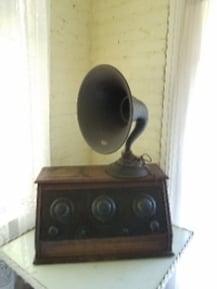
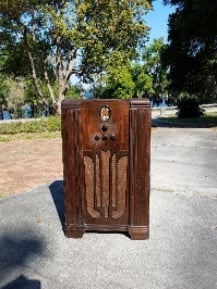
Radios


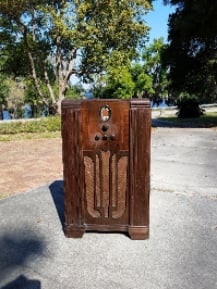
The above radios belonged to my grandfather. The radios came from the family home in McKenzie. Mother told us many stories of listening to the radio while growing up. She remembered hearing about the bombing of Pearl Harbor on the radio.  I could always picture them sitting around the radio when the terrible news came. She also told of listening to the original broadcast of War of the Worlds. She said that their family knew that it wasn't a real attack but just a story. When she was young, she and her sister, Martha Elizabeth Wright Wharton, had many chores and work to be done around the farm. They always hurried to get finished before their favorite radio show was on, and they would run to the house and listen. My favorite story though, was that after the children went upstairs to bed, they could still hear their father listening to the radio below. Very late, every night, when the station signed off the air, it always played the National Anthem. Mother said that each night, she would get up out of bed and stand with her hand over her heart while it played.

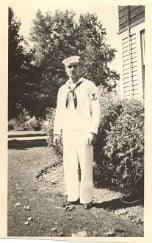
Uniforms

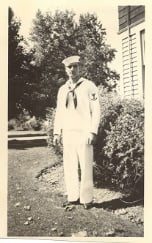
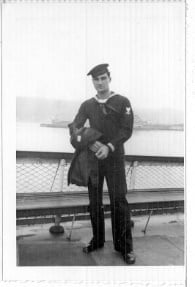
The World War II Navy uniforms belonged to my father, Clarence James Papetti, b. 1920 d. 2011. My parents met after World War II, while taking classes at the University of Tennessee, in Memphis.


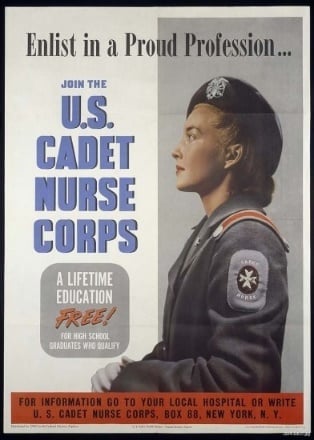
Cadet Nurse Corps Uniform

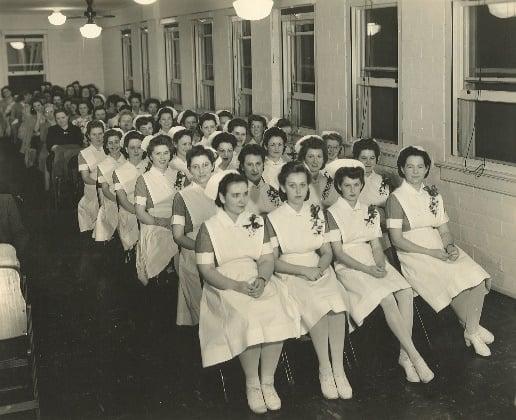
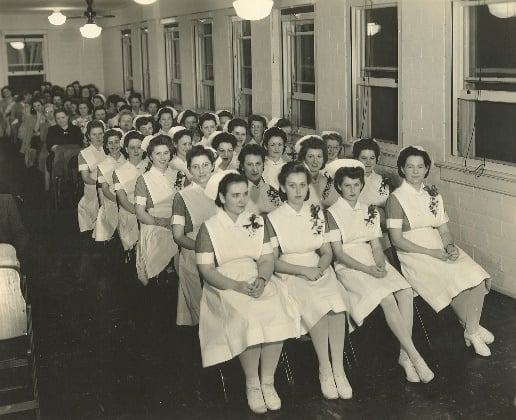
My mother, was in the External link opens in new tab or windowCadet Nurse Corps during World War II and had a lifelong career as a registered nurse. Due to a shortage of nurses at home and overseas during World War II, there was an effort by the federal government to recruit and educate nurses as well as expand and improve training.  A United States senator from Ohio, named Frances Payne Bolton, promoted a program that would help with this shortage of nurses. It became known as the Bolton Act, and the Cadet Nurse Corps was signed into law in 1943. In exchange for assistance for tuition and training, the Cadet Nurse program required that the recipients complete their education within 30 months and then work as military or civilian nurses. I left a book with you that includes much more about the history of the Cadet Nurse Corps.

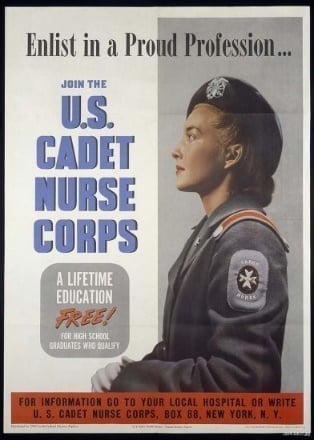
I have two types of my mother’s uniforms and a nurse’s cap. Below is a picture of the type that we have. My mother is not in this particular picture. I found the photo on the internet, but hers was the exact same. Also, I believe I left the cotton summer uniform with you. The poster is an example of one of many recruitment posters that were used  to encourage young women to “Enlist in a Proud Profession.”


Military Engagement - Through the Years

Military Engagement


Civil War


The Conway Bible


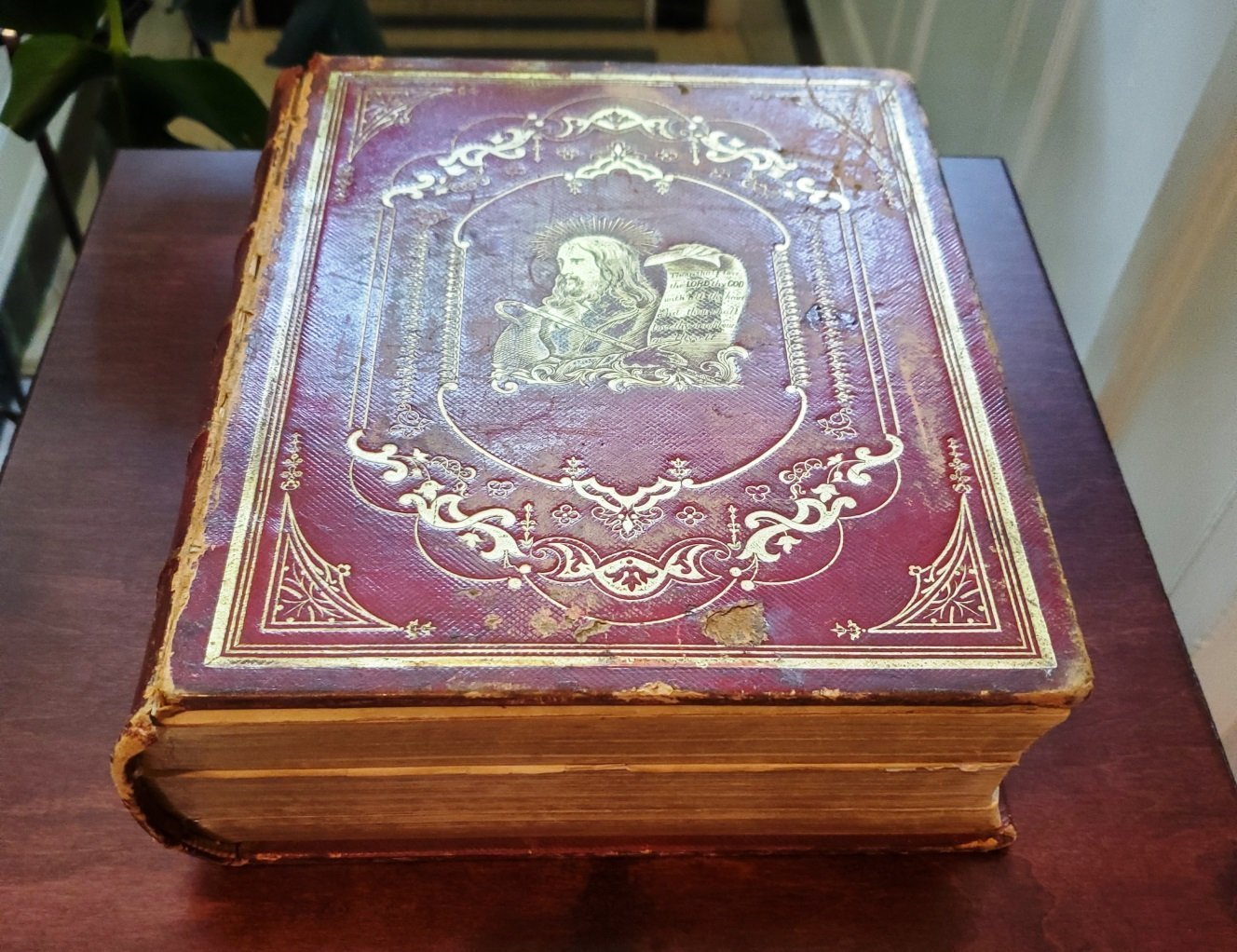
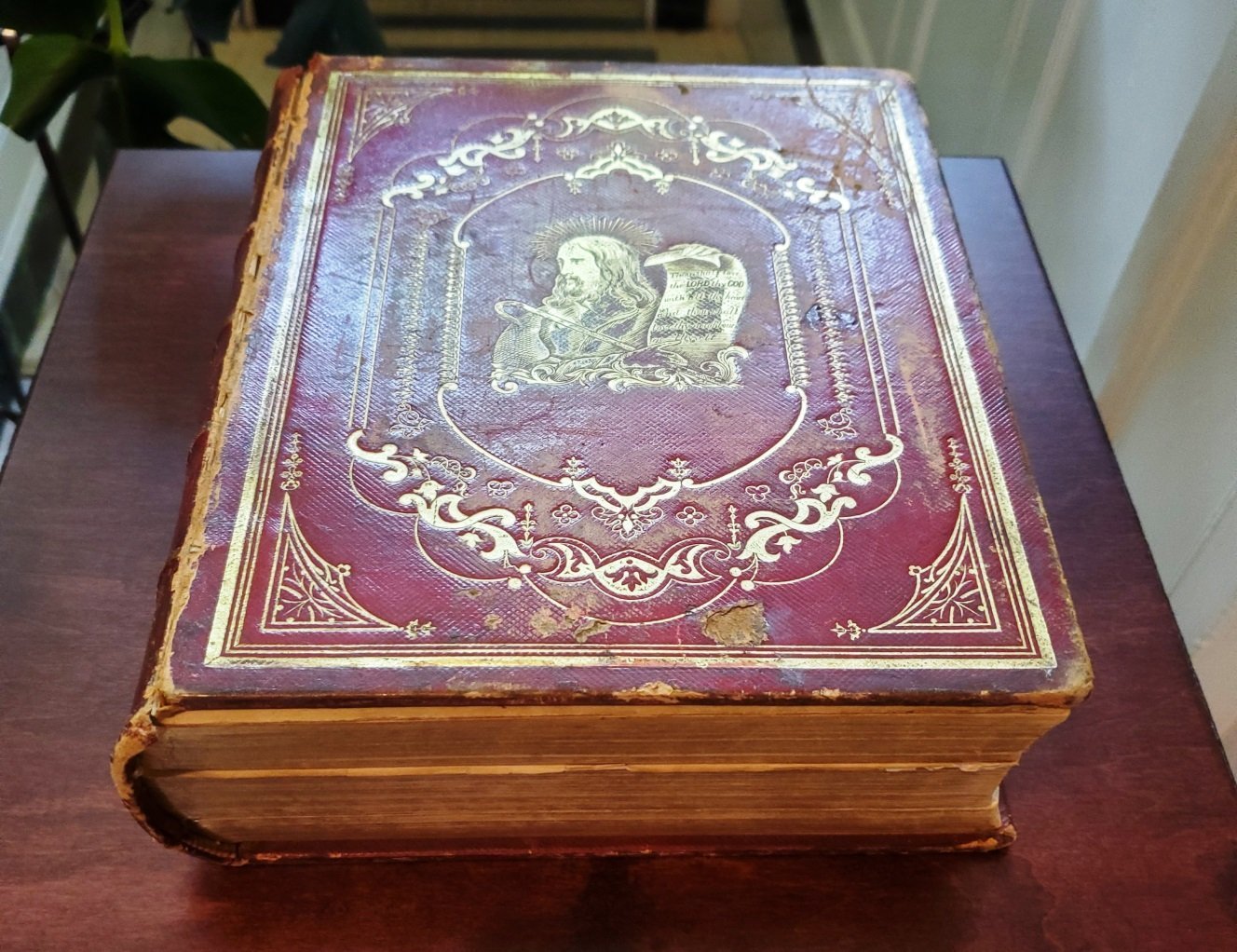
The Commander of “C” Company 5th Tennessee Infantry Regiment Captain Thomas Conway and his troops were presented this beautiful, gilded bible by the “ladies of Paris” on May 20, 1861, before marching off to fight in the American Civil War. The Company included many native sons of Henry County and Paris, TN. Captain Conway was killed in action at the Battle of Shiloh in 1862 and the bible was then presented to Captain Conway’s widow.


The Conway Bible was published in 1860 by J.B. Lippincott & Company and is one of the incredible historical artifacts at the Heritage Center. Captain Conway wrote valuable handwritten accounts about his soldiers into the margins of this beautiful burgundy leather-bound bible with absolute dazzling gild trim. There is a gold gilded image of Jesus on the cover that reflects the sun coming in from the grand entranceway. Conway recorded the names of his soldiers that were promoted, discharged, killed or wounded in battle etc. thus providing exciting primary source historical information on some of Paris and Henry County Confederate Soldiers. There were ninety-two native sons on the original roster of “C” Company 5th Tennessee Volunteers from Paris and Henry County.


The Henry County Historical Society purchased the Conway Bible and presented it to the Paris Henry County Heritage Center to maintain its preservation and display for the local community. Recently the Bible has had a museum pedestal case built for its special housing and presentation. accession # 2022-033-21


Civil War

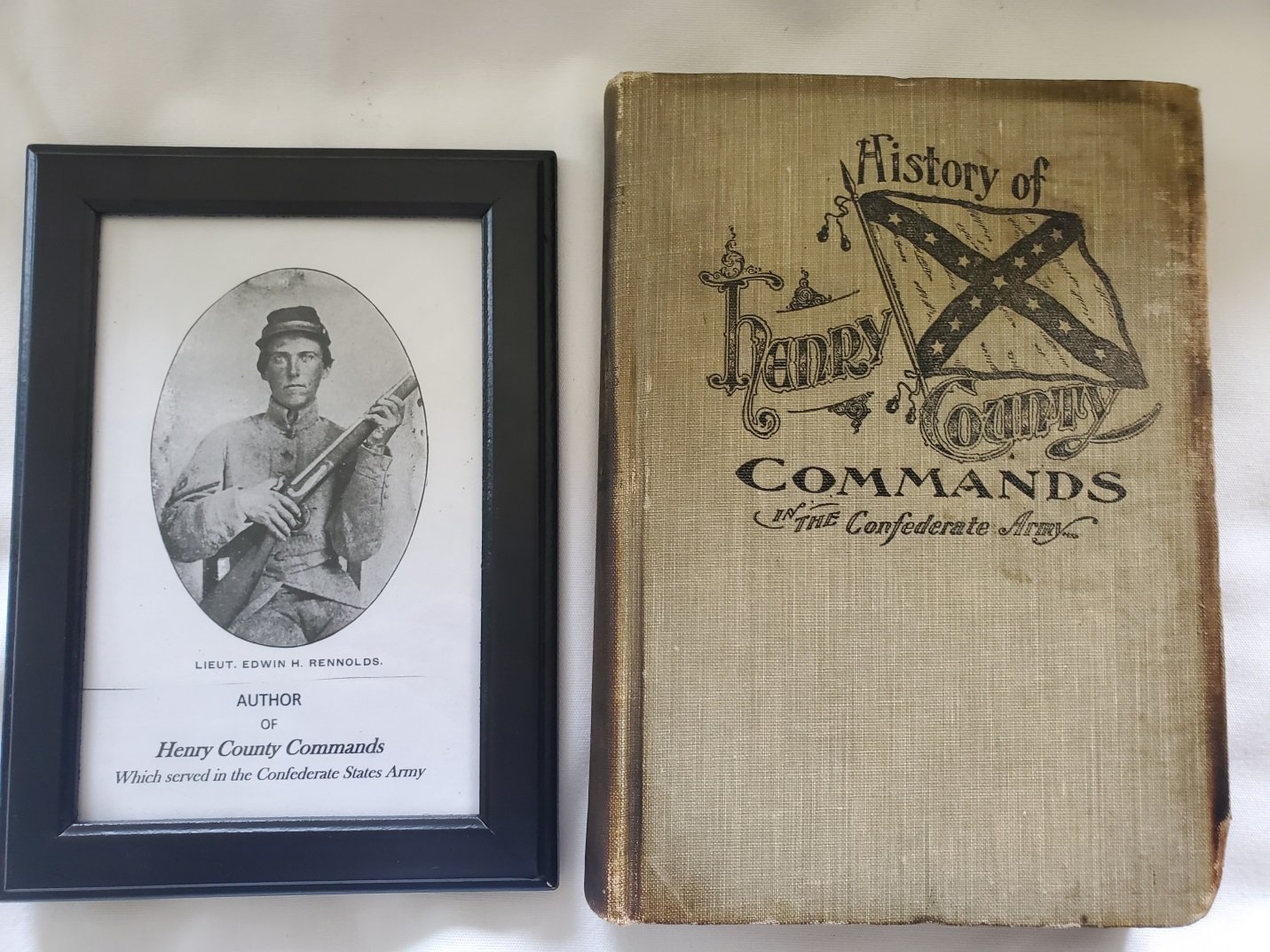
Henry County Commands

By

Lt. Edwin H. Rennolds


A History of Henry County Commands which served in the Confederate States Army, including rosters of the various companies enlisted in Henry County, TENN. The book was published in 1904 and includes some but not all of the portraits of past Commanders. The Author served with Company “K” 5th Tennessee Infantry. accession # 2022-033-08


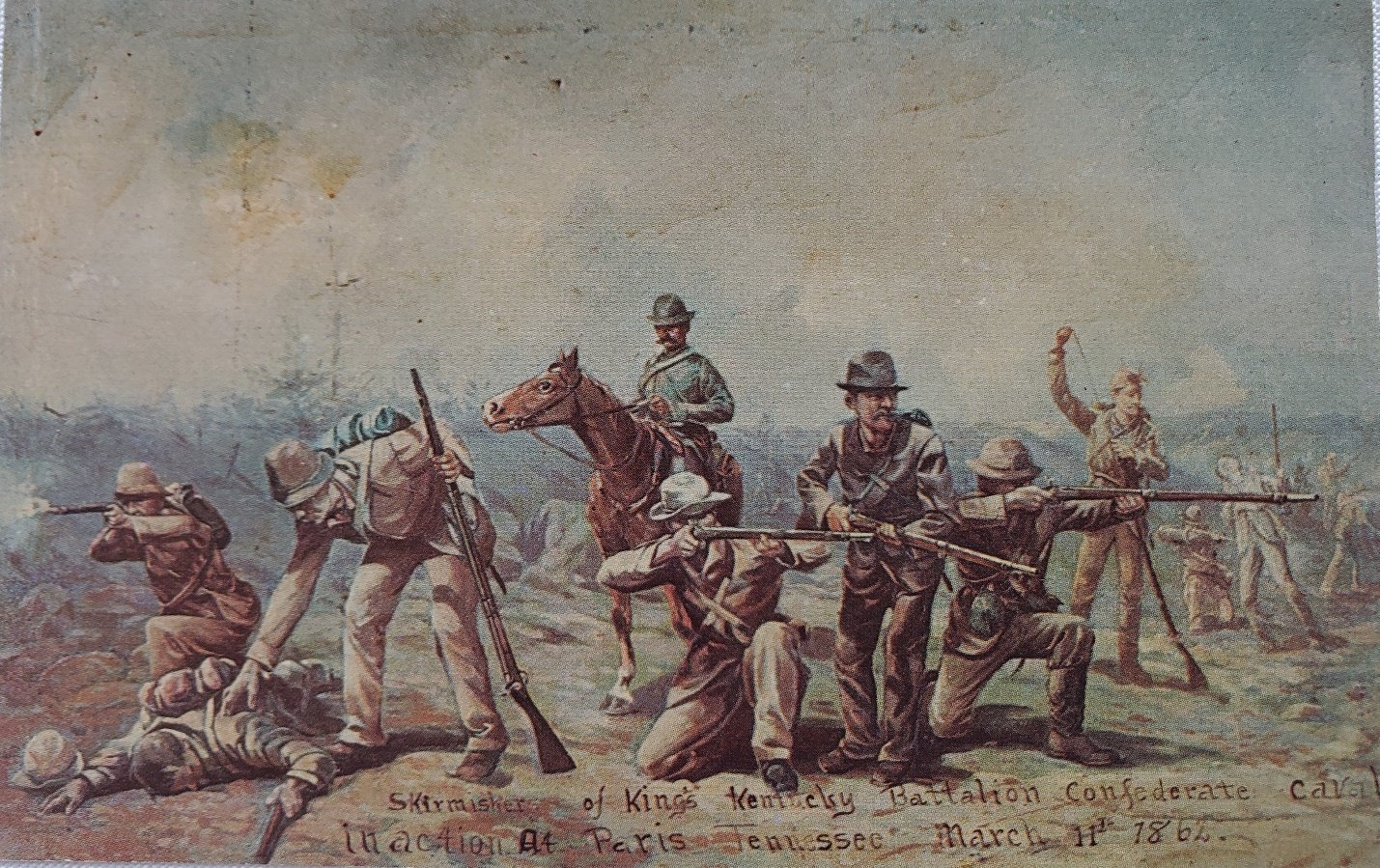
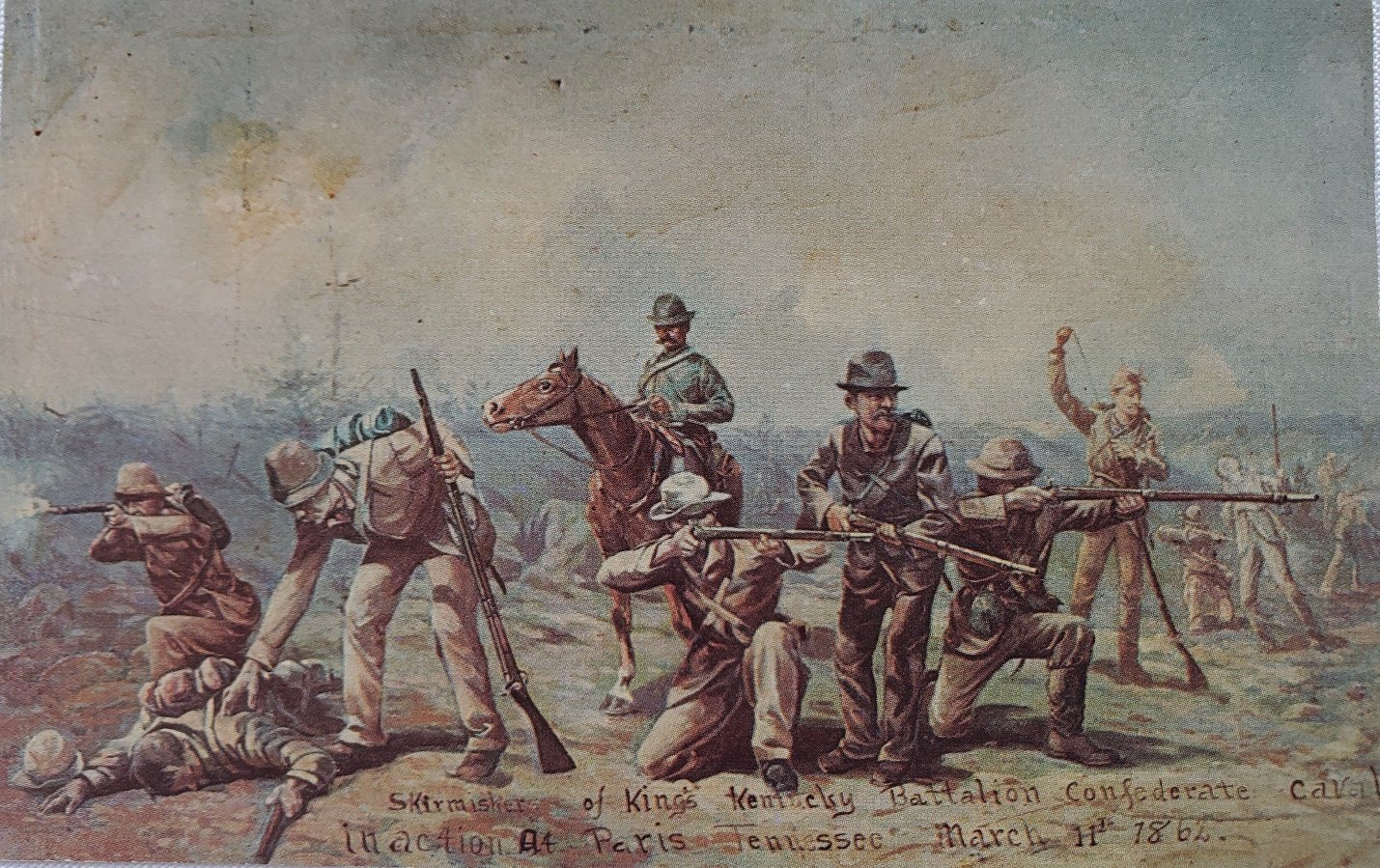
The Battle of Paris Tennessee


A depiction featuring The Battle of Paris TN. Which occurred early on during the American Civil War on March 11th, 1862, accession # 2022-033-28


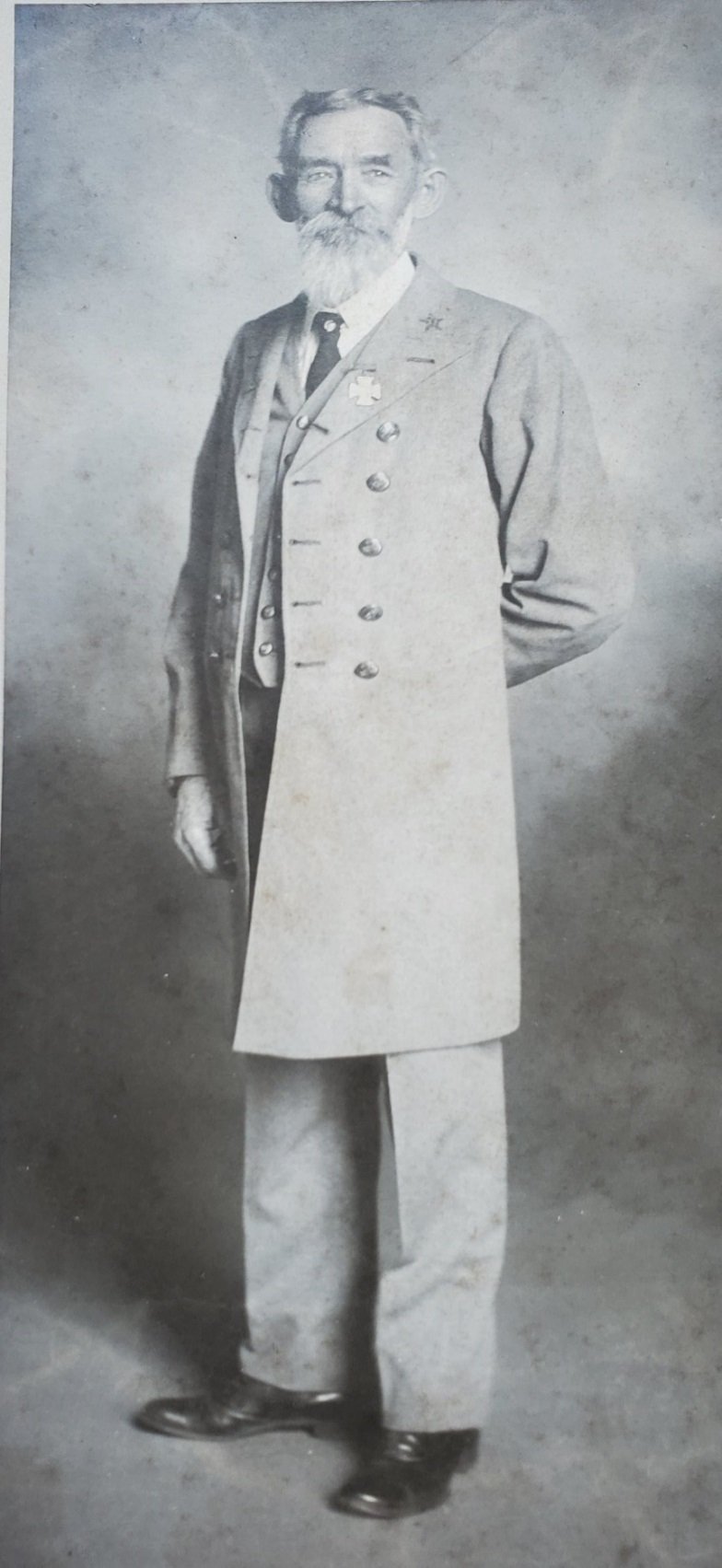
Doctor Caldwell is a native of Henry County and served as a medical doctor during the American Civil War. Many of his artifacts are currently on display at the Heritage Center here in Henry County.


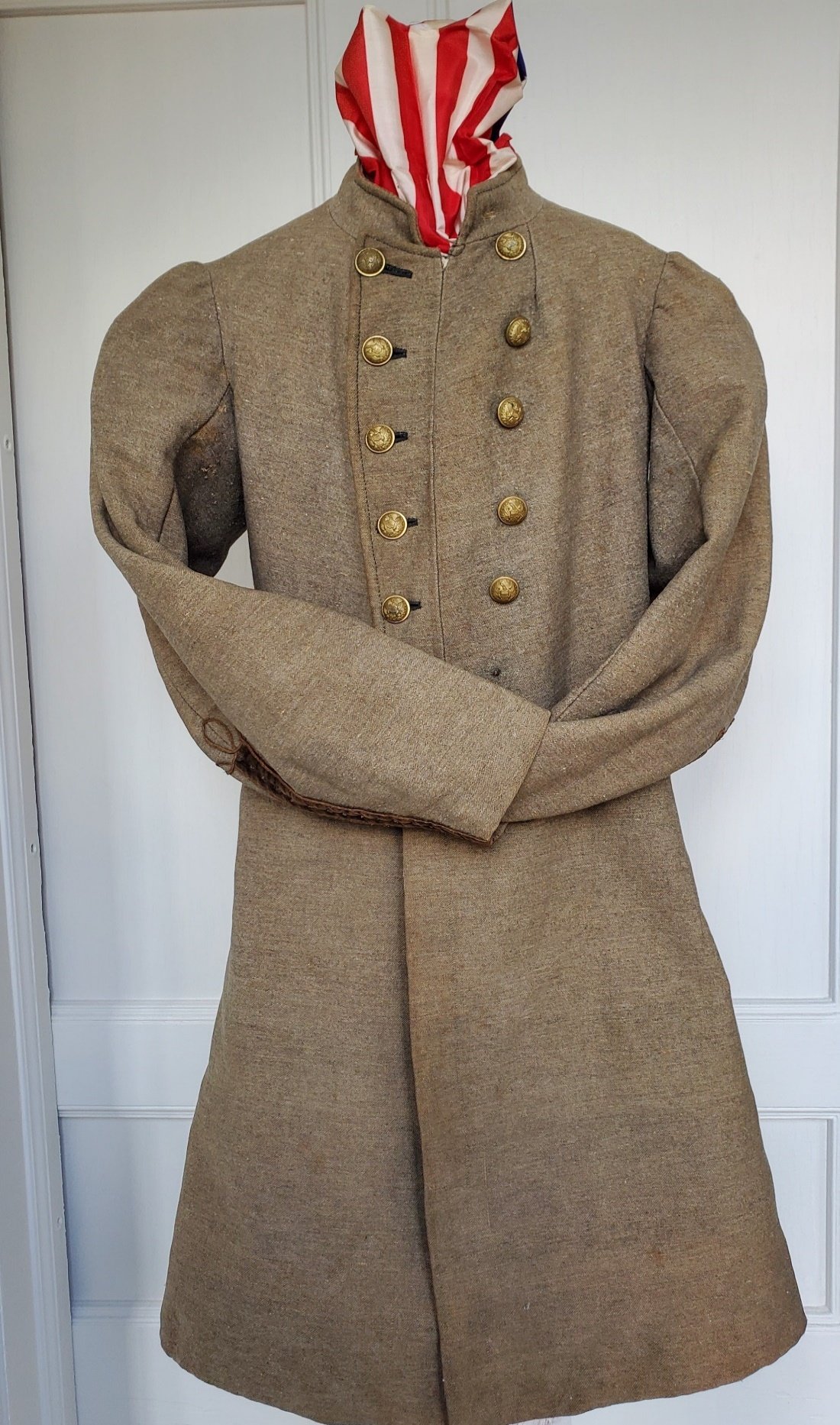
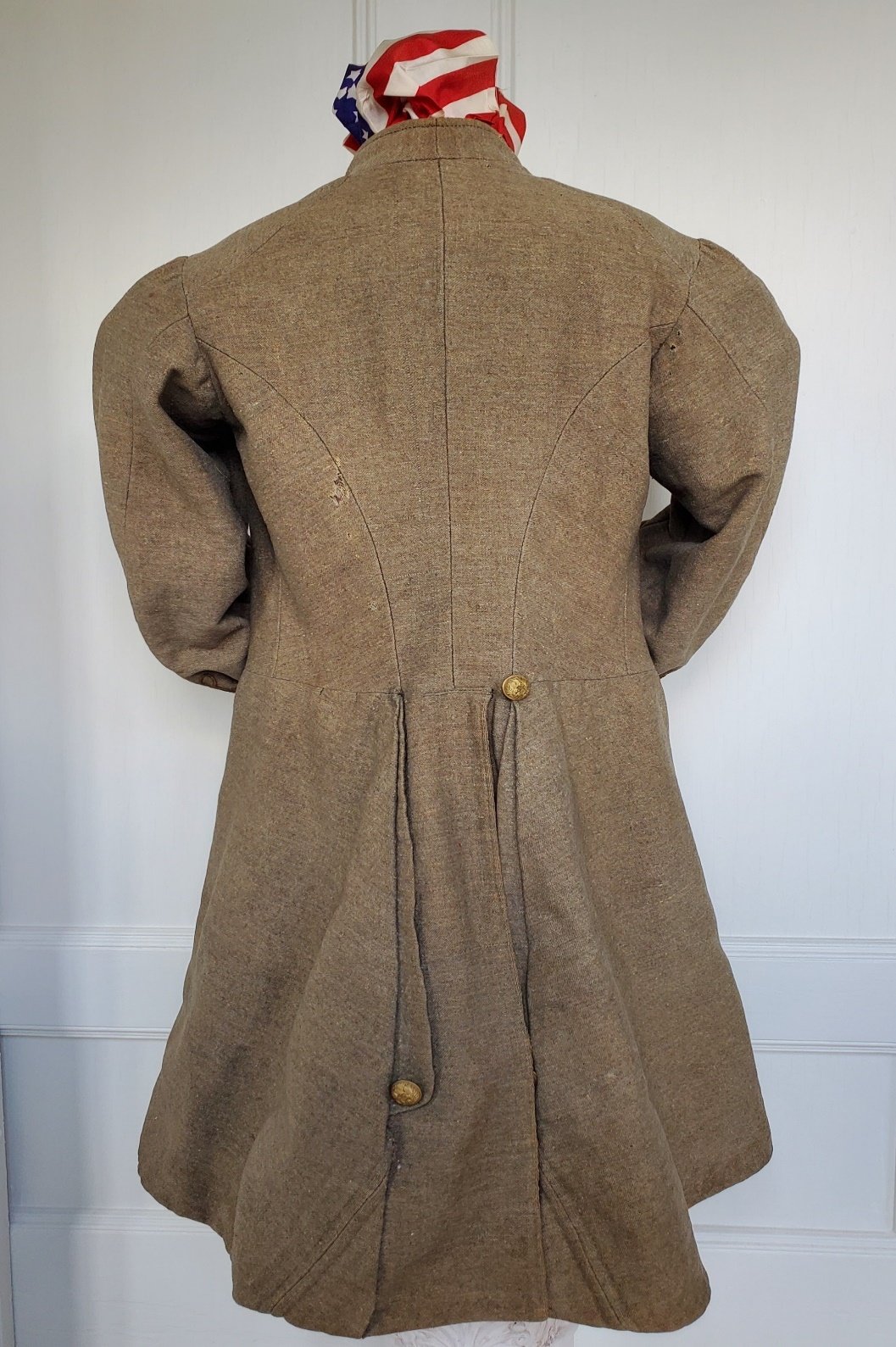
Dr. Caldwell is photographed wearing his Civil War frock coat. Made of heavy wool the garment has been well preserved and is on display at the Paris Henry County Heritage Center. The buttons are from the time period but are not original to Dr. Caldwell’s frock. accession # 2022-033-23,24


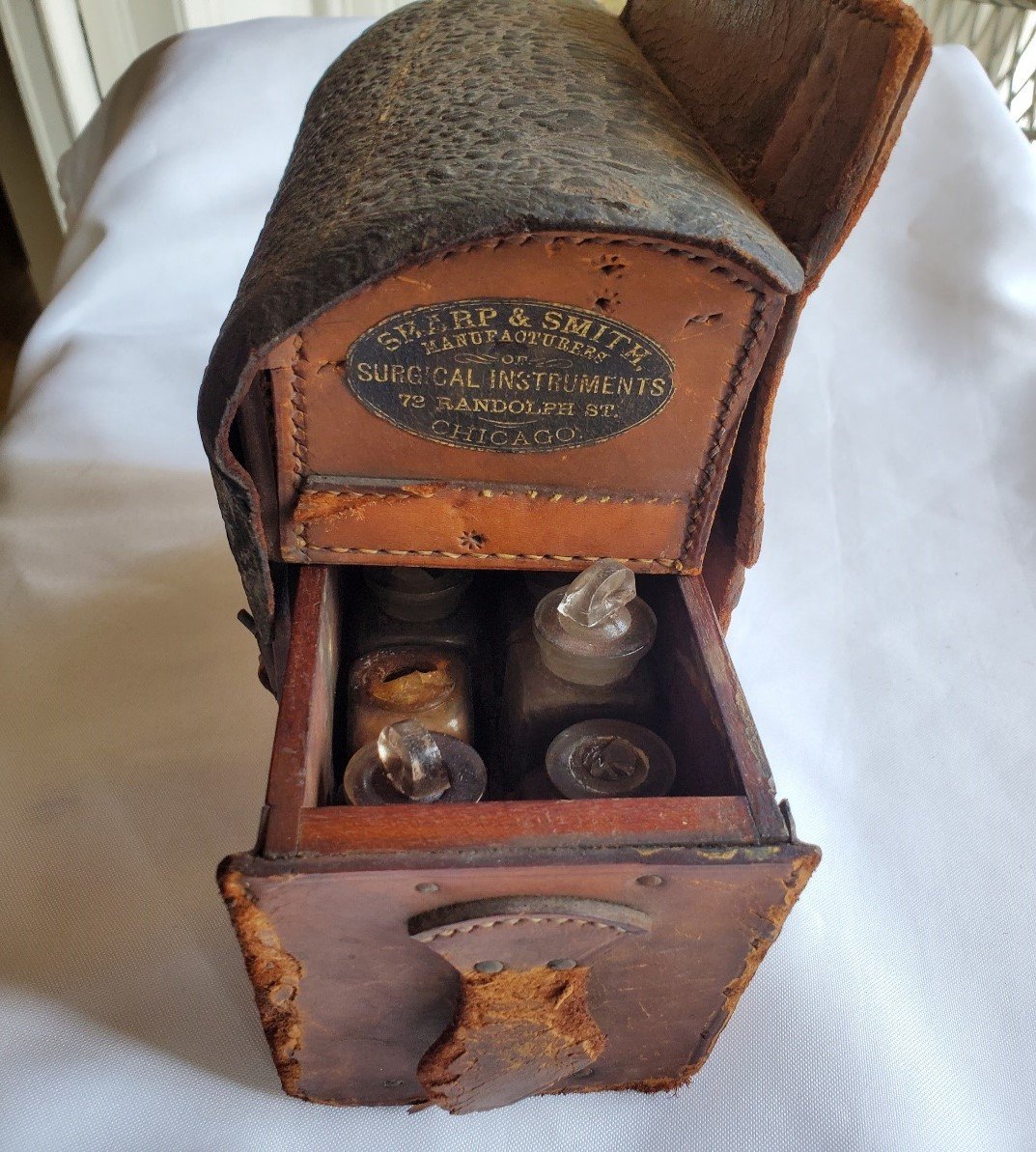
Civil War Surgical Instrument Carrier


This surgical instrument case belonged to Dr. Caldwell and was used by him during the Civil War. accession # 2022-033-26


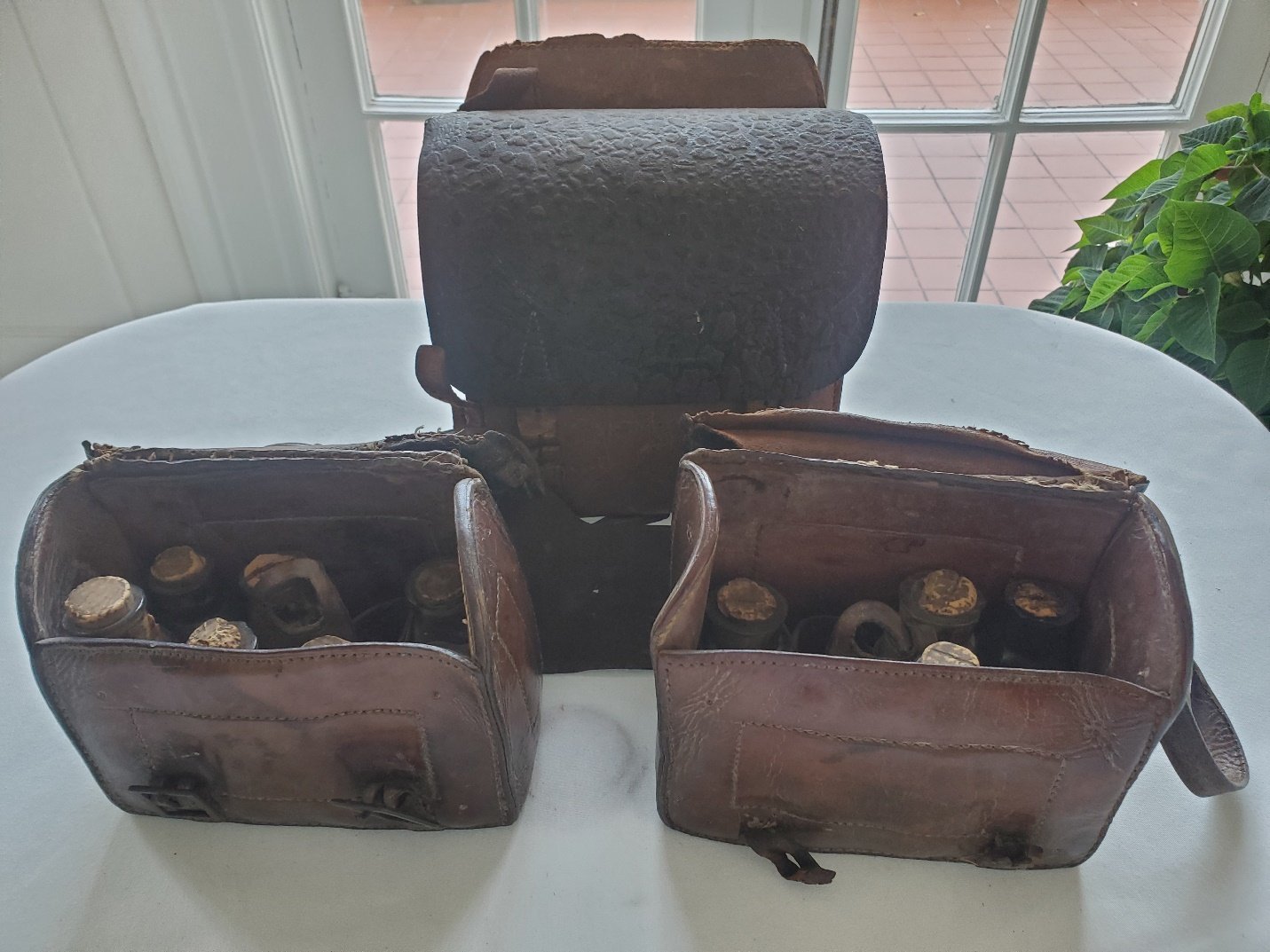
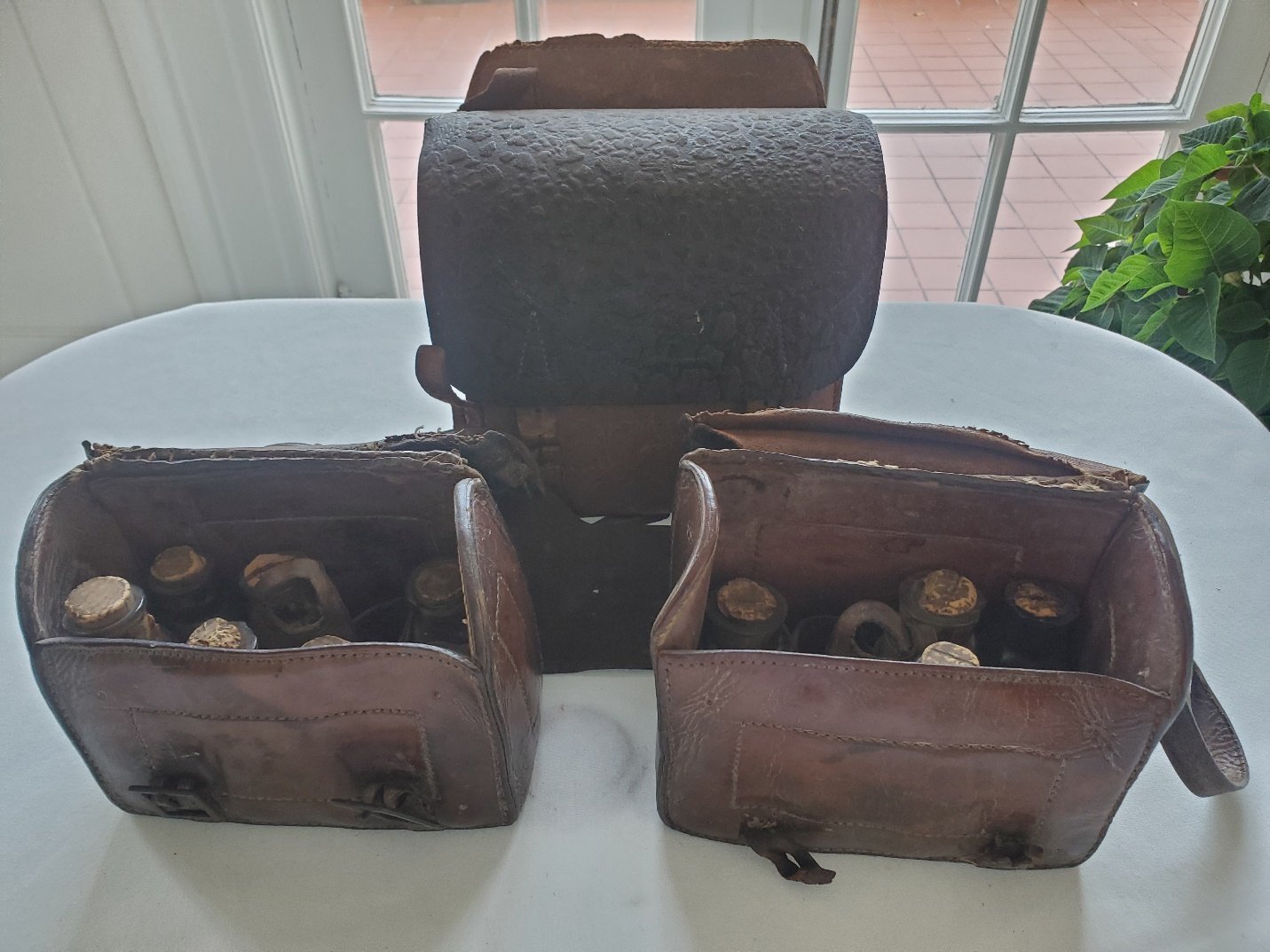
Civil War Horse Saddle Medicine Carrier


Doctor Caldwell used the horse saddle medicine carrier during the Civil War. accession # 2022-033-25,26


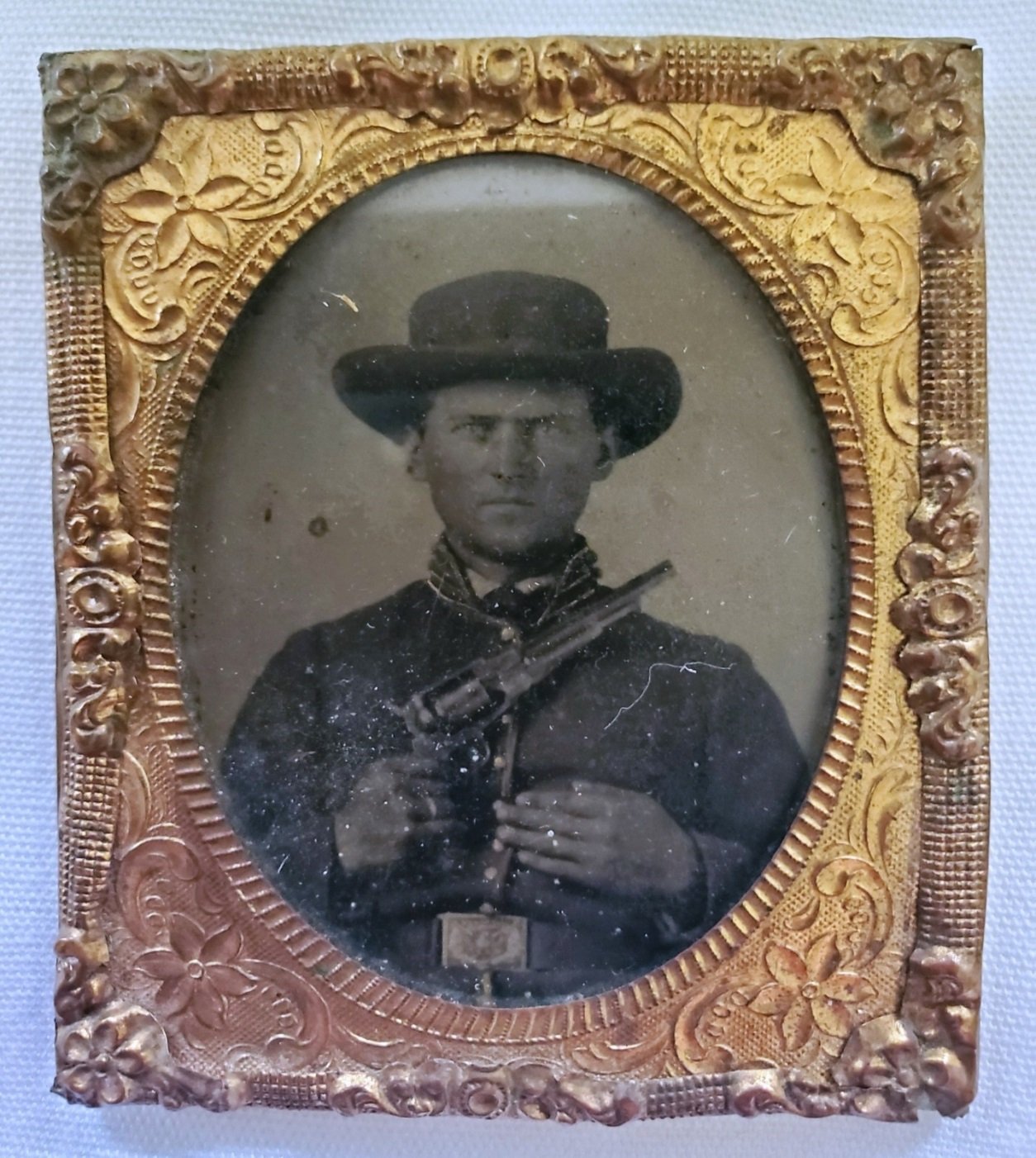
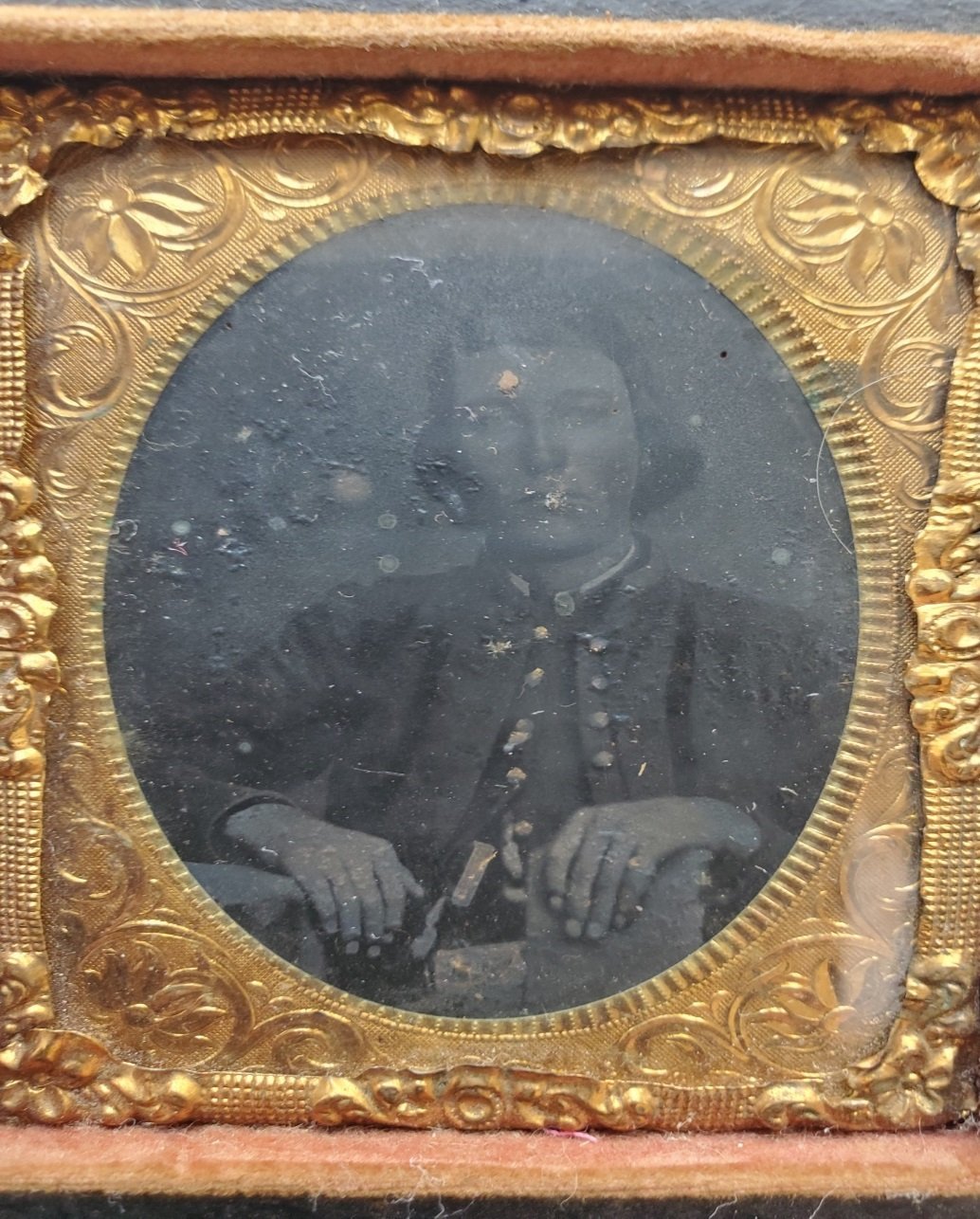
Henry County Confederate States Army Soldier


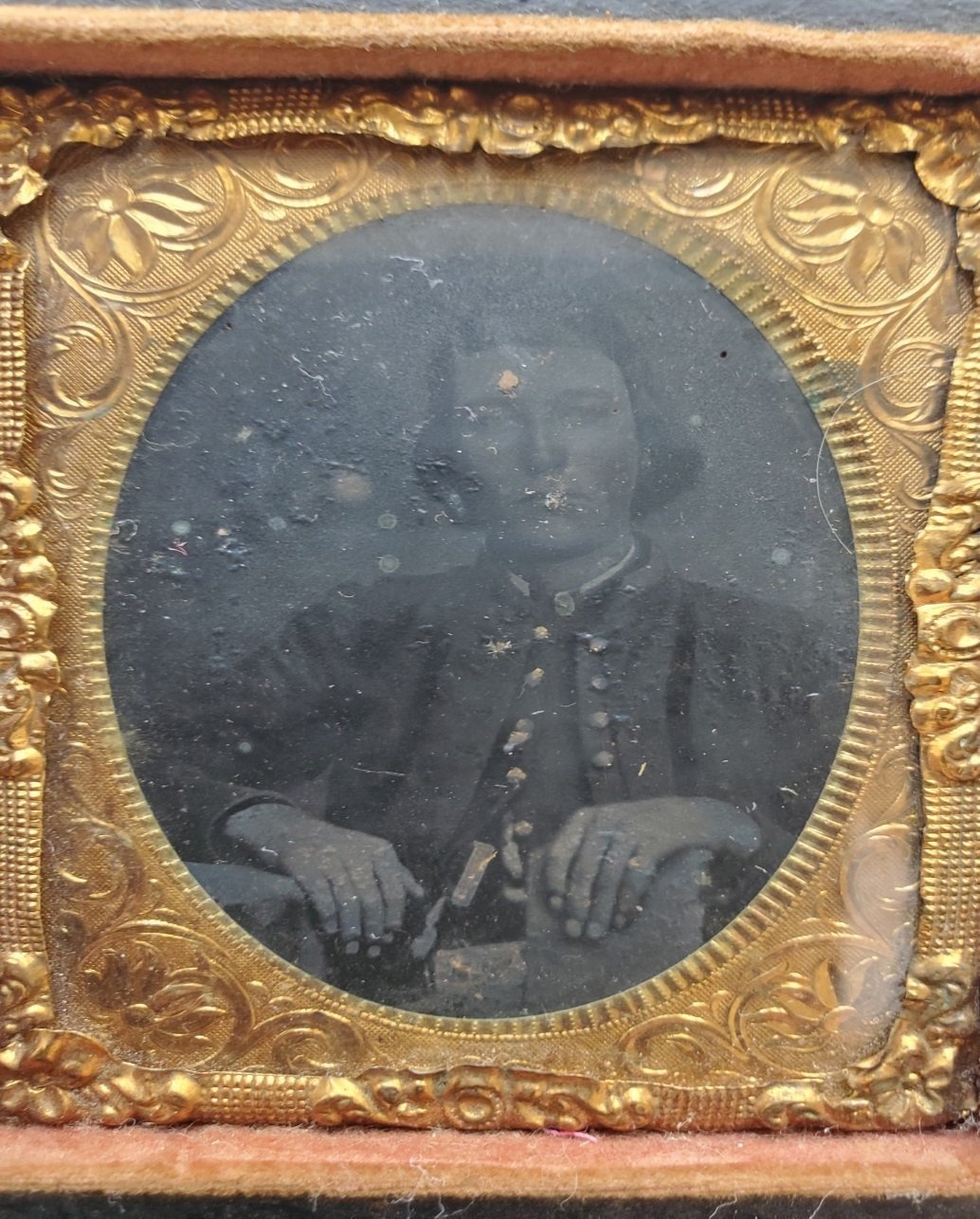
Photography was a relatively new technology during the American Civil War and was the first major conflict to be extensively photographed. This photo was done using the daguerreotype process of capturing an image, which was available and widely used in the 1840s – 1860s. The name of this young confederate officer from Henry County is unknown. accession no. 2022-033-012


Henry County Confederate States Army Soldier


This unknown Henry County CSA soldier is holding the popular colt revolver used by both sides during the American Civil War. accession # 2022-033-16


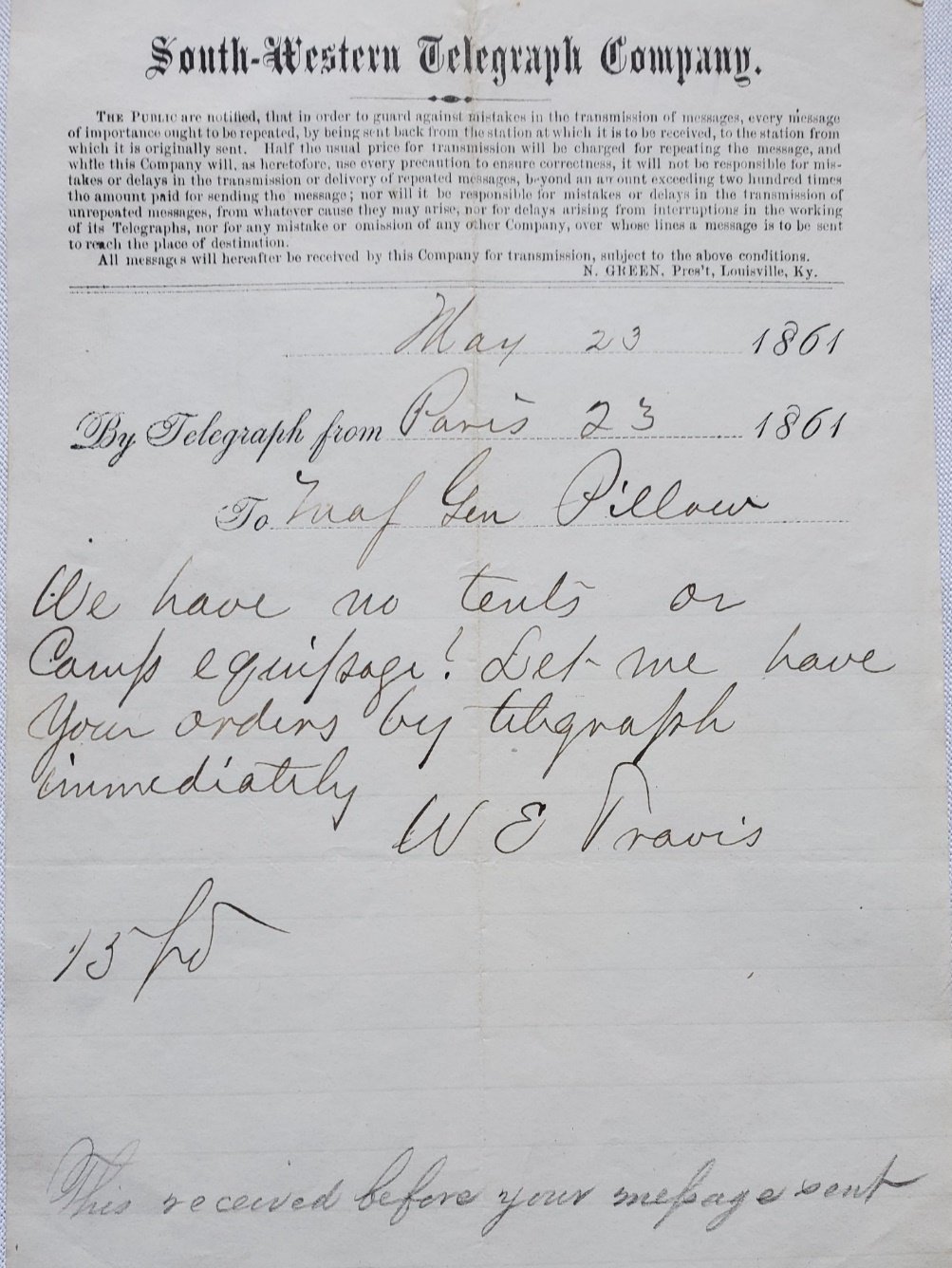
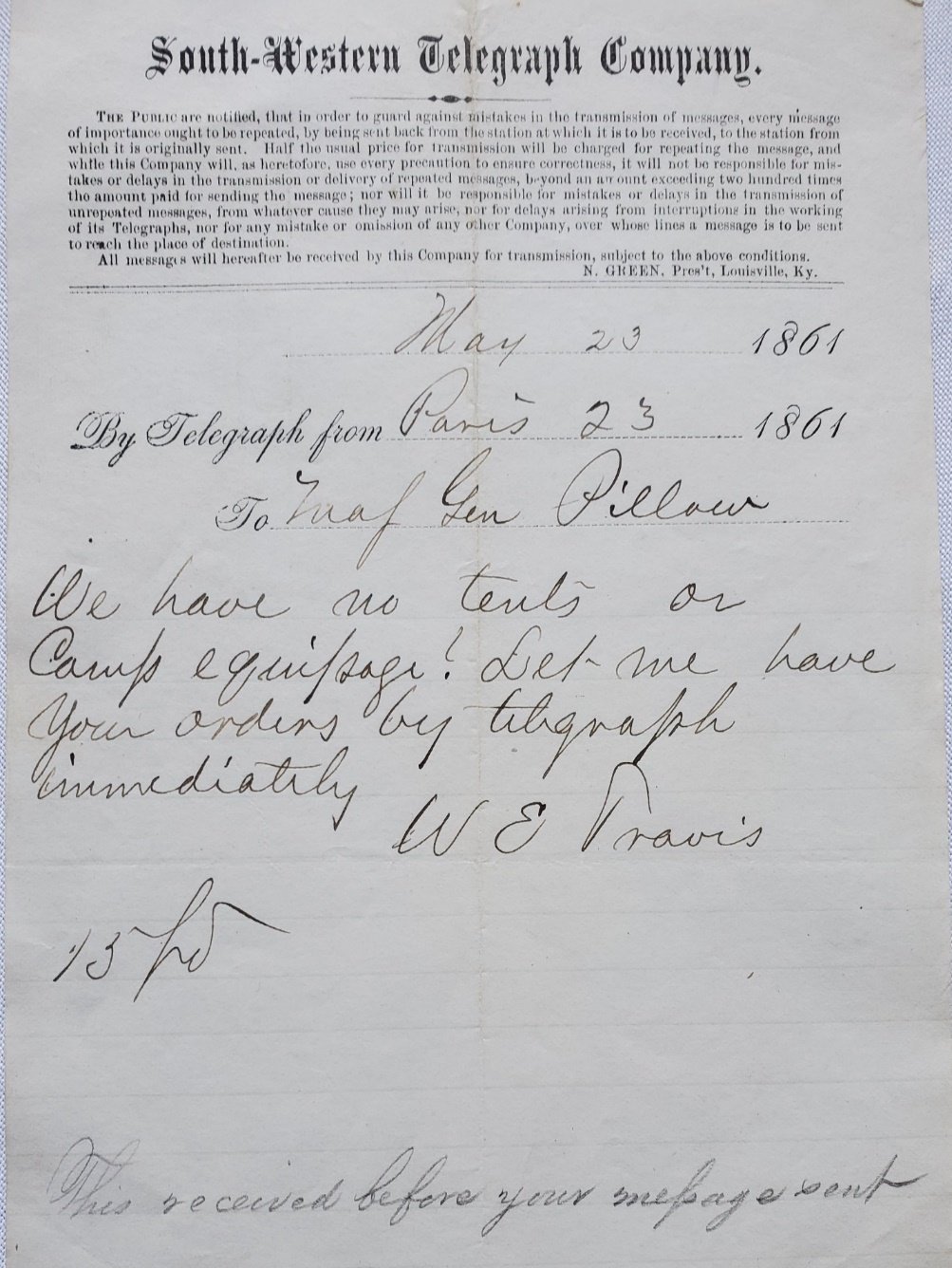
South-Western Telegraph Company

May 23, 1861


May 23, 1861

From Col. Travis to Major General Pillows

“We have no tents or camping equipment! Let me have your orders by telegraph immediately”


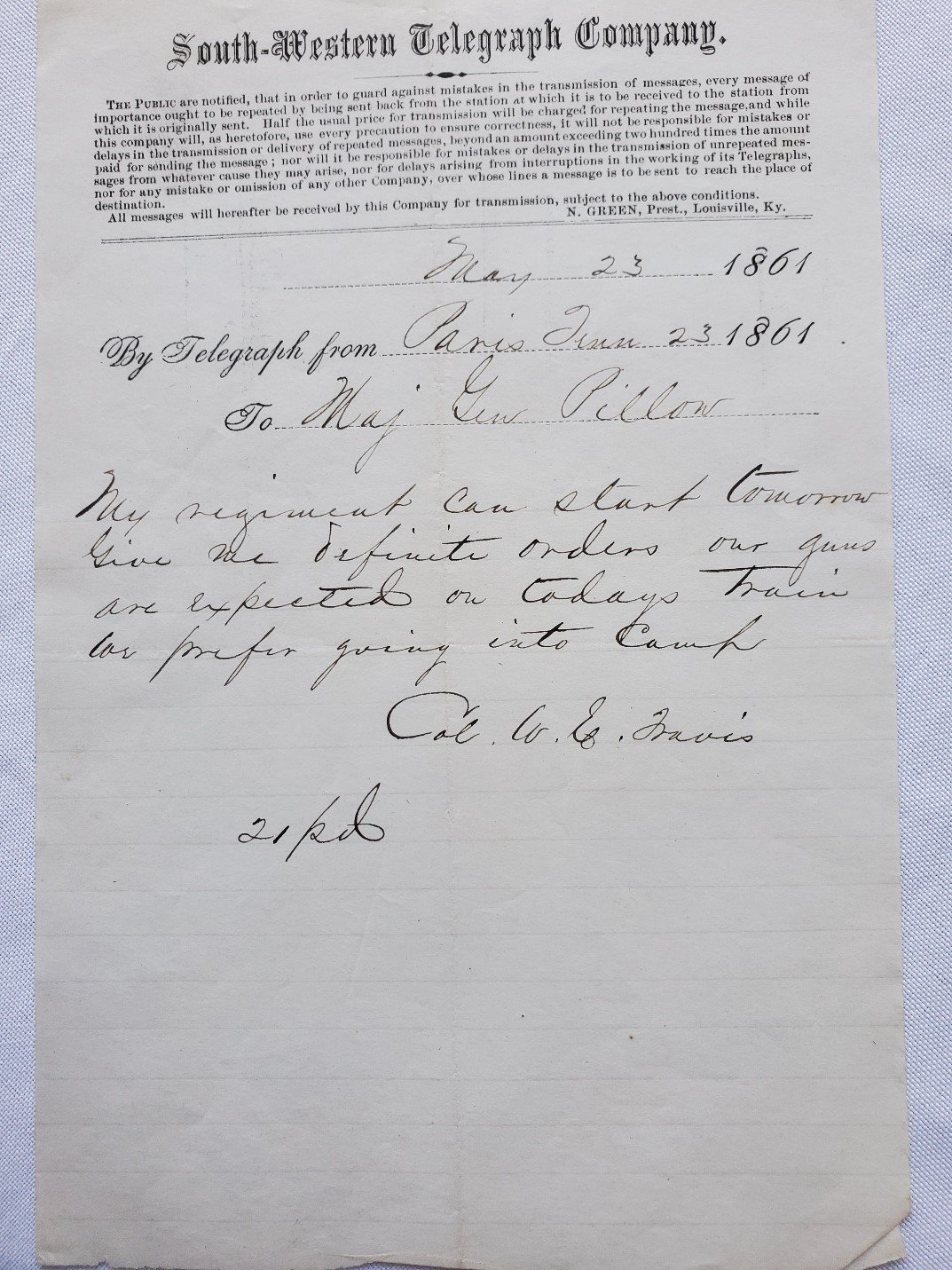
South-Western Telegraph Company
May 23, 1861


From Col. Travis to General Pillows

“My Regiment can start tomorrow, give me definite orders. Our guns are expected on today’s train”


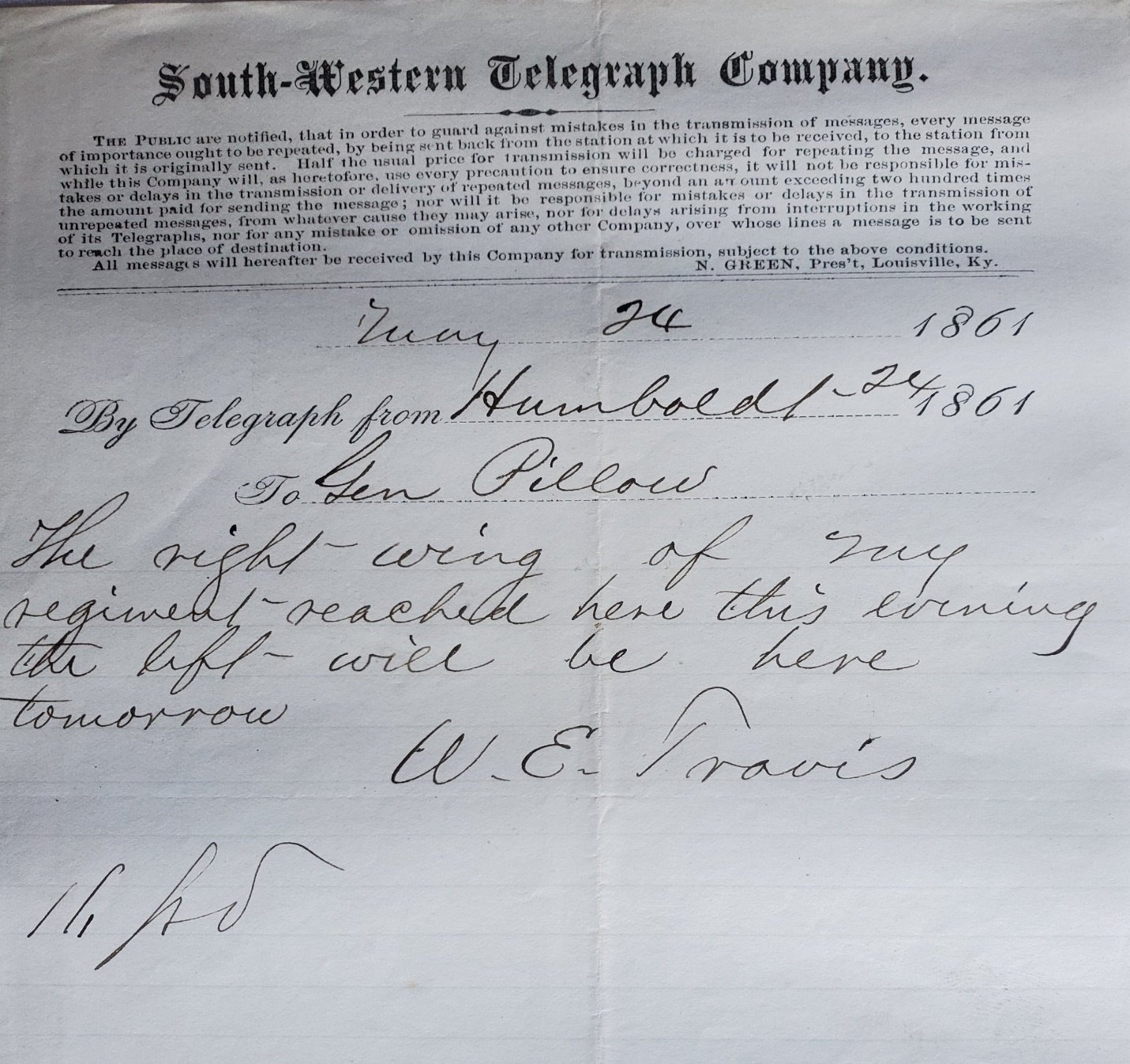
South-Western Telegraph Company
May 24, 1861


From Col. Travis to General Pillows

“The right-wing of my regiment reached here this evening, the left will be here tomorrow”


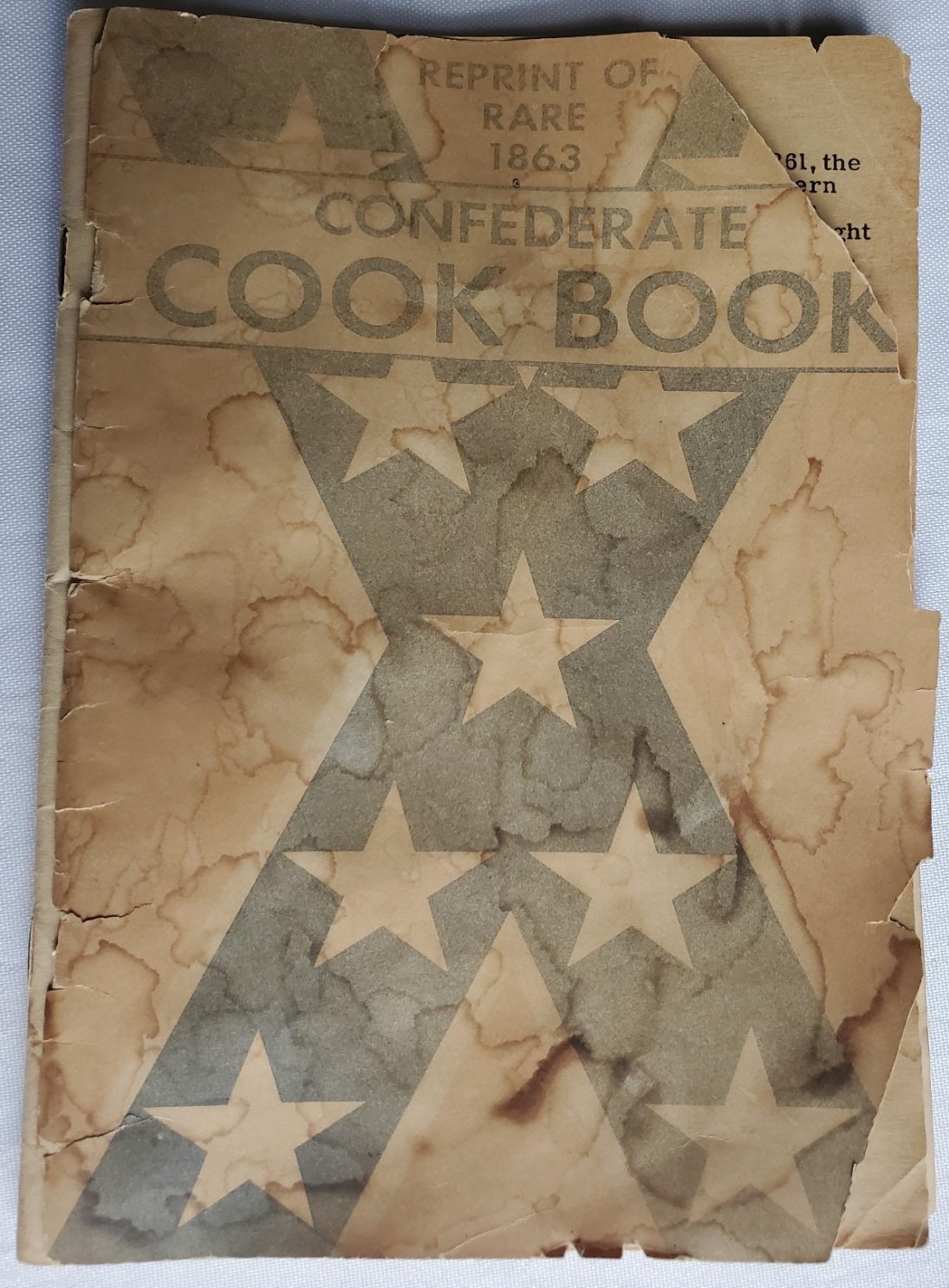
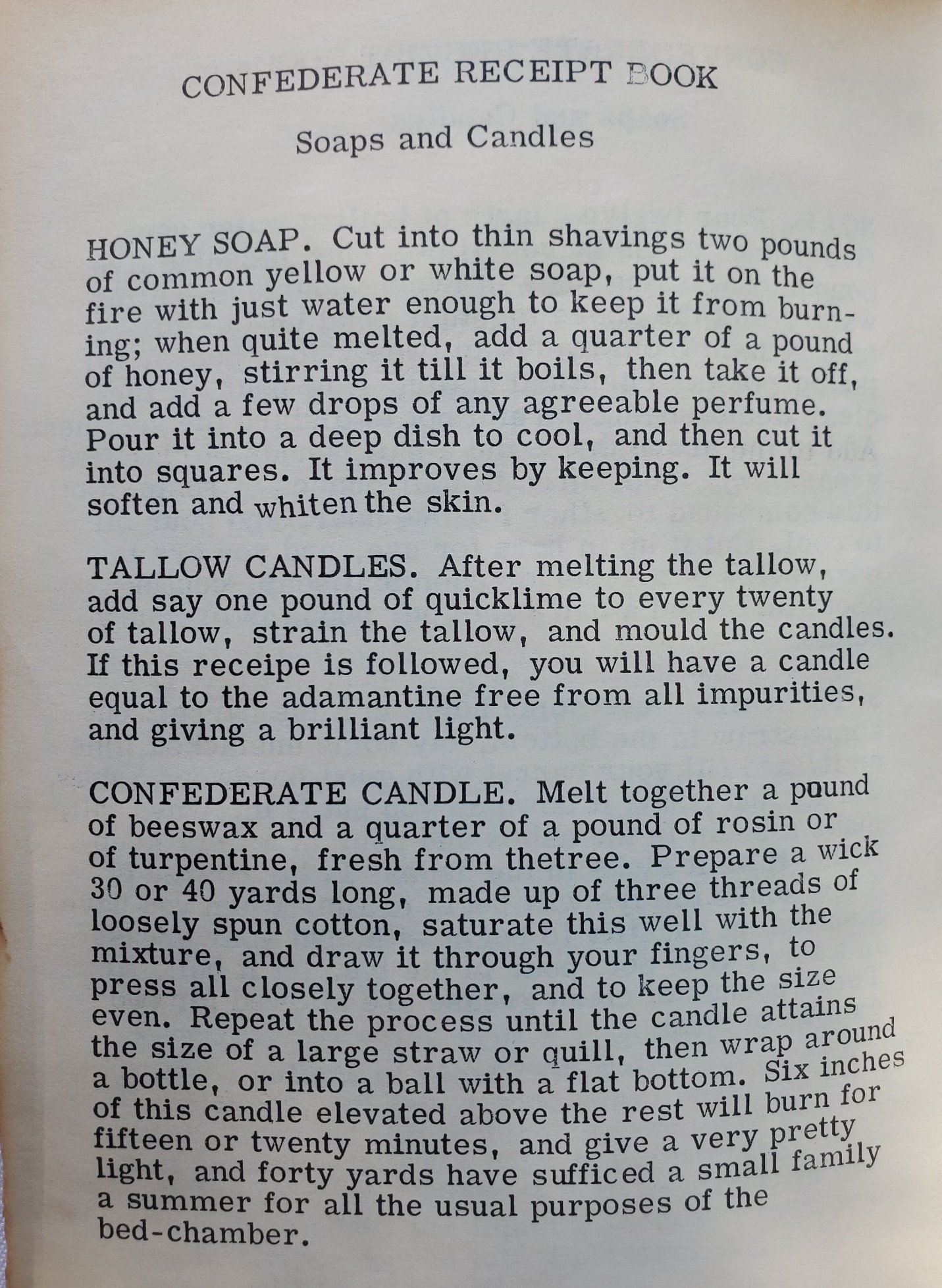
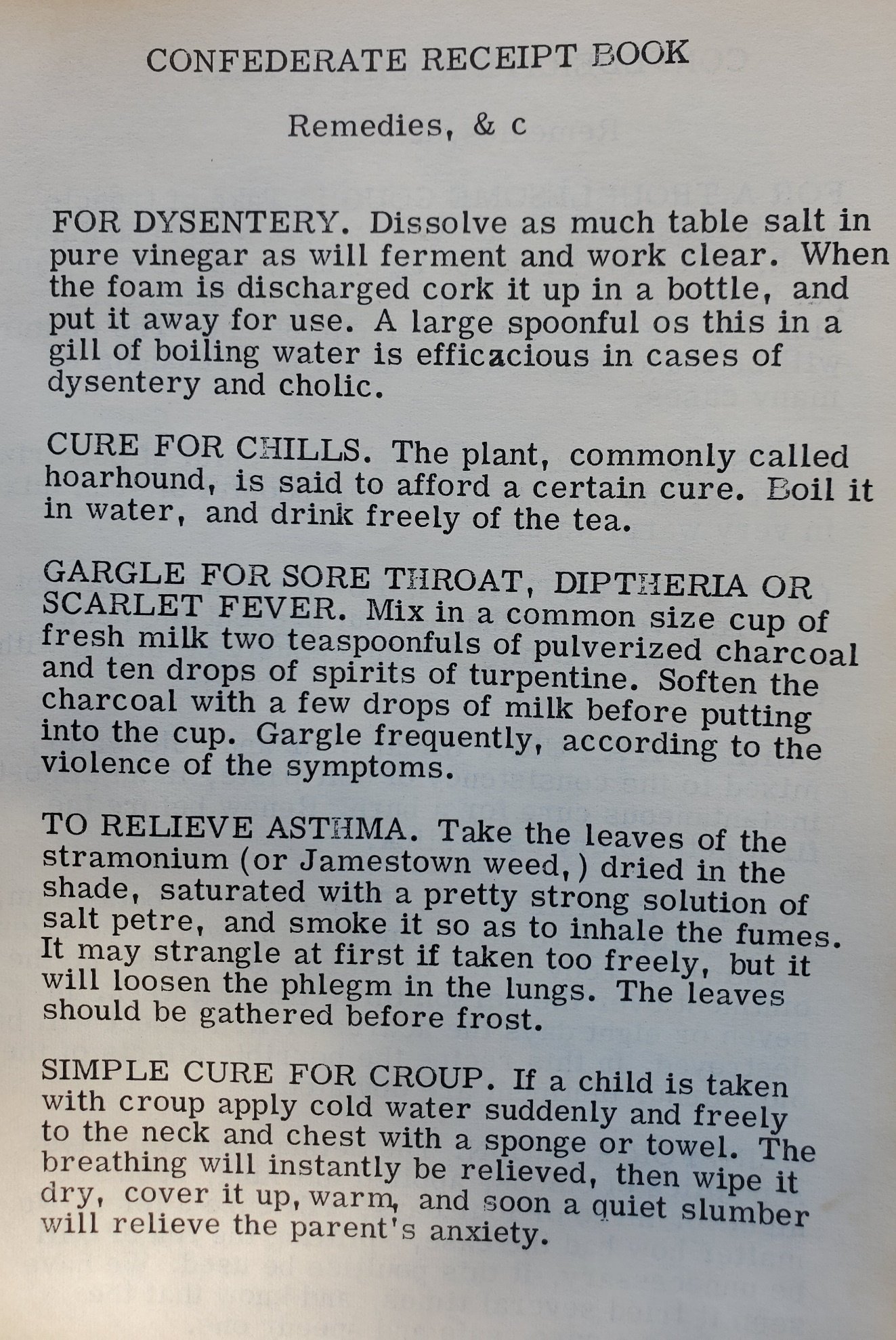
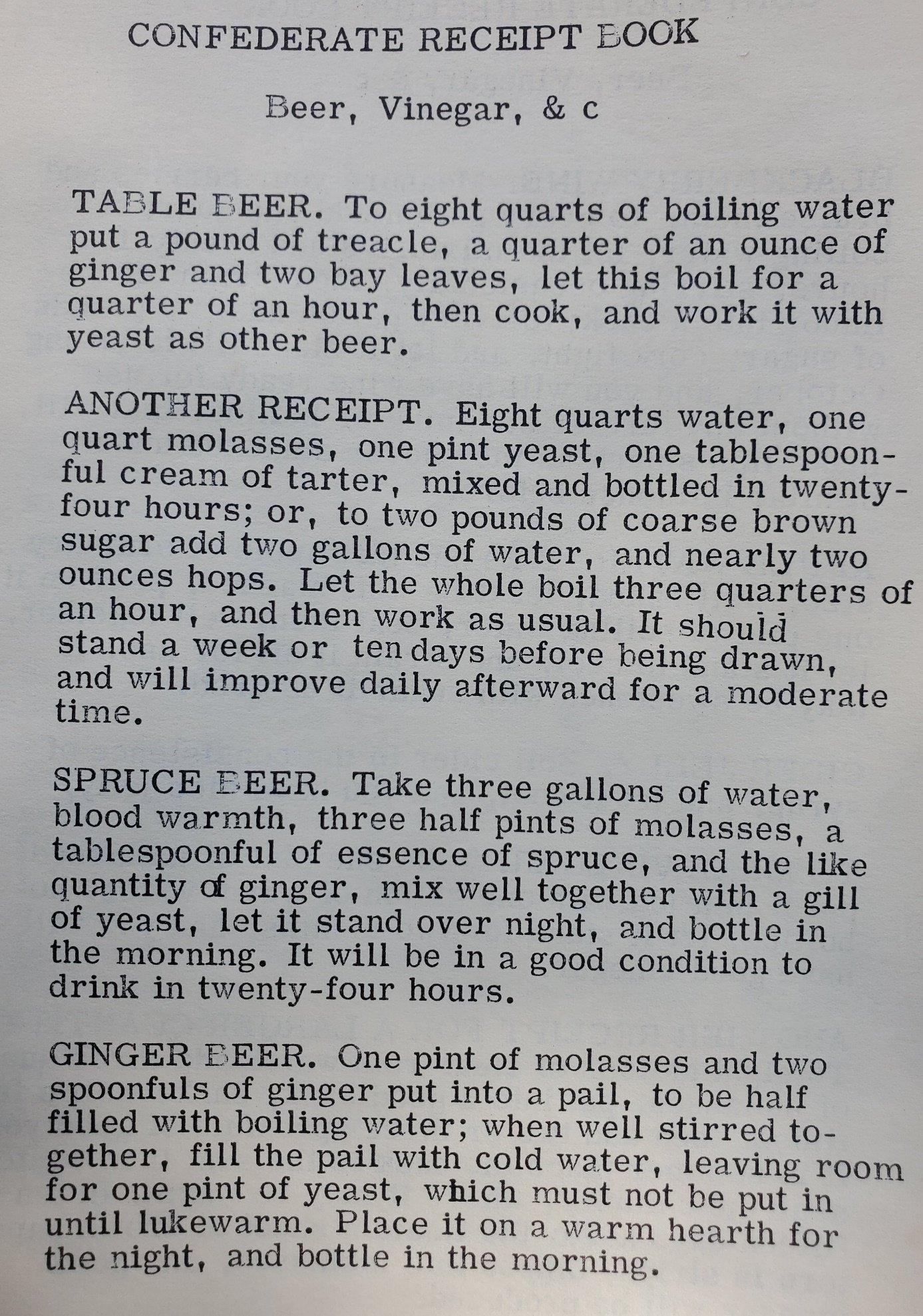
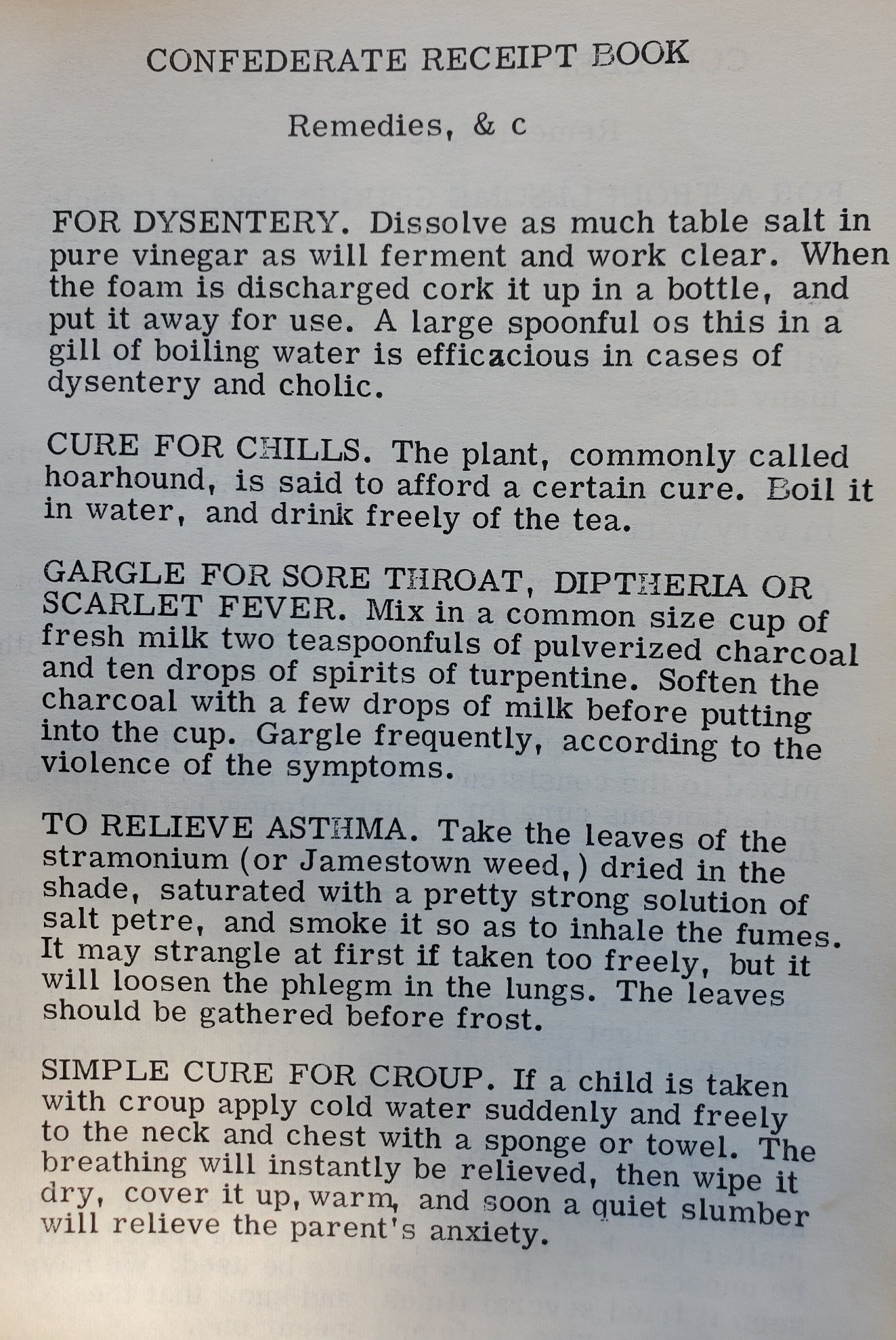
Rare Reprint of an 1861 Confederate Soldiers Field Cookbook


This unique document authored by Jefferson Davis Freeman and Published by Pioneer Press of Harriman Tennessee. Resources were scarce for the average soldier in the south and “The Confederate Cookbook” provides an insight as to how the CSA soldier survived their daily life during the war. Below are some examples of what’s inside the cover. Accession # 2022-033-31


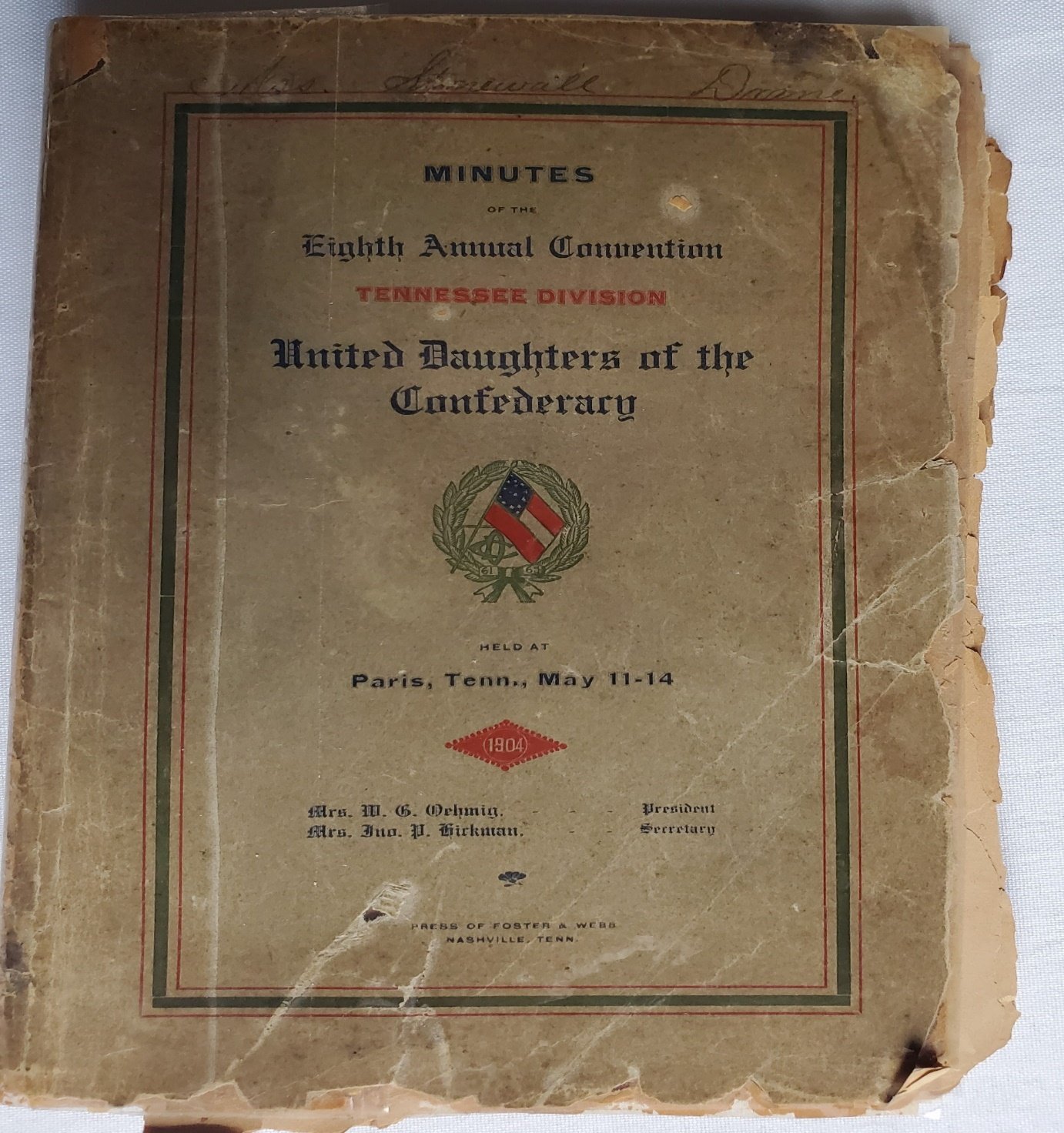
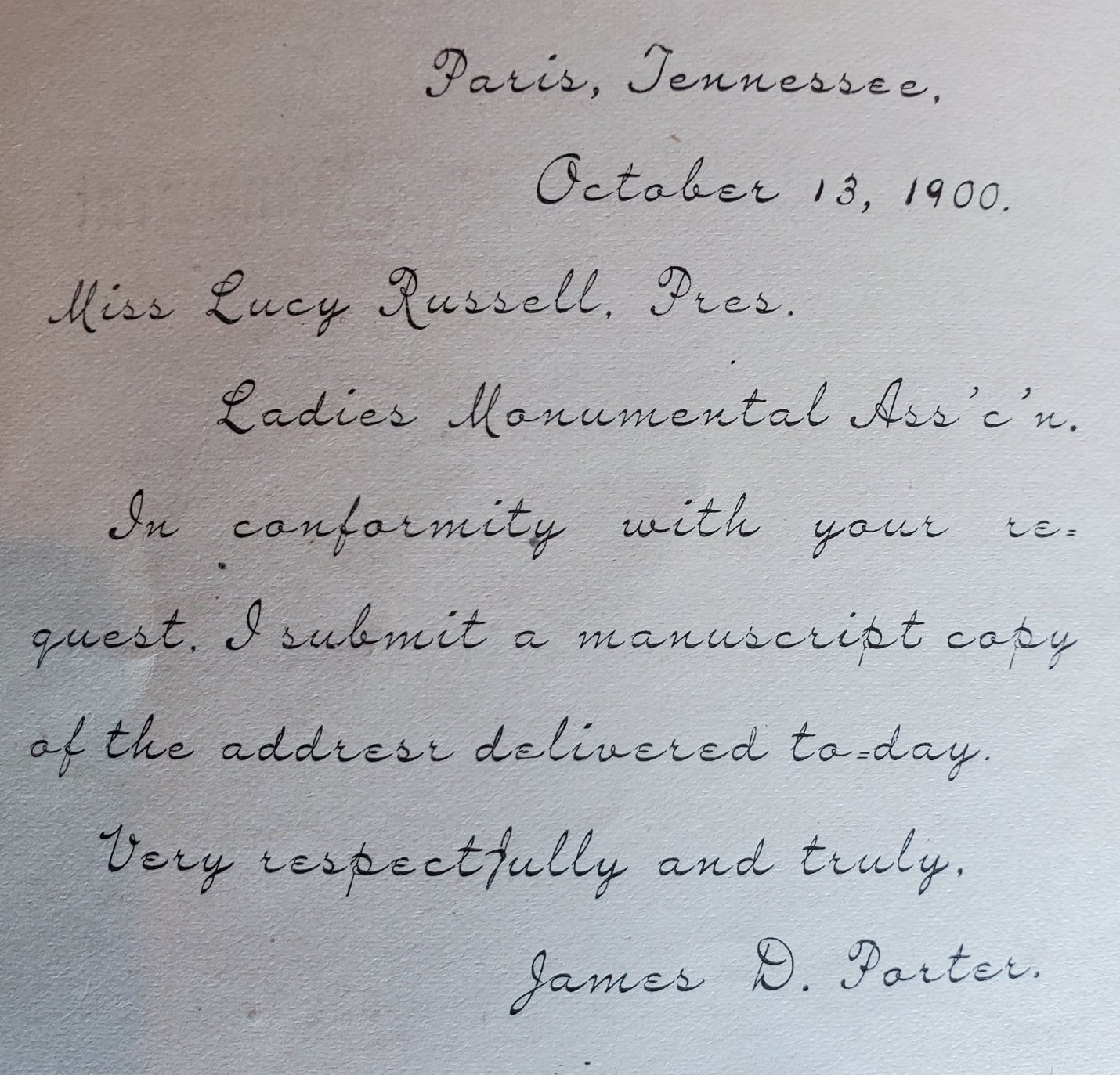
United Daughters of the Confederacy


Inside are the minutes of the 8th Annual United Daughters of the Confederacy Convention held in Paris Tennessee on May 11, 1904


Company F 154th Infantry Regiment CSA
“Paris Blues”


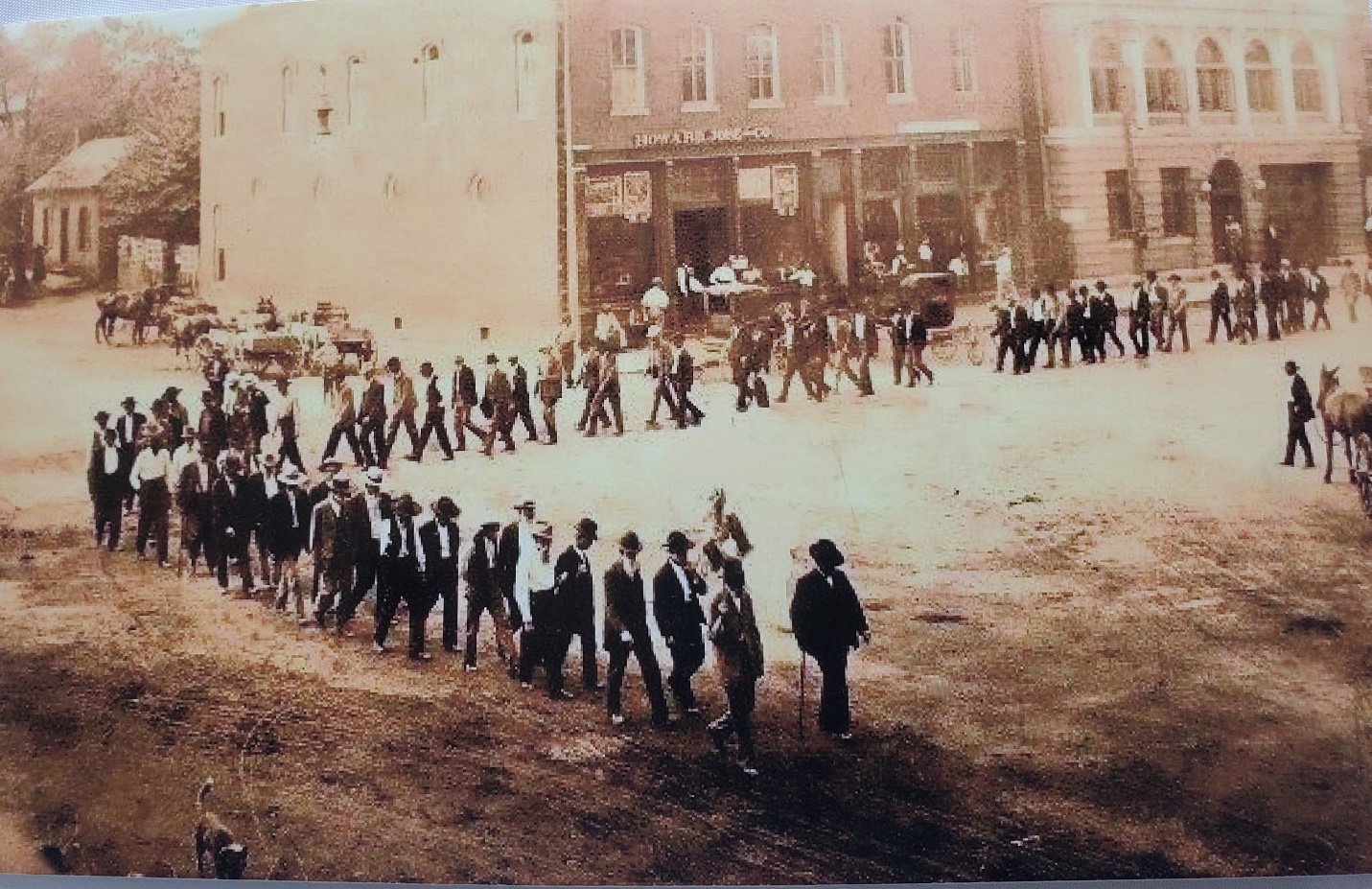
Courthouse Square Paris Tennessee July 9, 1909, Company F CSA Veterans march to the statue dedication. accession # 2022-033-27


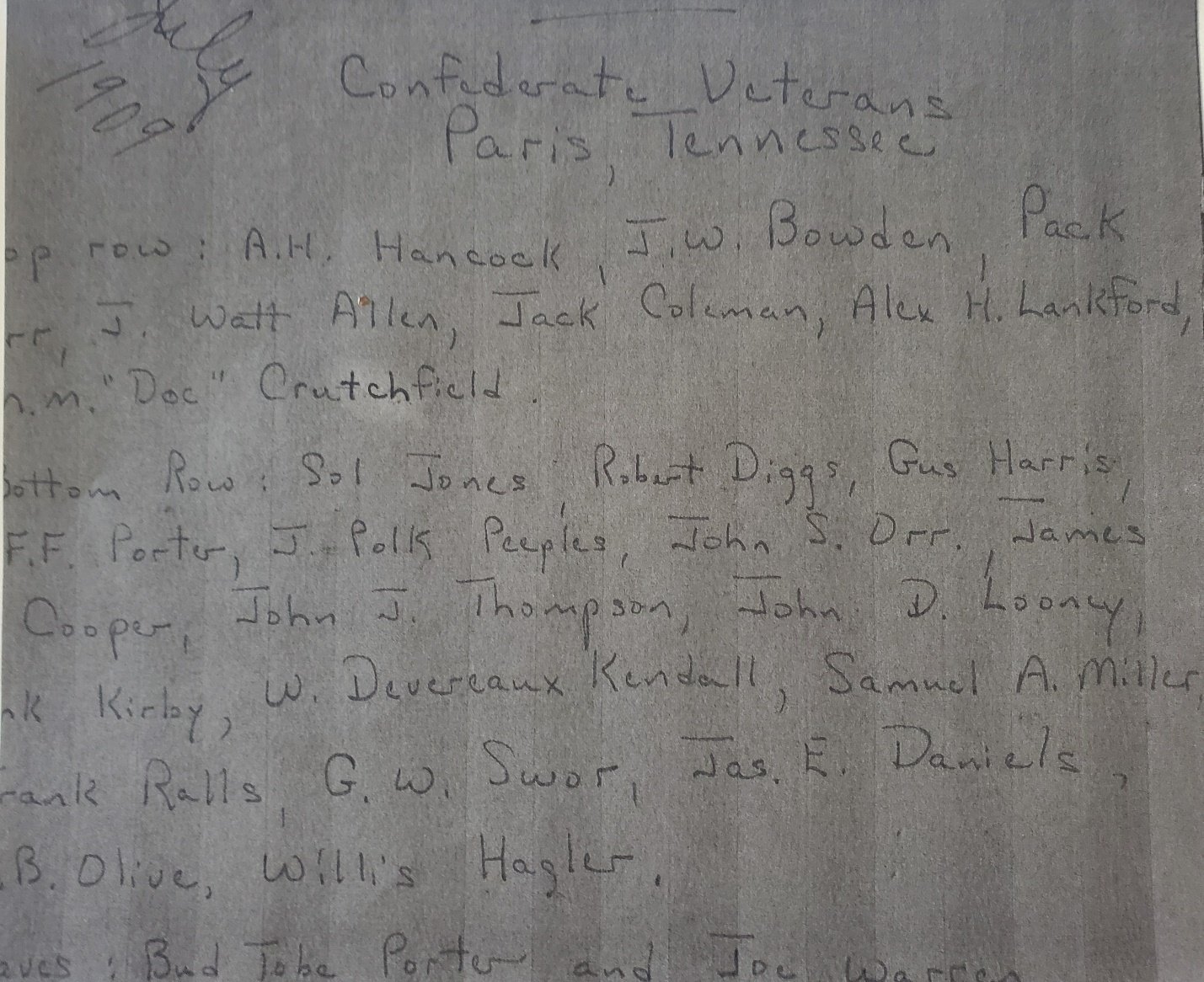
The Paris Blues was one of the best outfits from Tennessee during the Civil War.  Company F was formed in Paris about a year before the war’s outbreak.  Henry Countians fought gallantly in fifteen major battles throughout the war. The men in the photo gathered here in July 1909 for a reunion and memorial dedication on the Paris courthouse lawn.  Below are the handwritten names of the veterans on the back of the photo. This unique discovery was taken in July 1909, forty-four years after the hostilities of the Civil War ceased.


Back of photograph with veterans’ names.


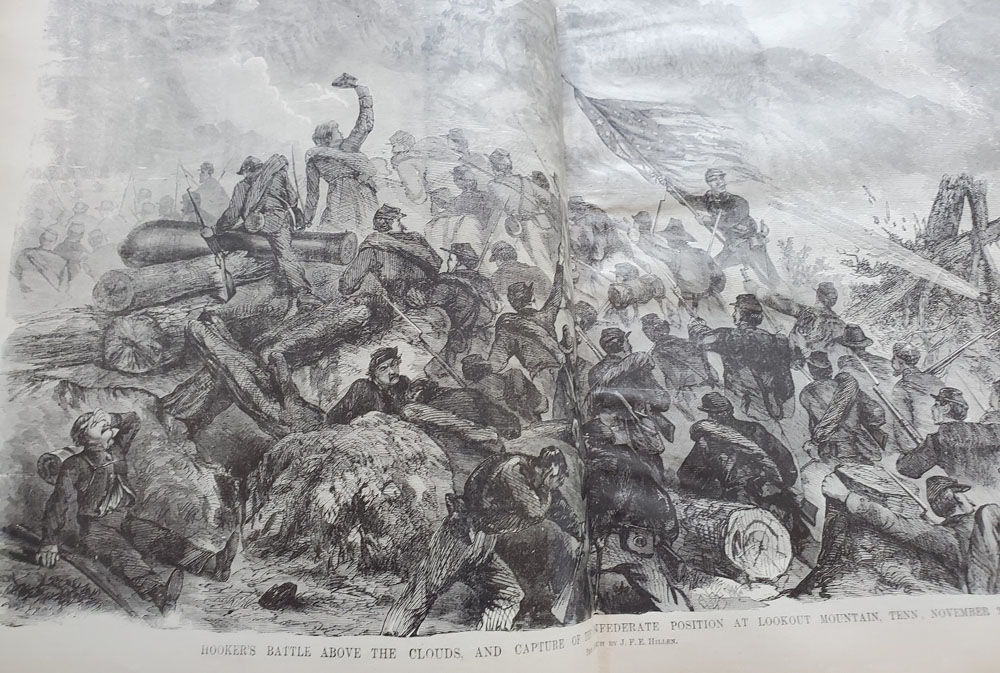
The Century War Book Vol. I & II


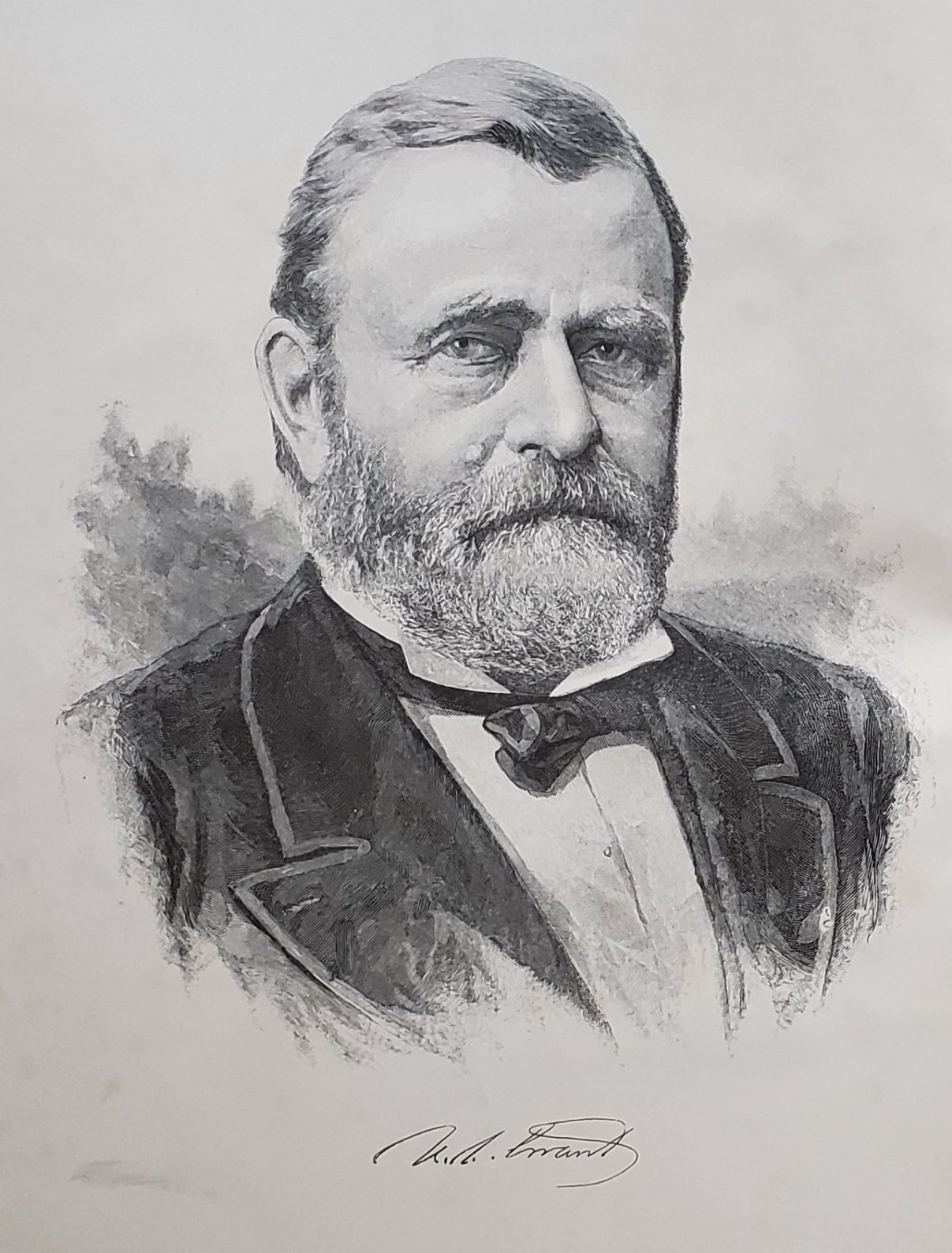
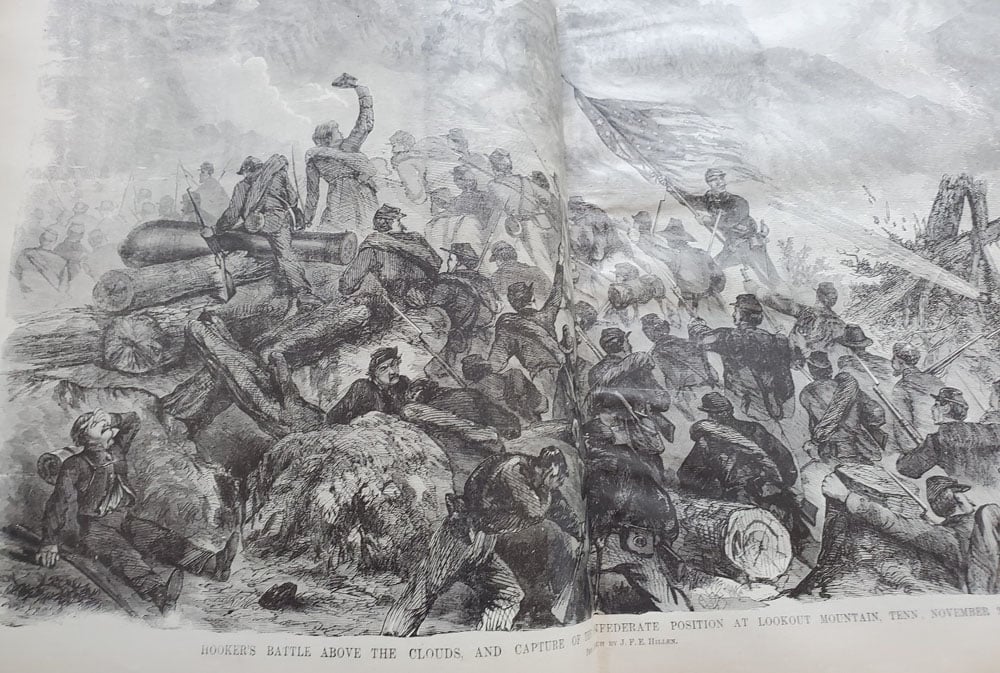
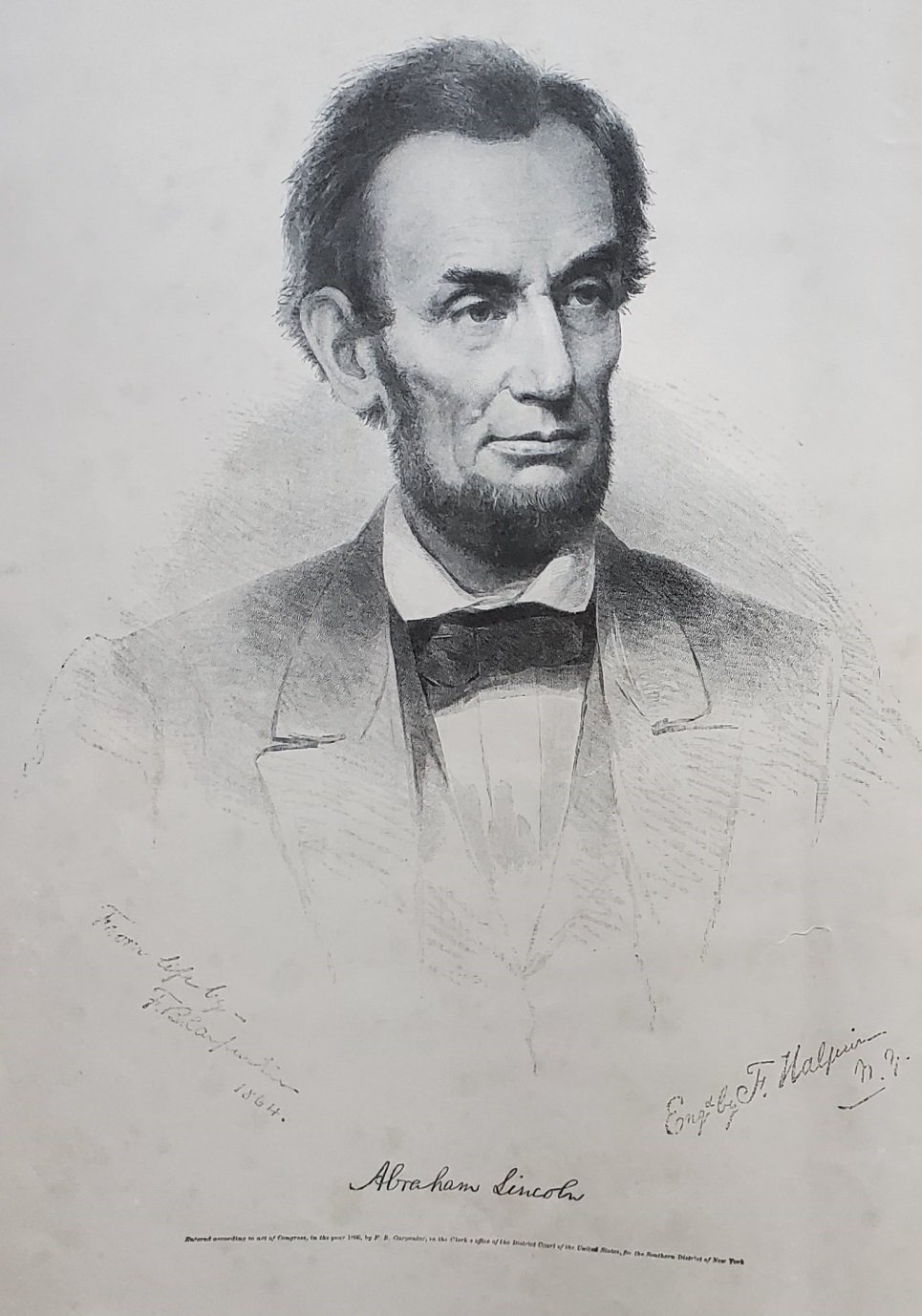
The Century War Book is full of time period sketches. Published in 1885 by J.H. Brown Publishing co., New York. Eight different artist contributed to these books and were edited by the Generals and commanders on both sides of the conflict. The above sketches are of President Lincoln, General Grant and the Battle of Lookout Mountain in East Tennessee. accession# 2022-033-10,11


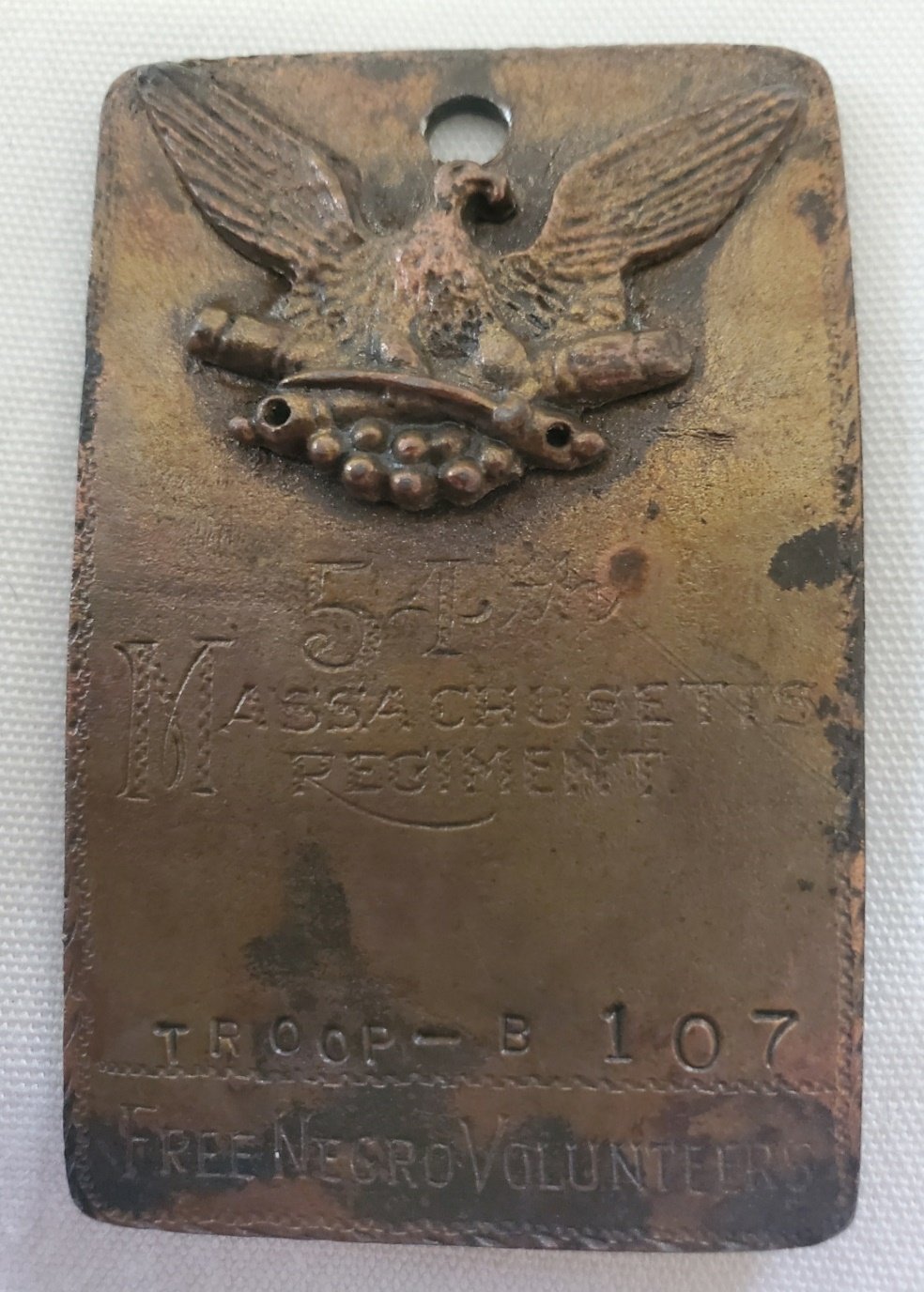
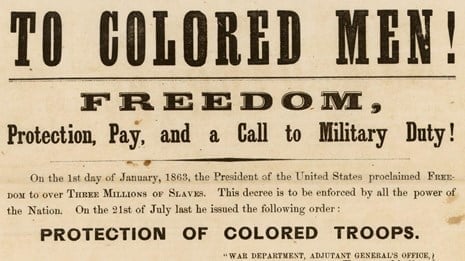
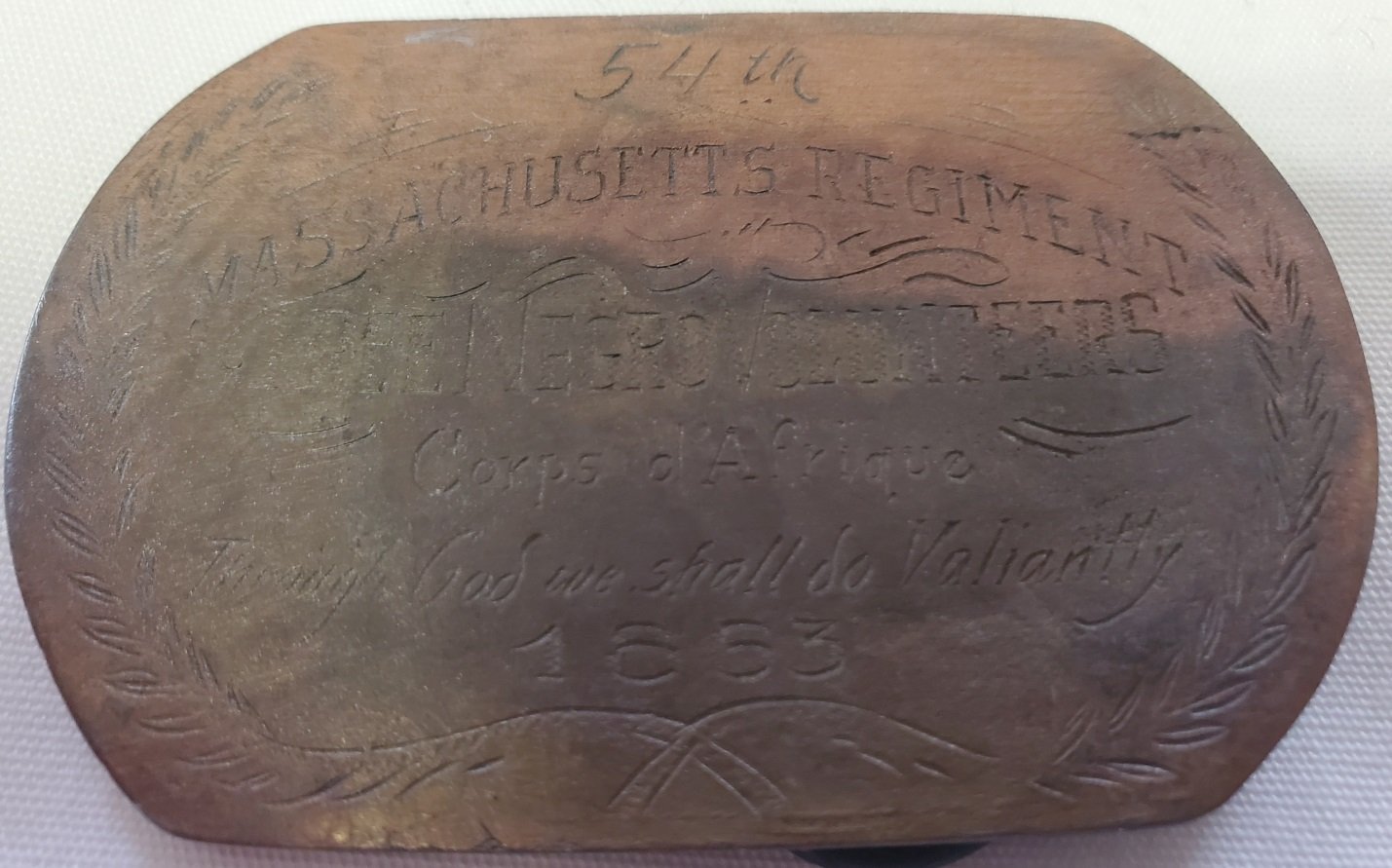
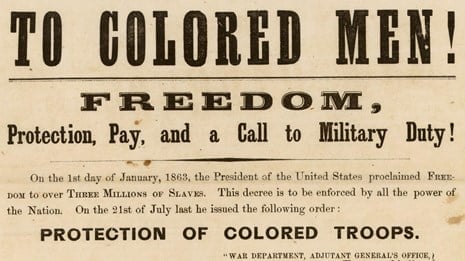
54th Massachusetts Free Negro Volunteers
Soldiers Identification Tag


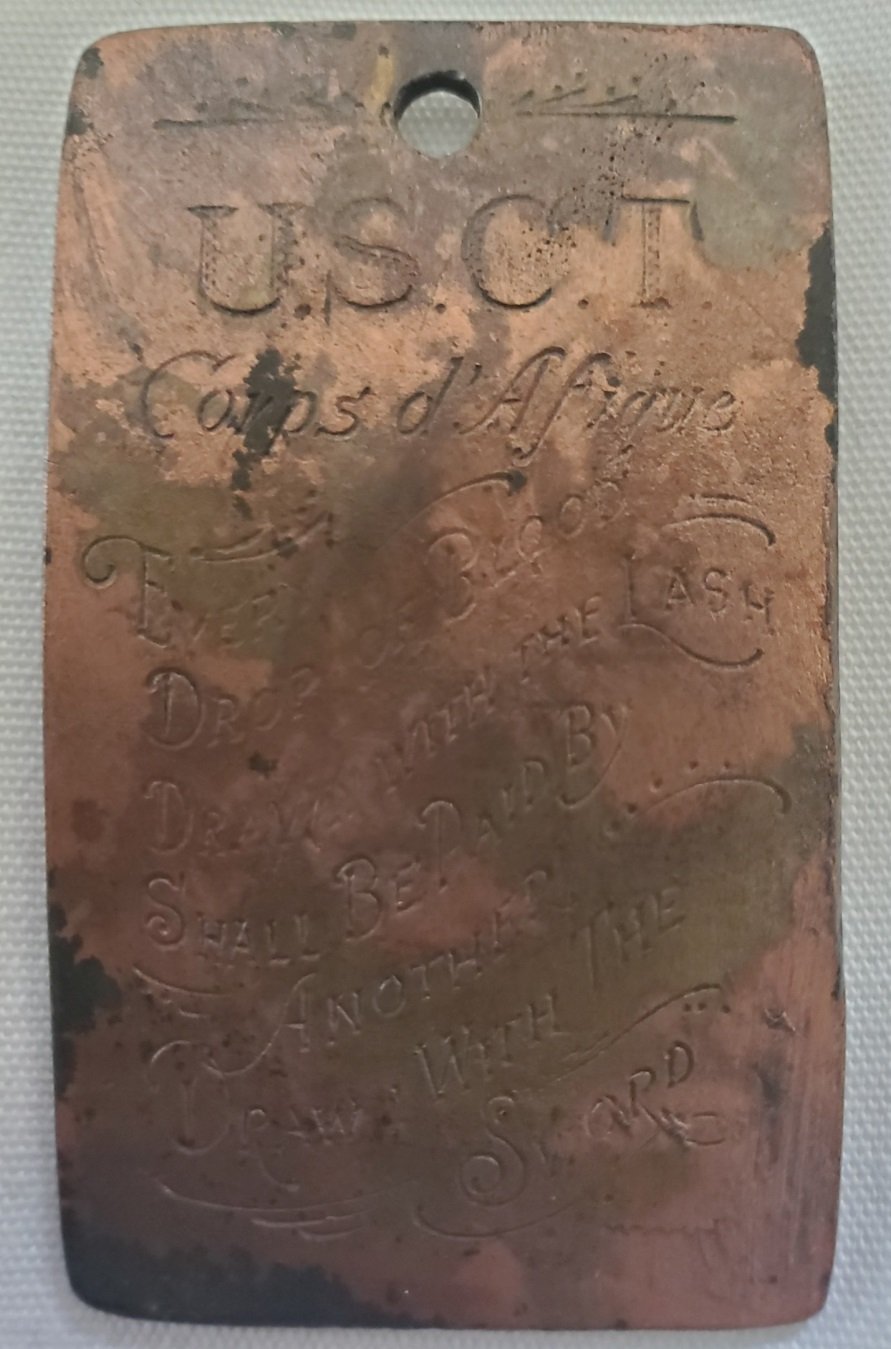
U.S.C.T (United States Colored Troops)

Corps d’Afrique

“For every drop of blood drawn with the lash

Shall be paid by another drawn with the sword.”

The 54th USCT (United States Colored Troops) formed in Mass. and took part in the heroic and tragic assault on Fort Wagner, S.C. in July 1863. acc# 2022-033-03


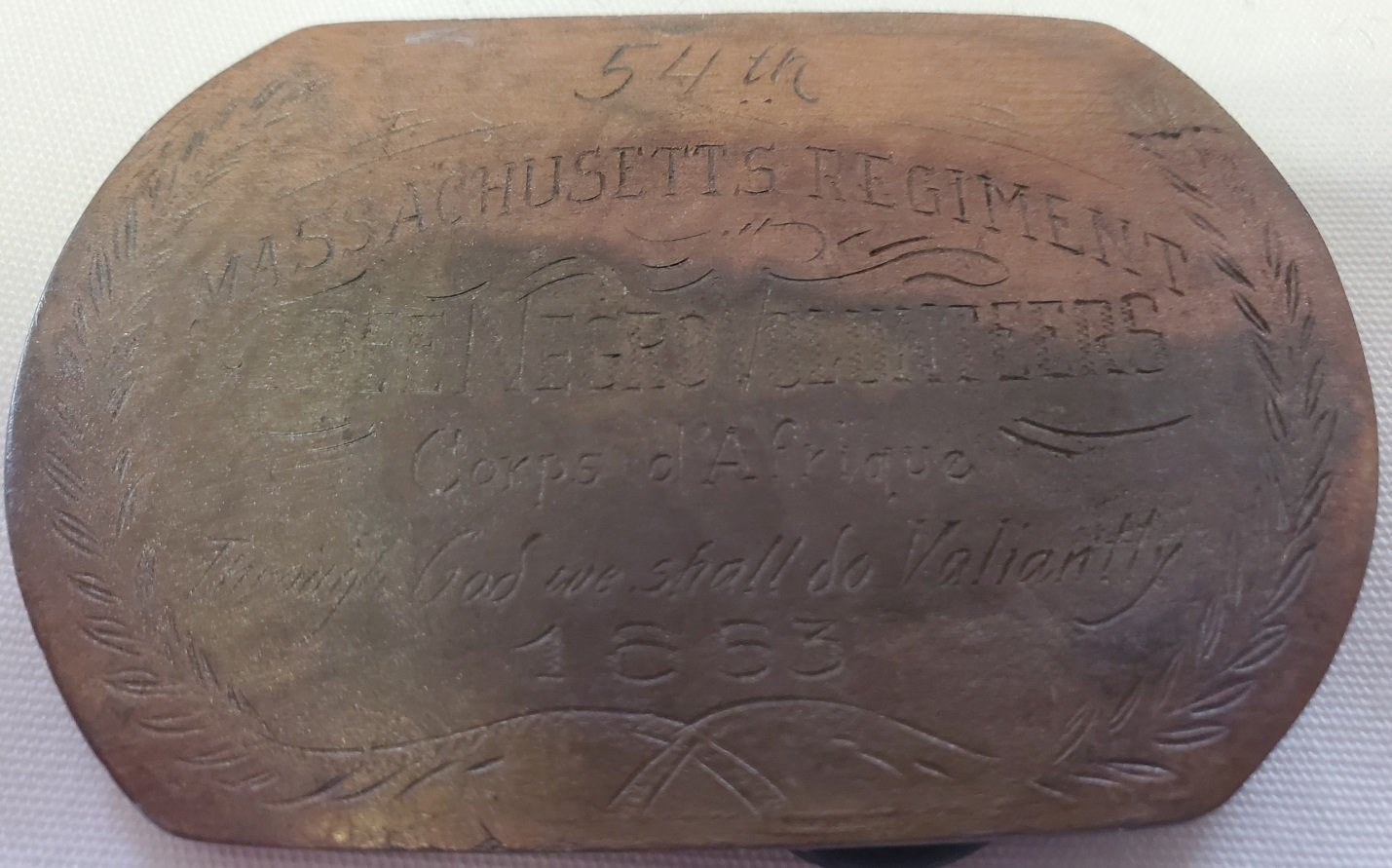
54th Free Negro Infantry Regiment Uniform Belt Buckle


The 54th USCT(United States Colored Troops) formed in Boston Massachutes and took part in the heroic and tragic assault on Fort Wagner, S.C. in July, 1863. accession # 2022-33-02


WWI, The Great War


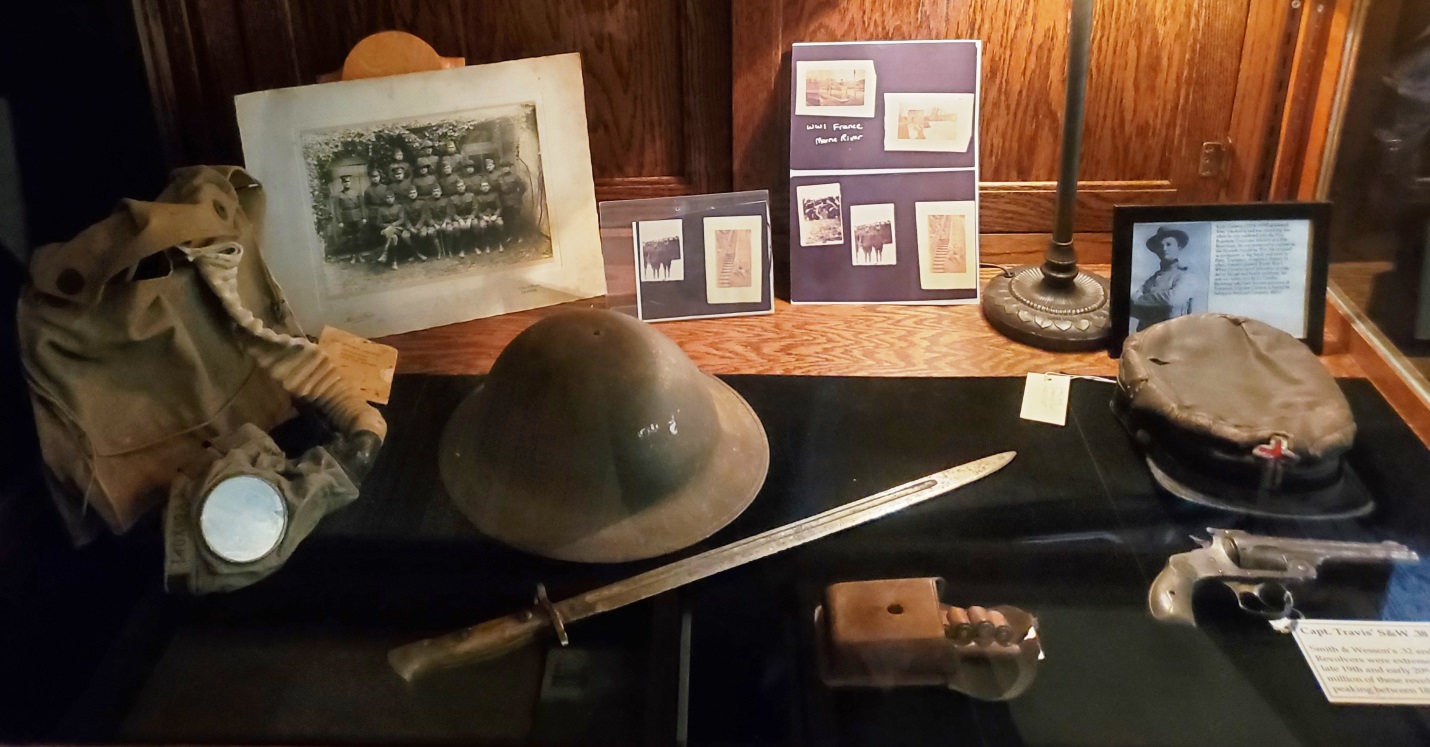
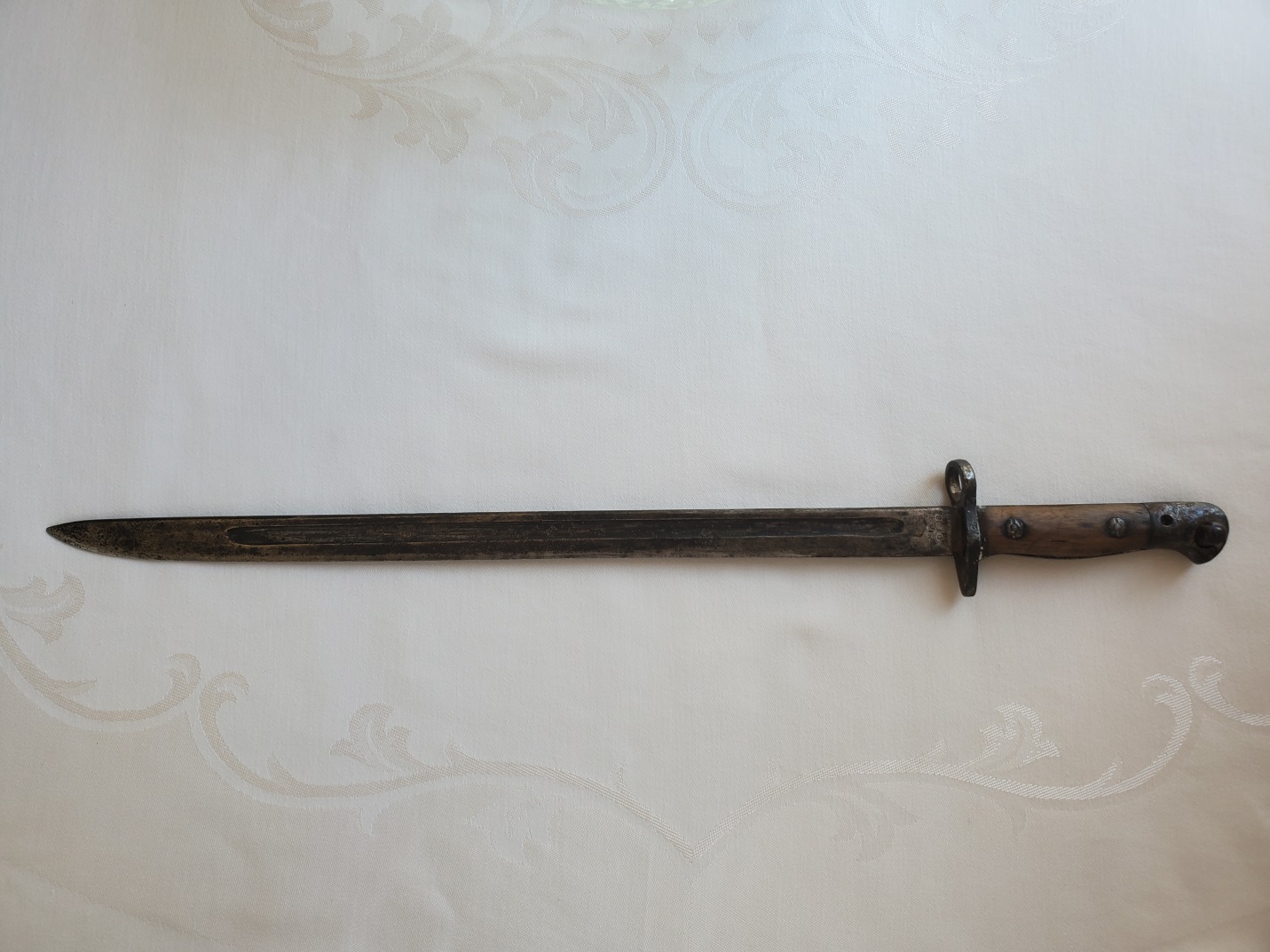
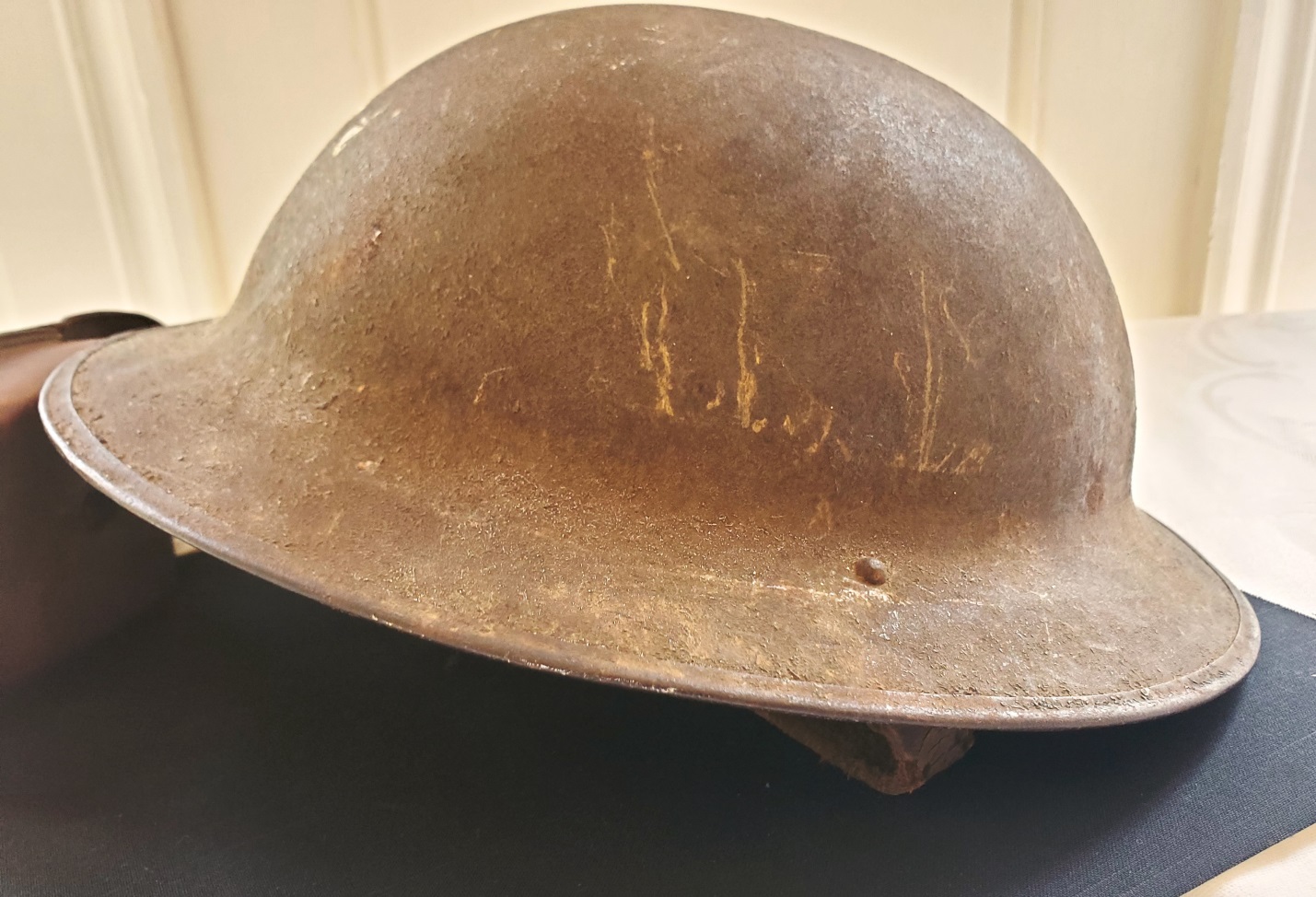
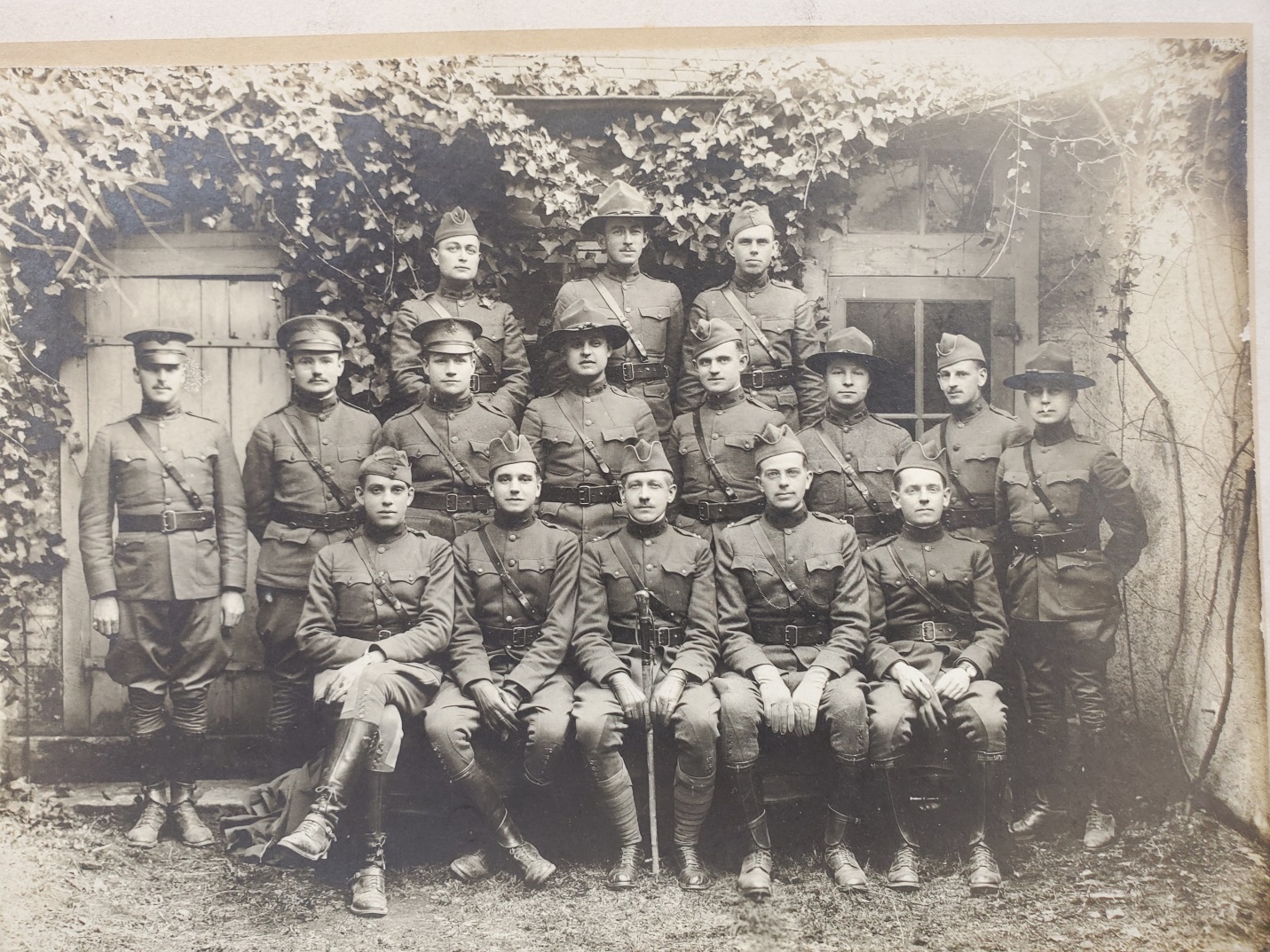
On display are some rare and unique items including authentic time period gas mask, helmet and a 1907 bayonet. Also displayed are two special items from the Spanish American War featuring Paris native Captain Travis’s S&W .32 caliber revolver, an ammo case and a chaplain’s field hat from the Spanish American War. We also have on display original photographs of local “doughboys” in France and original enlistment contracts.


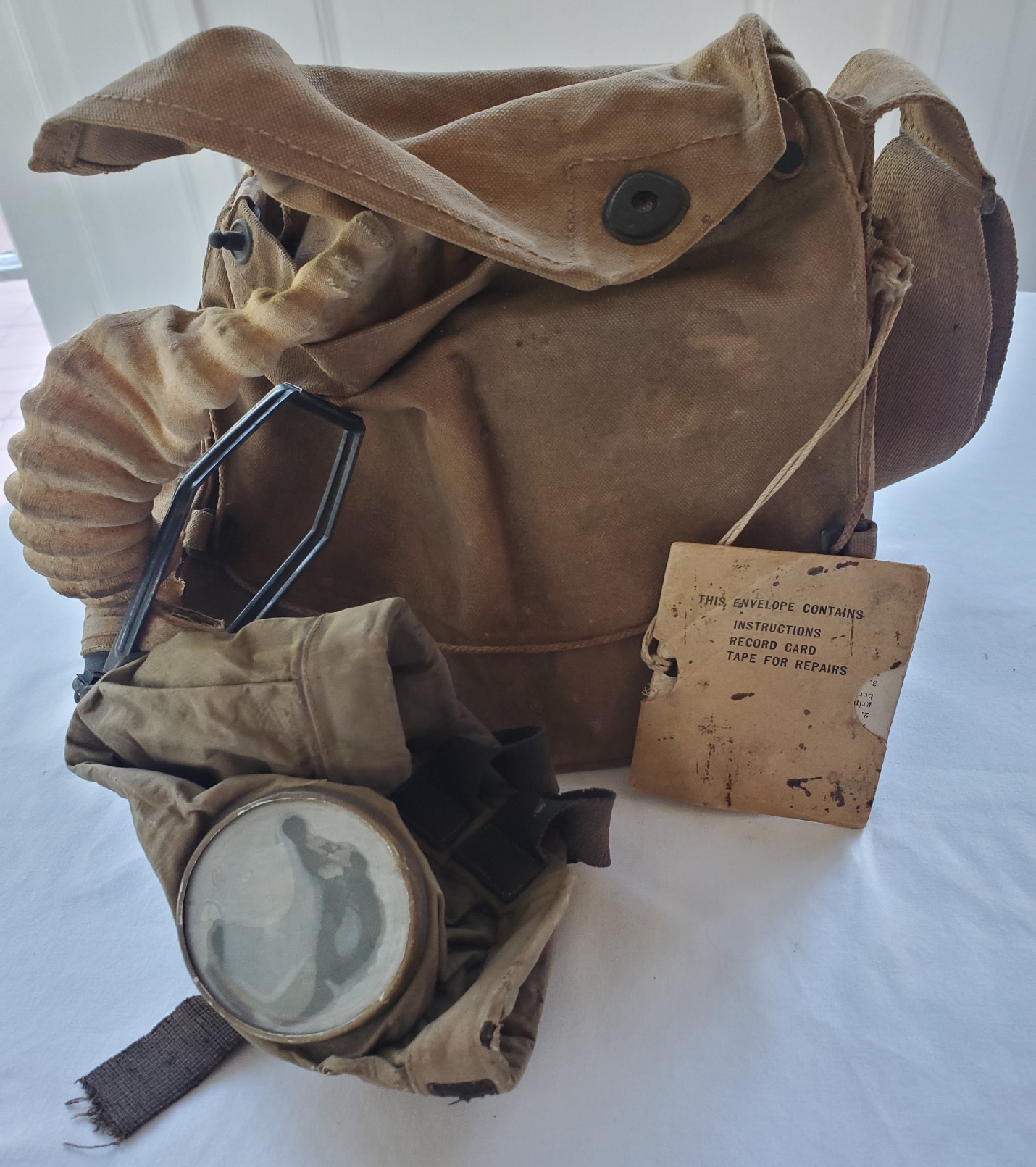
World War I M2 Gas Mask


The M2 gas mask was made by the French and used by French, British and US troops. In such great condition, the instruction manual is still attached. Accession # 2022-034-06


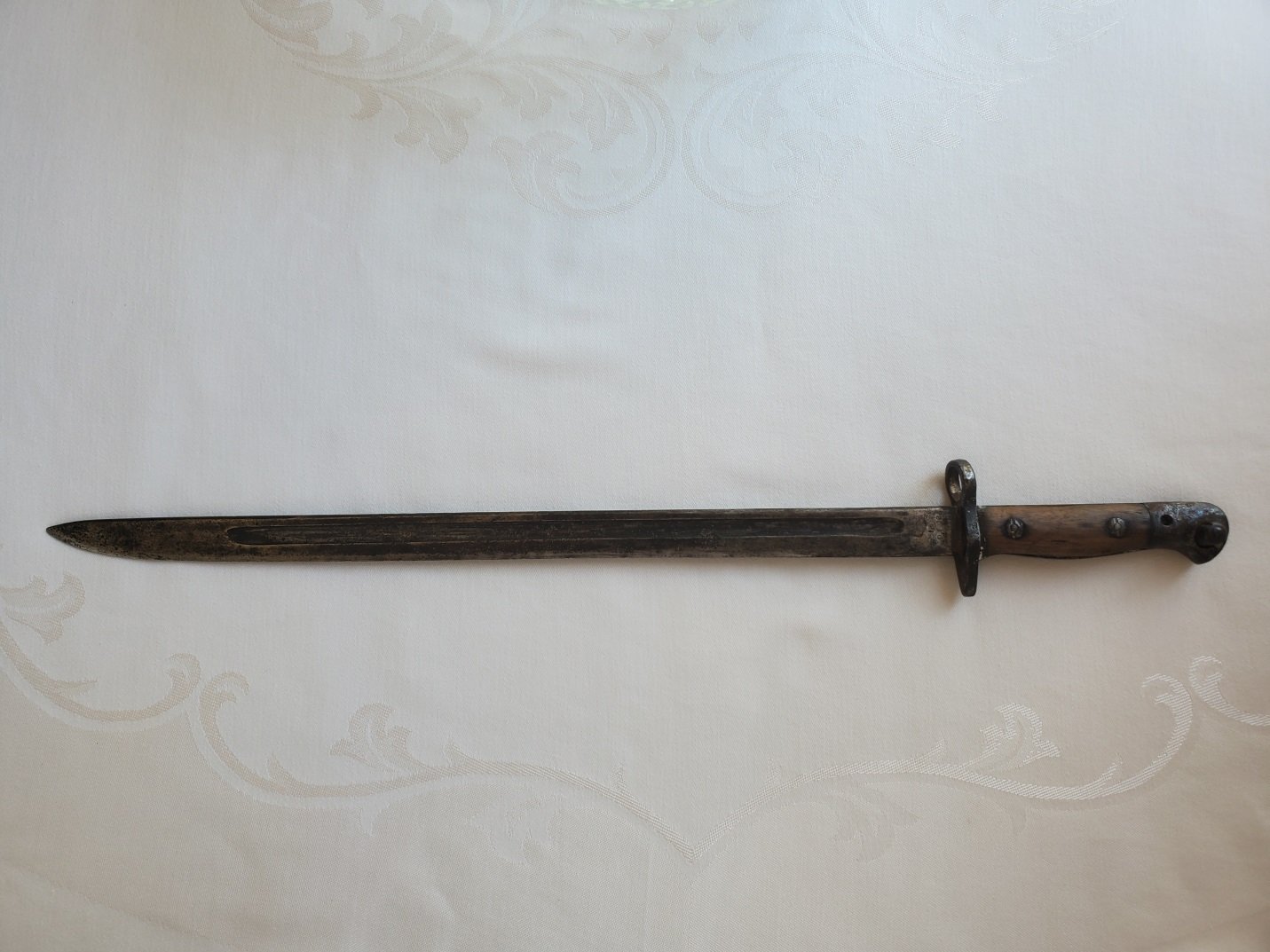
WW I Bayonet


The Sword Pattern 1907 Short Magazine Lee Enfield (SMLE) Bayonet was used extensively by Allis forces throughout WWI and WWII. The seventeen-inch blade came with a scabbard. The 1907 SMLE Bayonet was intended to provide an advantage to the soldier in close fighting. accession # 2022-034-01


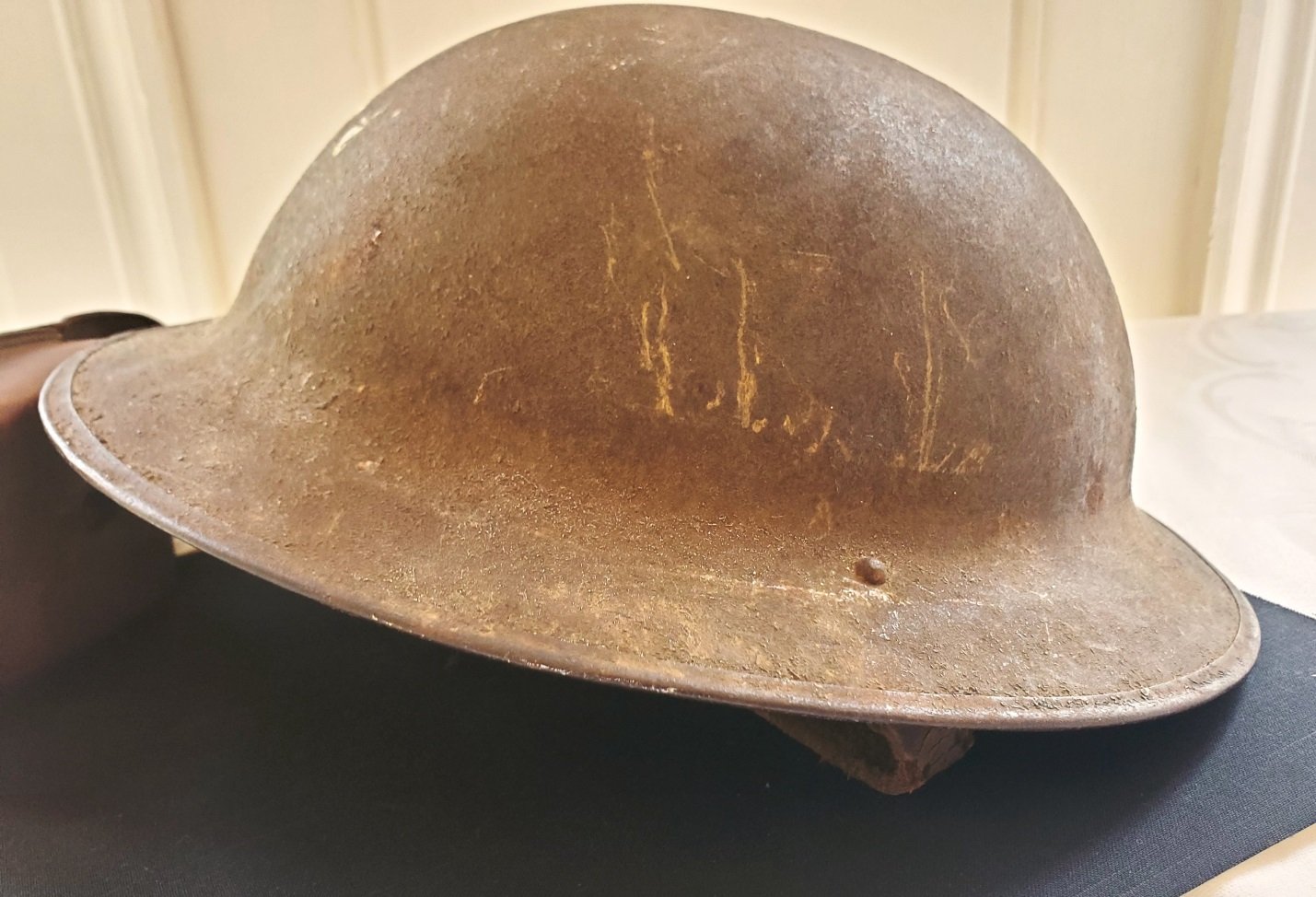
WW I “Doughboy” Helmet


Designed and patented by John Brodie, a Londoner in 1915, the British Mark I Steel helmet was adopted by the Americans and stamped M1917 Shrapnel - Helmet. The British and American soldiers soon found more colorful names for their helmets such as “the battle bowler, Tommy helmet, tin hat and doughboy helmet.” Although advances in personal protection on the battlefield had come a long way since WW I, the Mark I helmet offered some protection for the troops in the trenches of WW I. More than offering protection the Doughboys often used the helmet for their own personal daily hygiene such as shaving and washing. accession # 2022-034-03


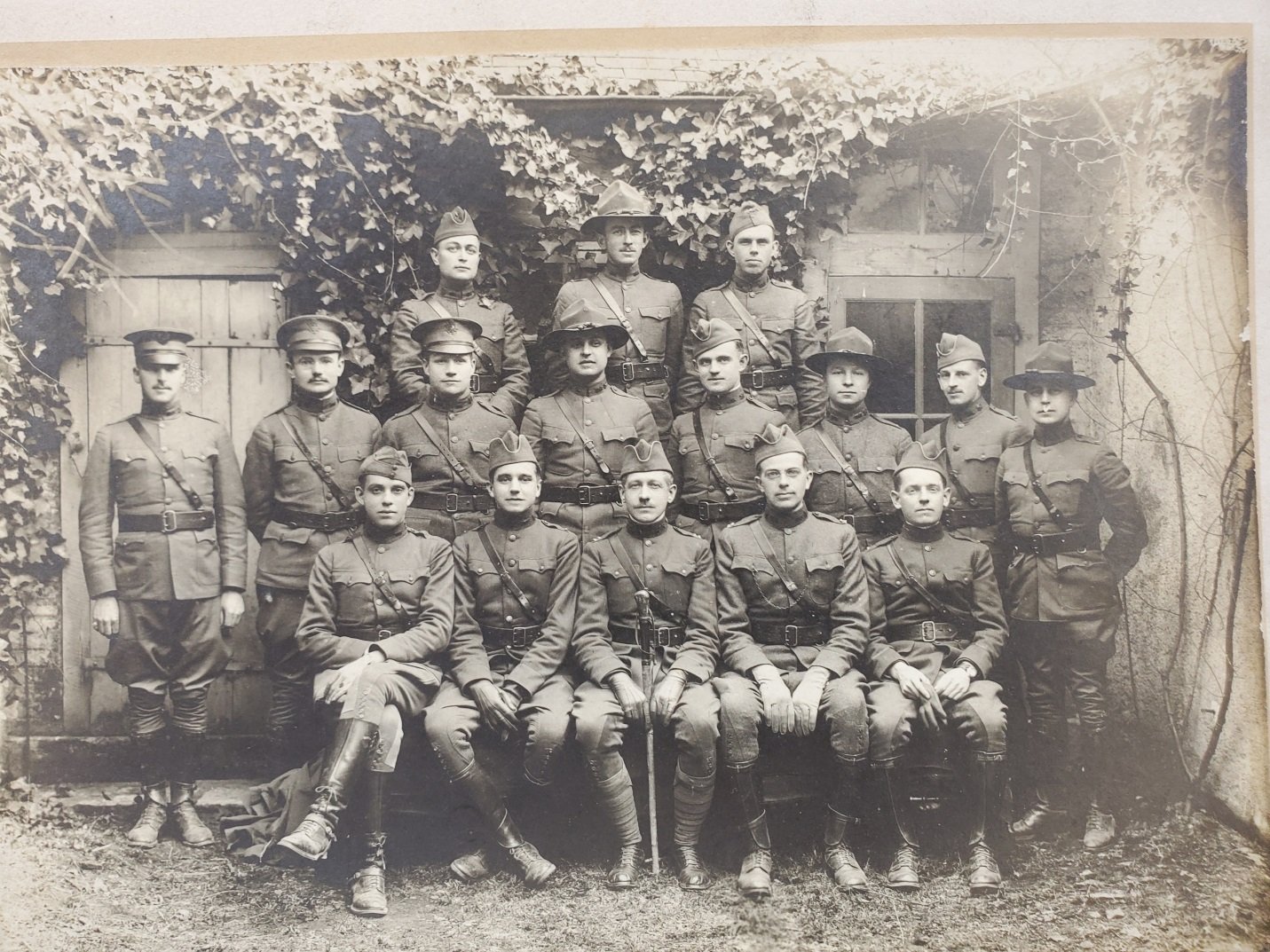
WW I Soldiers of the United States


Motor Parts Division, Support Depot

23. Rue St. Martin Nevers, France

The United States congress declared war on Germany on 6 April 1917. The U.S. deployed the American Expeditionary Brigade to France. Known as “doughboys” the American involvement helped the war come to a speedy end with an Allis victory on 11 November 1918. accession # 2022-034-02


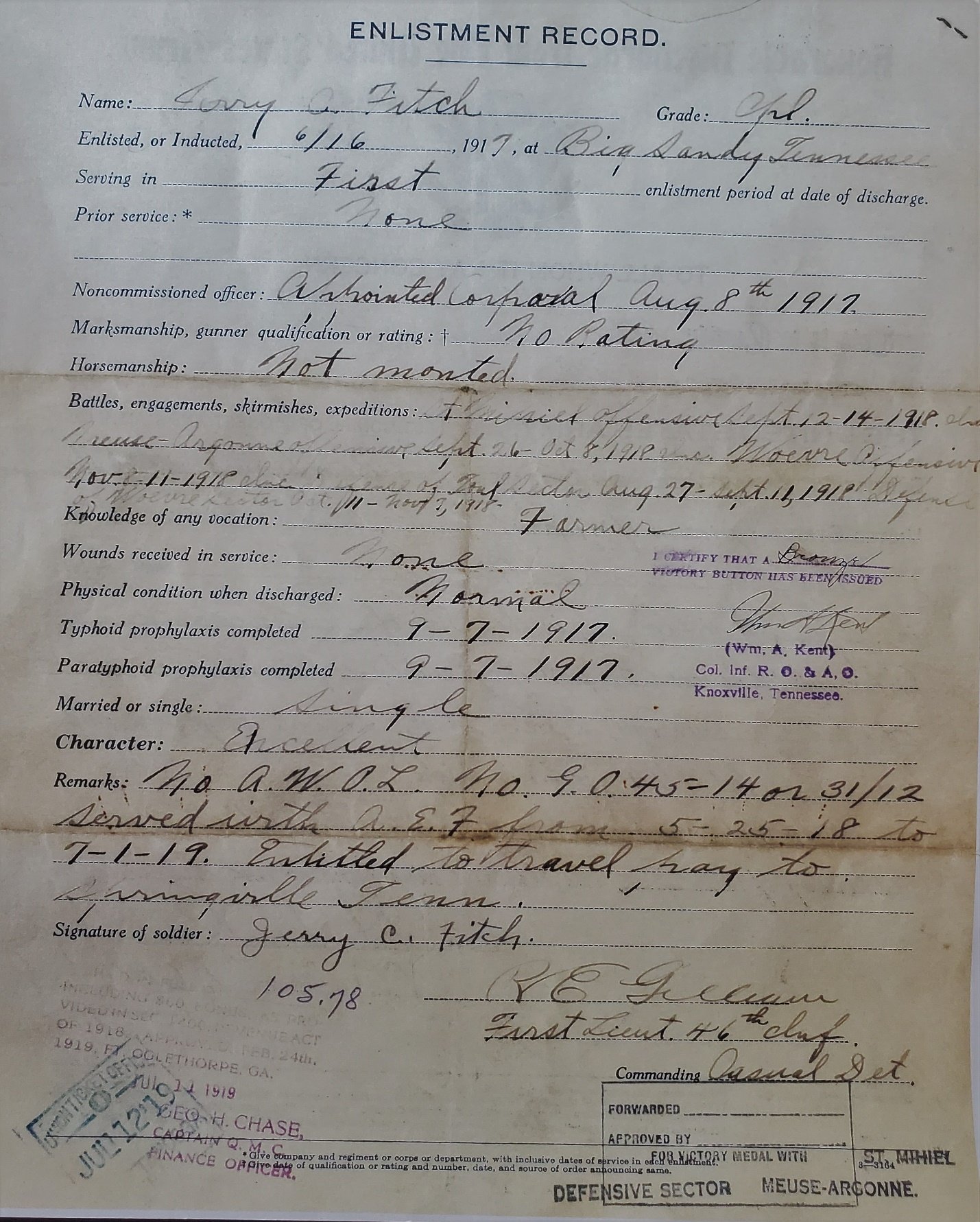
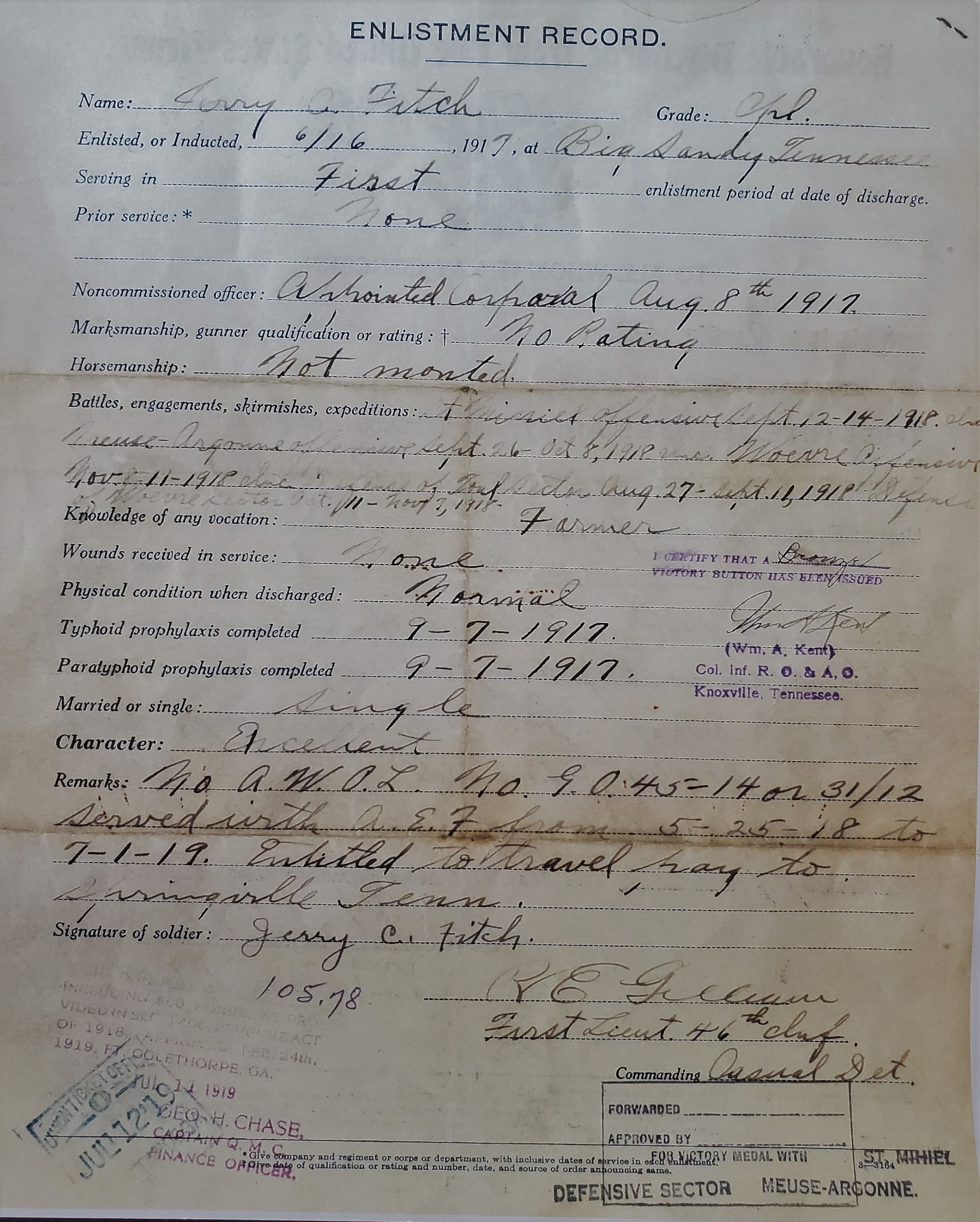
Enlistment Record of Jerry C. Fitch


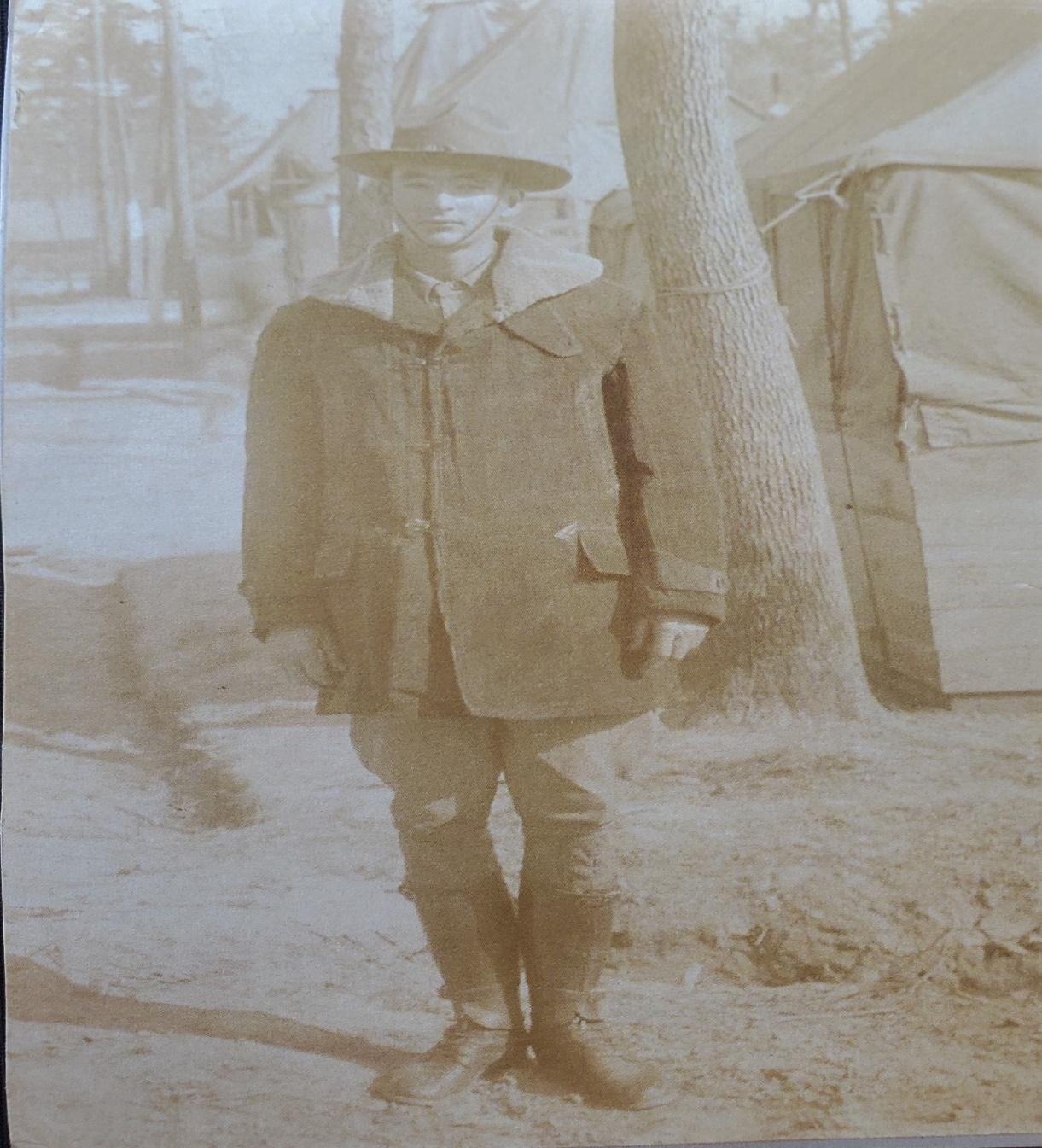
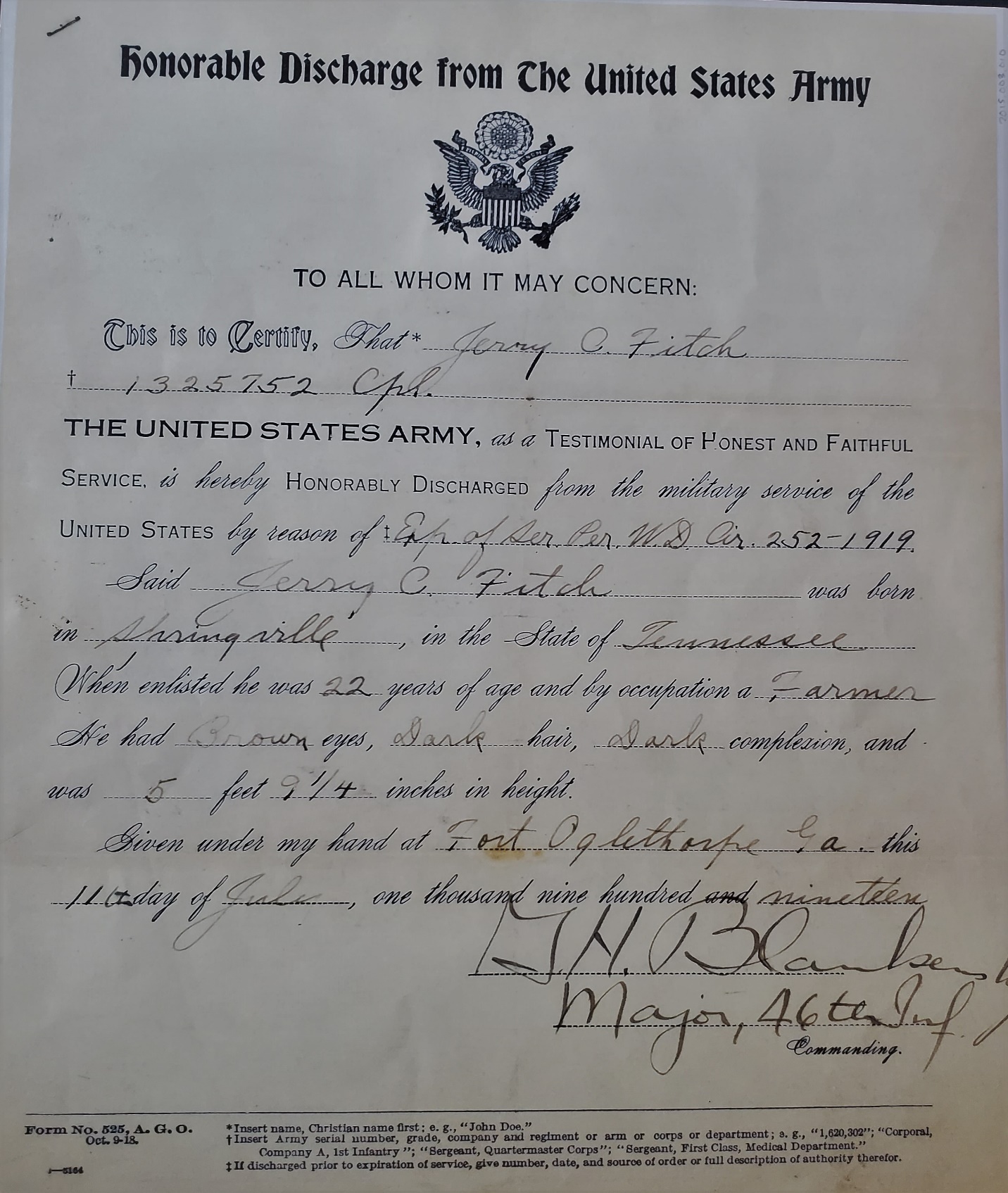
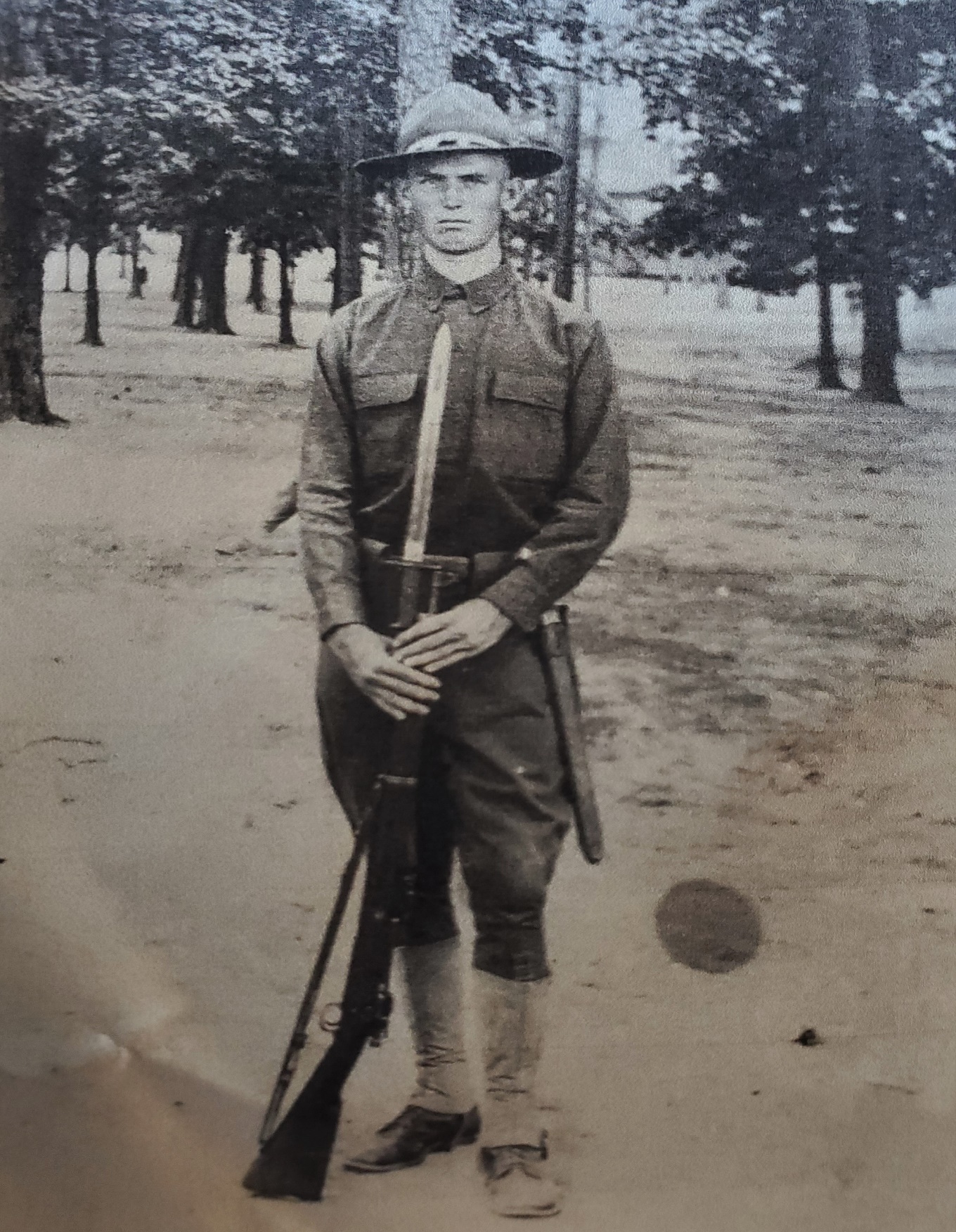
Jerry Fitch from Springville Tennessee enlisted in the U.S. Army at the onset of America’s involvement in June 1916. Fitch enlisted in Big Sandy and listed his occupation as farmer. Fitch served in the American Expeditionary Force (AEF) during WW I and participated in numerous offenses. Honorably discharged at the end of hostilities, he returned home and settled in Springville, TN.


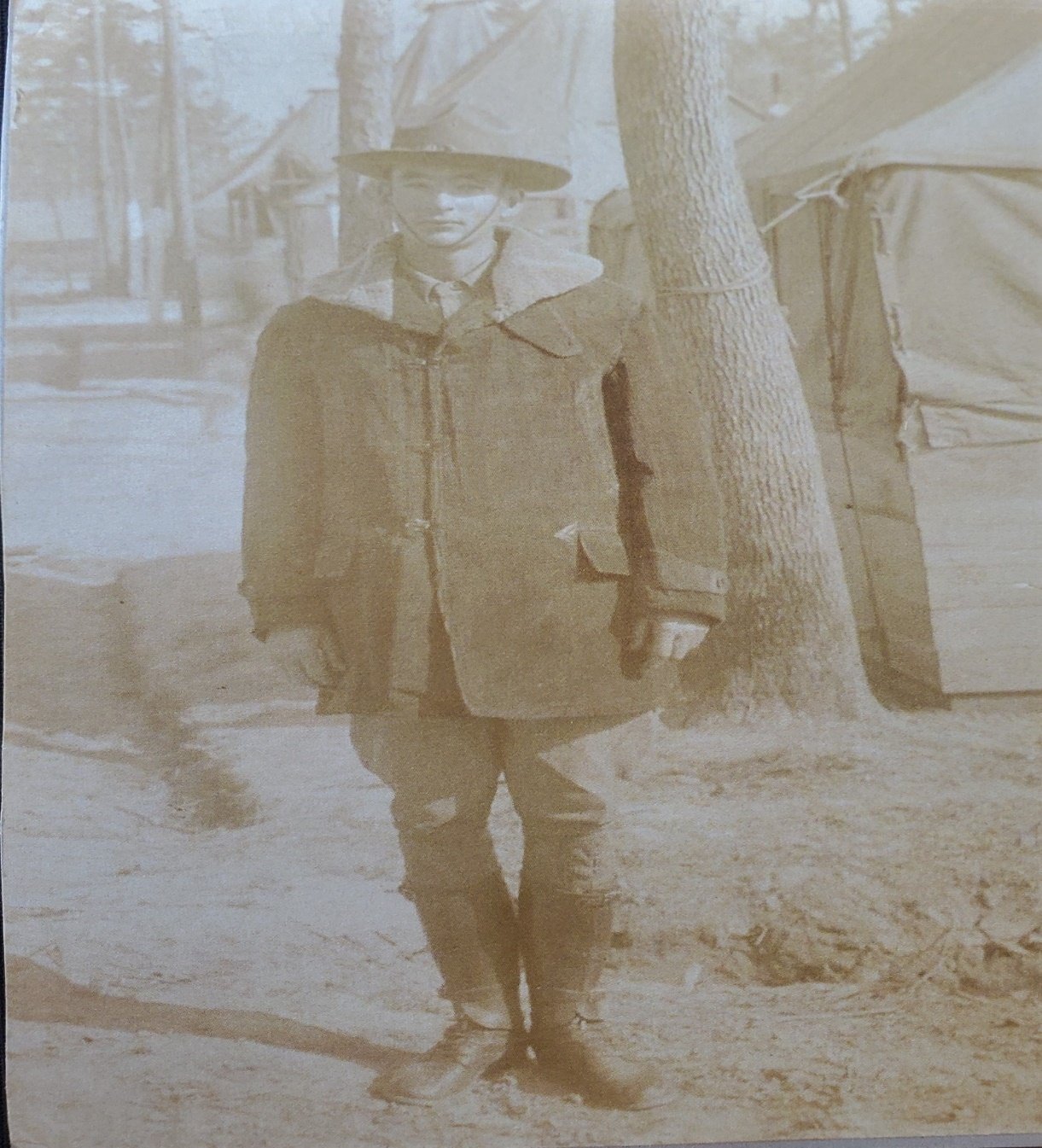
Jerry C. Fitch

France ca. 1917


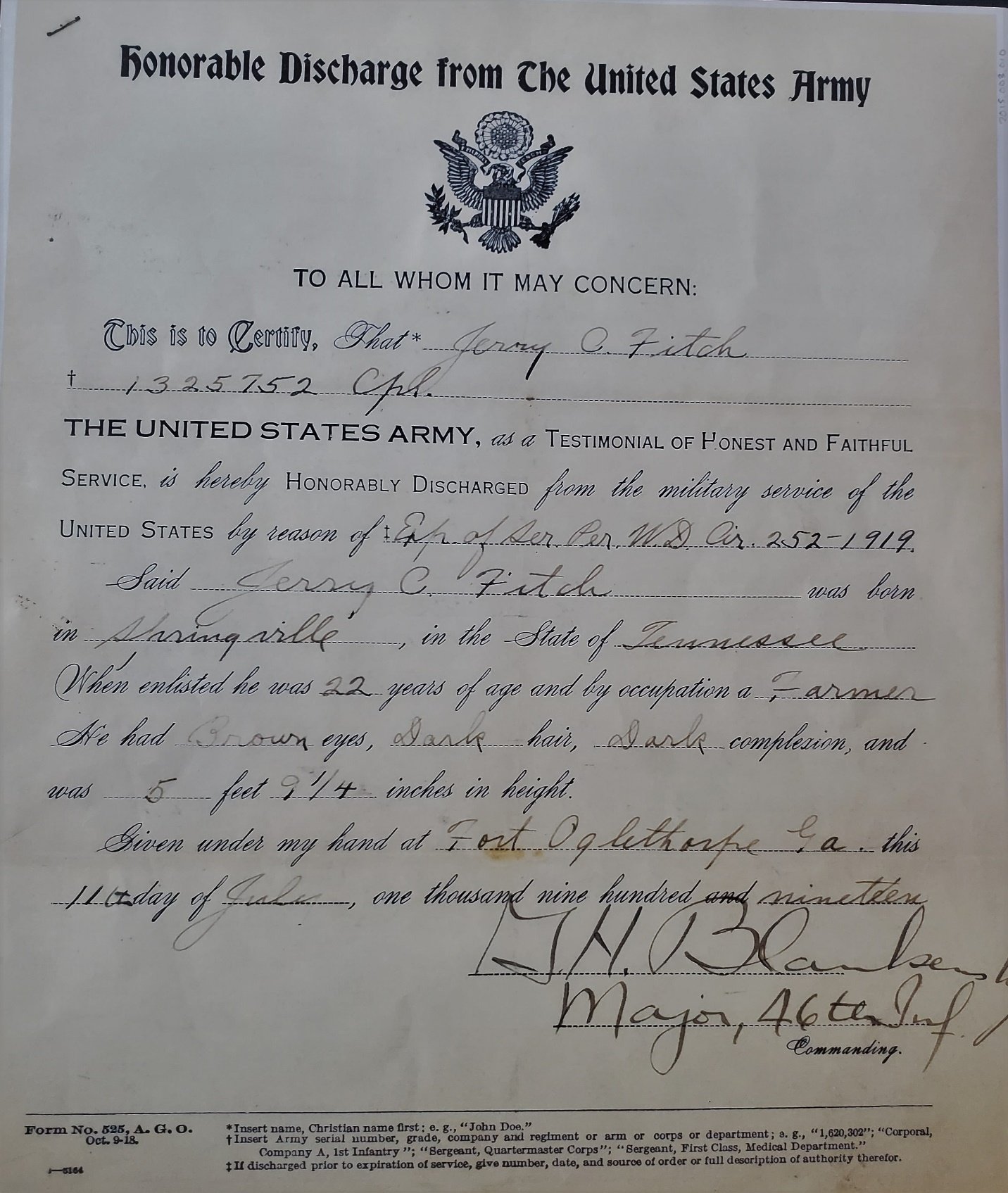
Honorable Discharge of Corporal Jerry C. Fitch U.S. Army


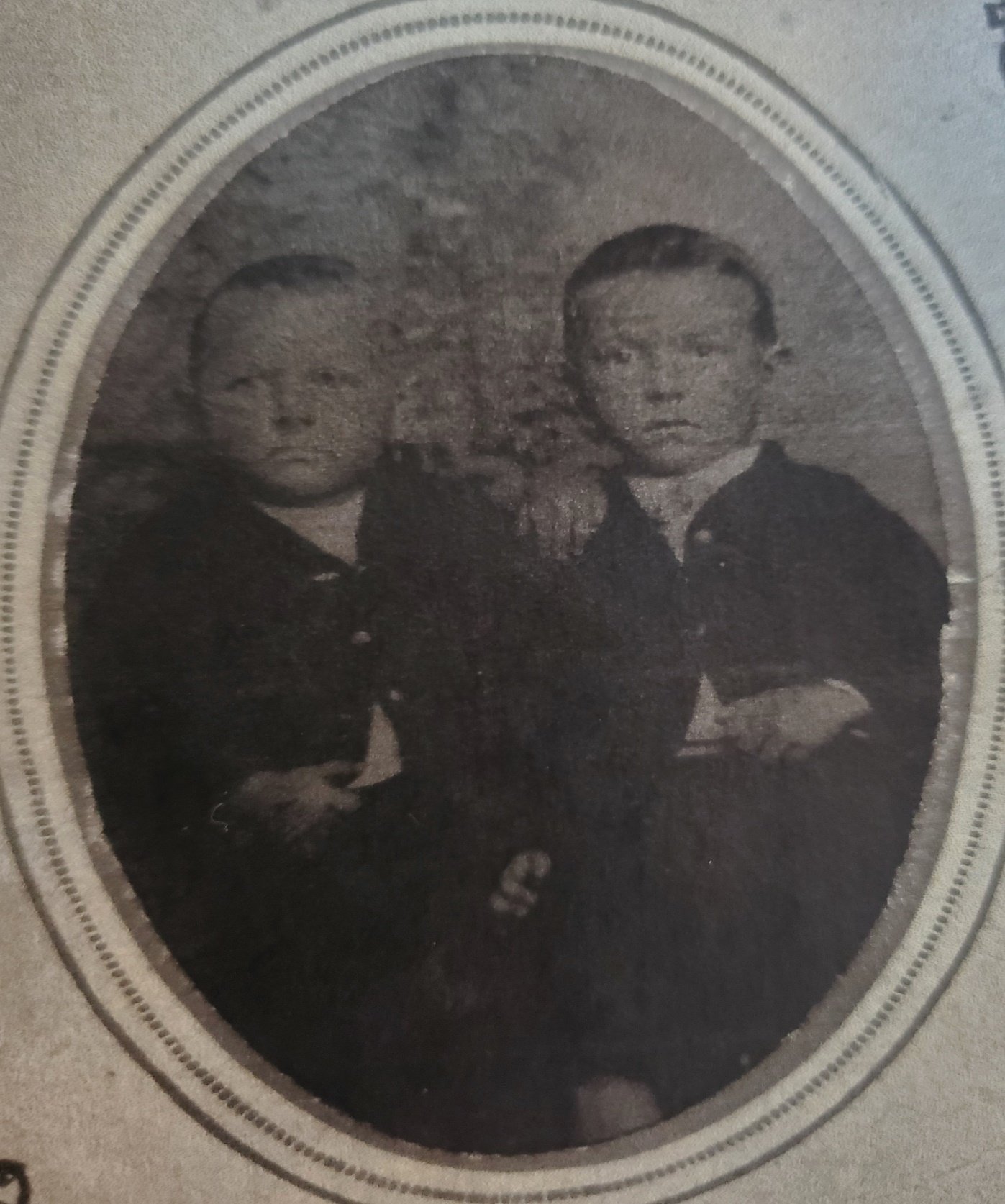
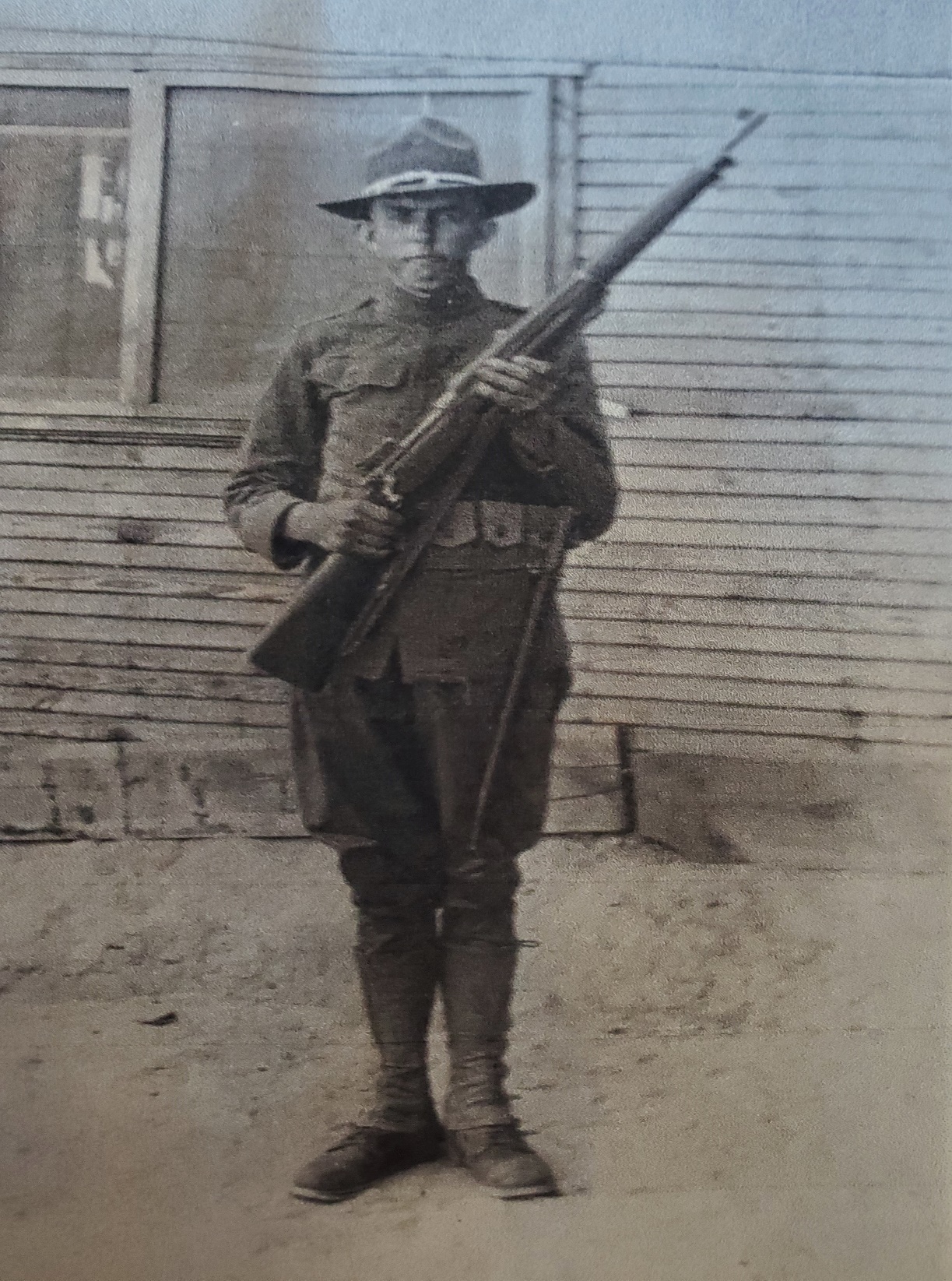
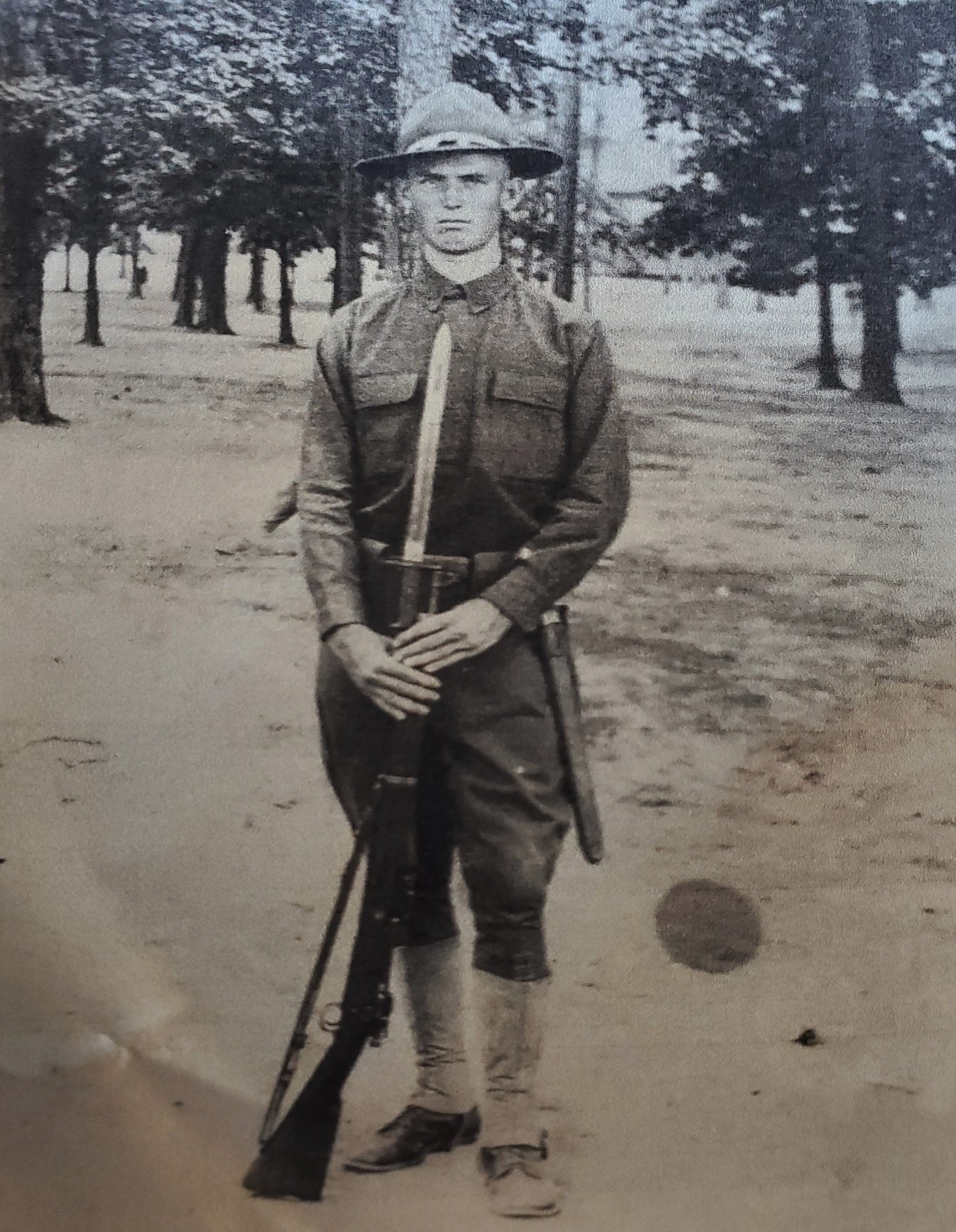
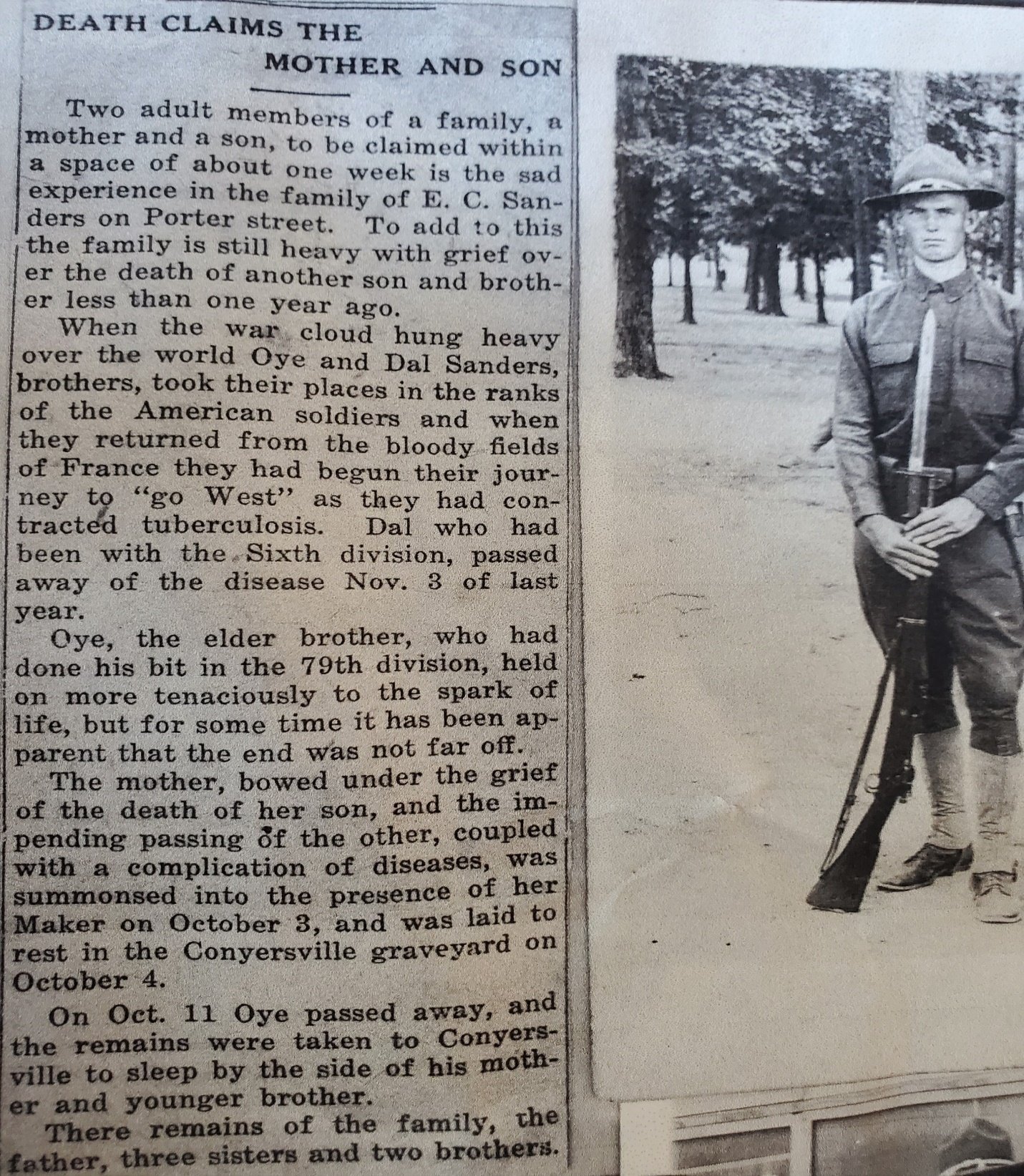
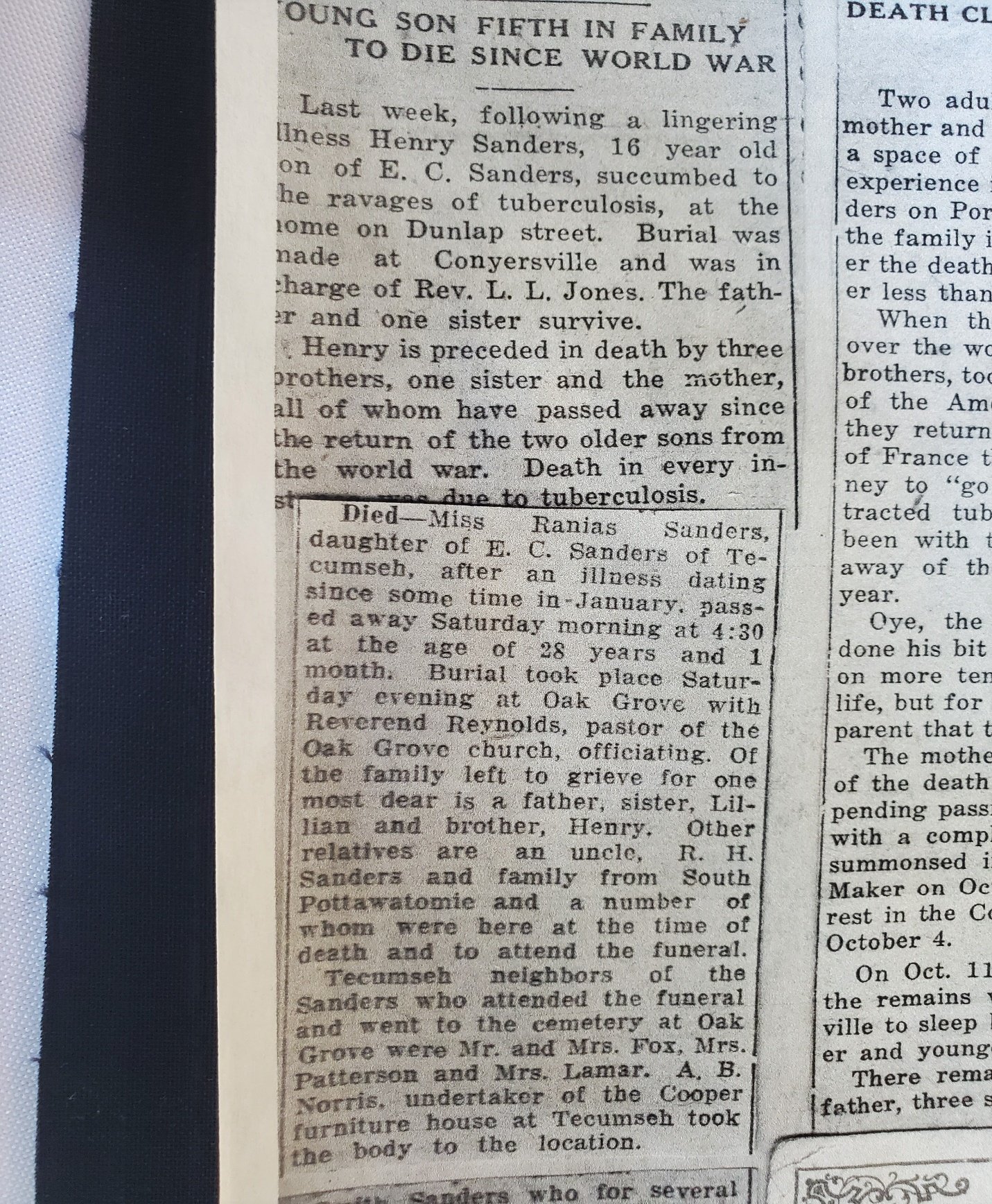
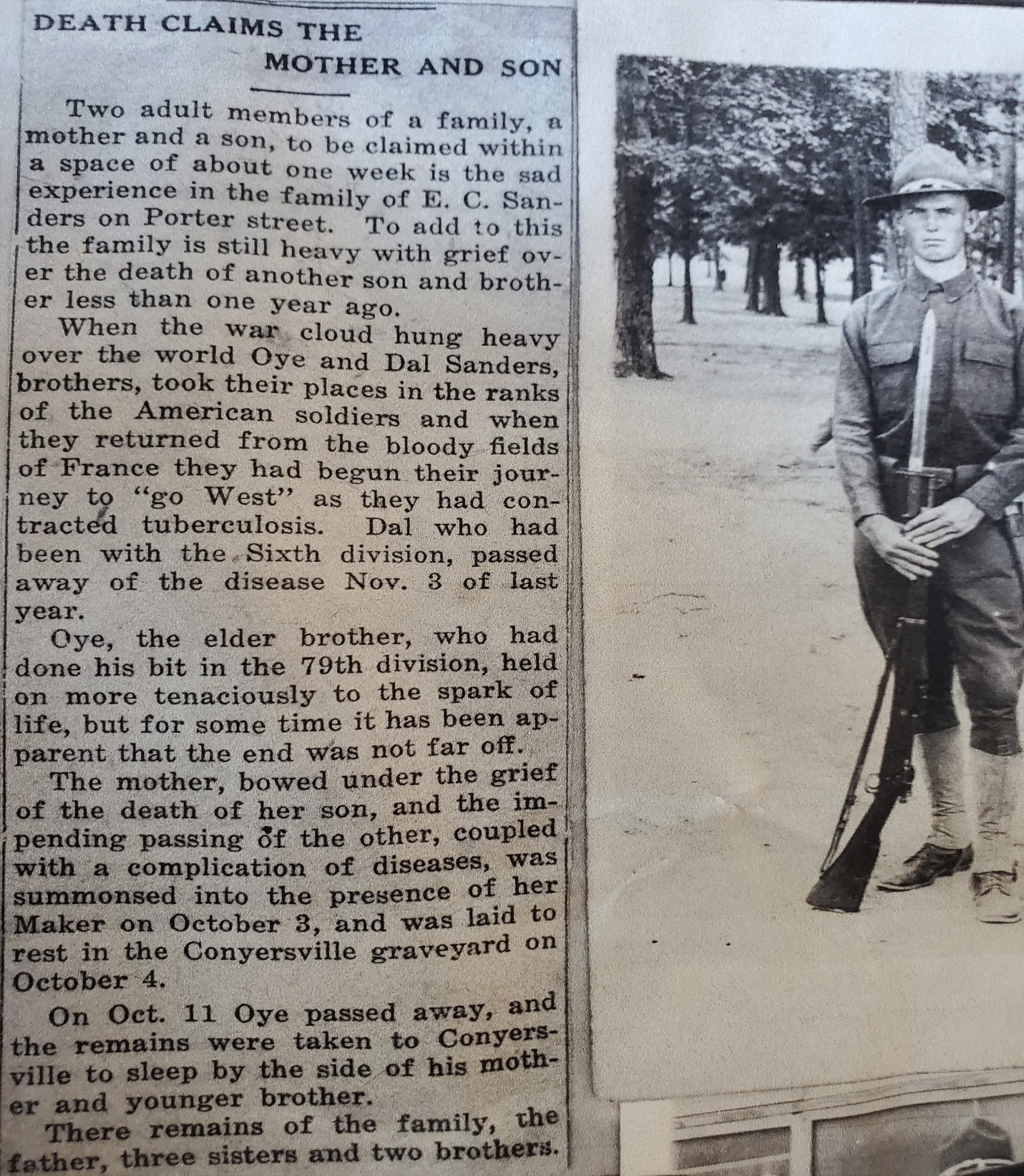
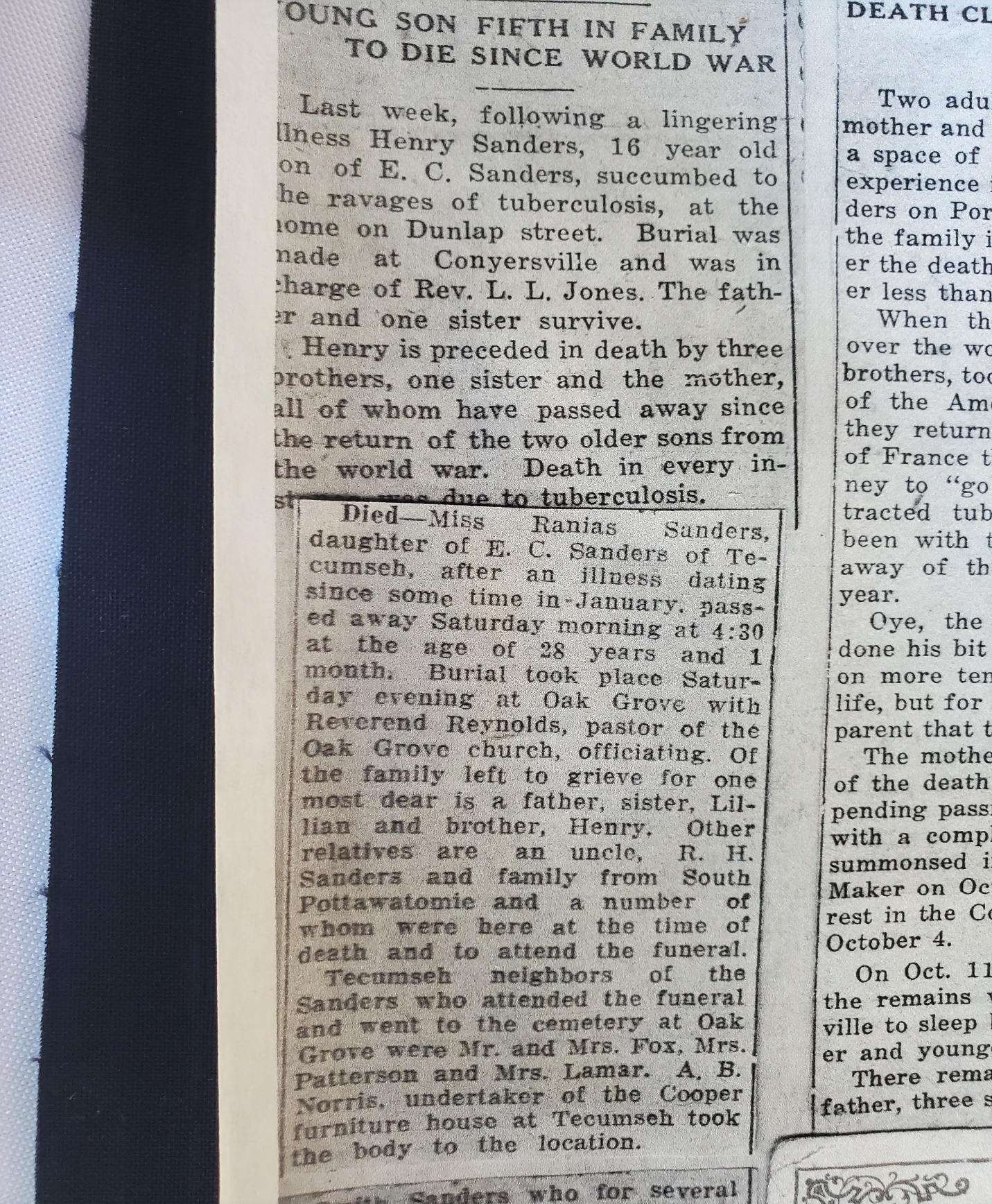
The E.C. Sanders Family of Dunlap Street Paris, TN


Dal Sanders of Paris served in the U.S. 6th Army Division in WW I


Oye Sanders, the big brother of Dal served in the 79th Division in WW I


Tragically, within a year upon their return to the U.S. the brothers would succumb to tuberculosis. Within a year their mother and brother would die a week of apart. Henry the youngest was only sixteen when he passed away from TB.


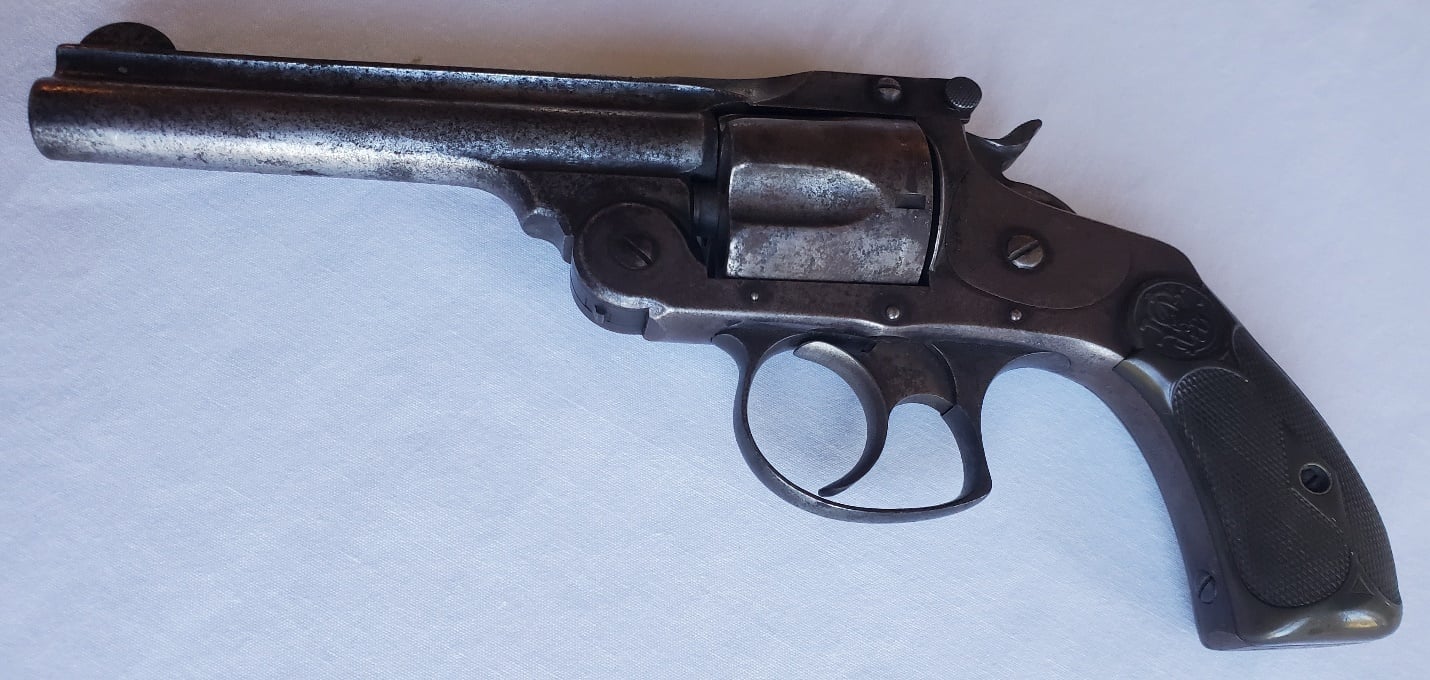
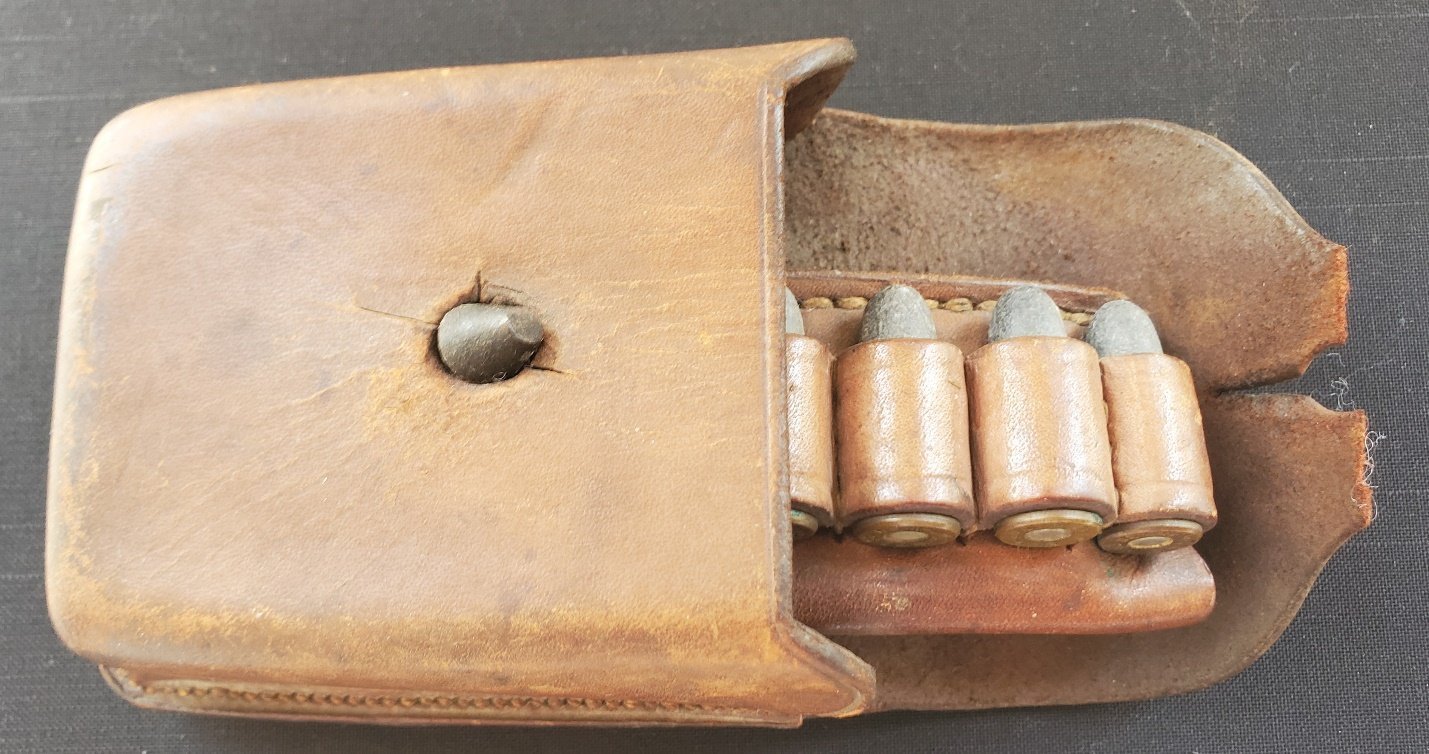
Captain Travis’s .38 Smith & Wesson Revolver


Smith & Wesson’s .32 and .38 Double Action Revolvers were extremely popular during the late 19th and early 20th centuries with nearly 1.5 million sold, peaking between the years 1881 and 1910. accession # 2022-033-07


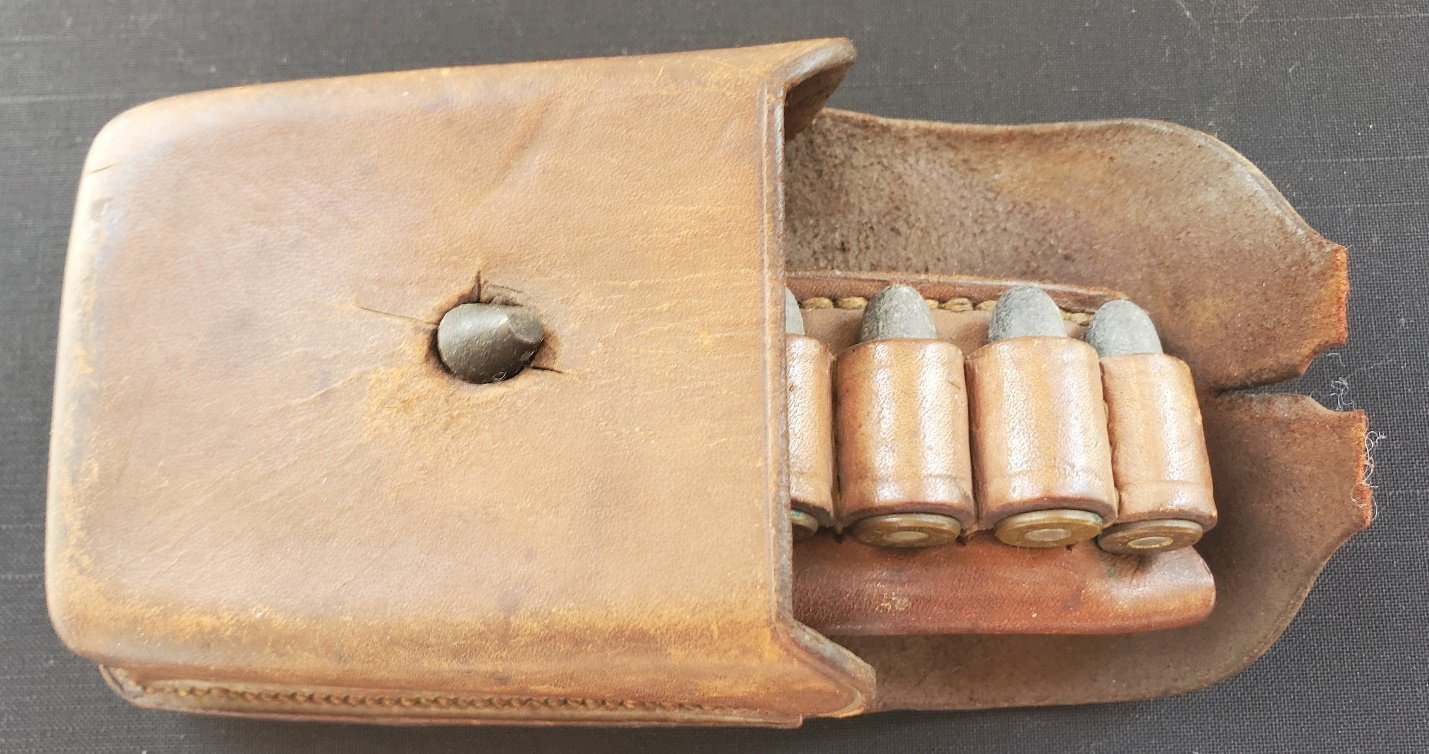
Captain Travis’s S &W .38 ammo carrying case accession #2022-033-04


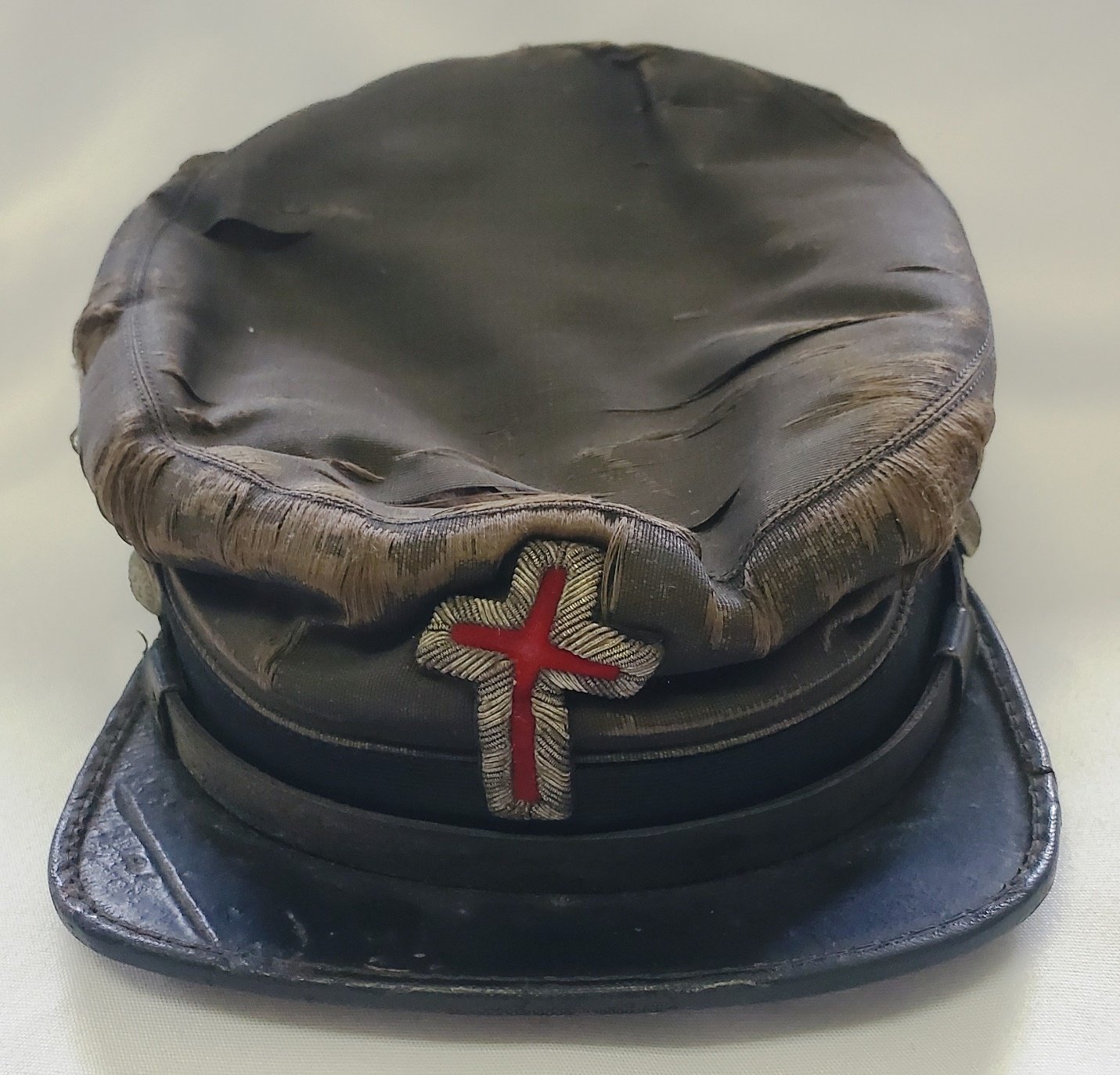
Chaplains Field Cap from Spanish American War


The Heritage Center in Paris is proud to display this unique artifact dating to the Spanish American War in 1898 accession # 2022-033-05


Stay abreast for additional postings as our collection swells with artifacts donated from our friends, family and community, from here at home and afar.


This Collection's Page is made possible by a Humanities 2022 Sharp Grant received in the spring. The grant was created for just such a time as this: to jump start robust and broad reach programing as we made our way past the pandemic to regain momentum. A thanks to  Humanities Tennessee and the National Endowment for the Humanities,  Your generous spirit and funding has inspired us to continue on through 2023 to further build out the collection and its presence on the web Collections page. Humanities Tennessee 2022 Sharp Grant has created work for those who photographed and documented our collection for download onto our website to enhance and expand our visibility and our outreach.


WW II


The United States in World War II 1941-1945

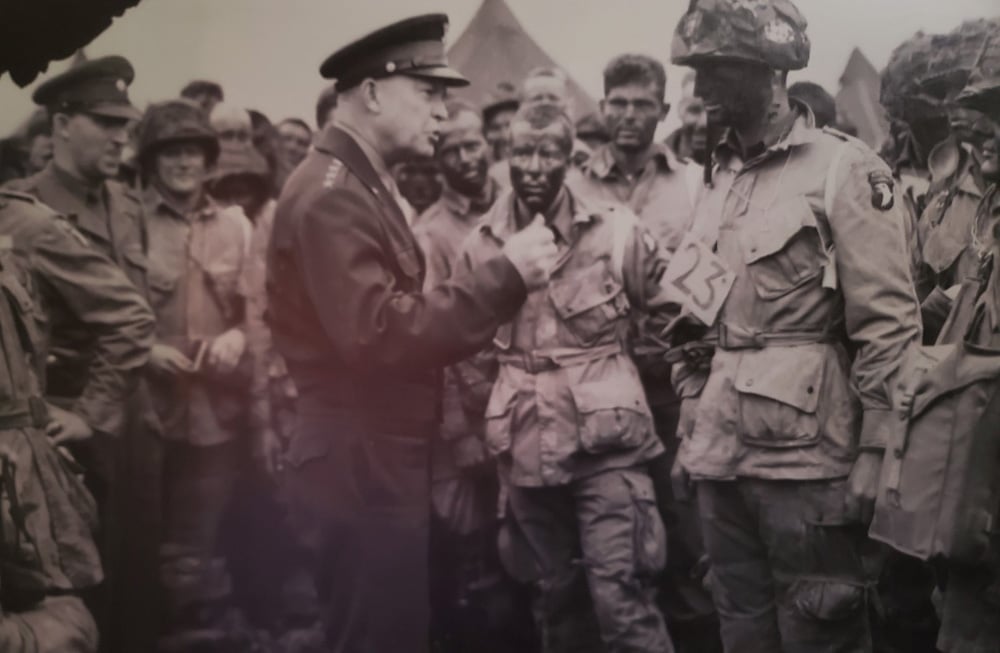
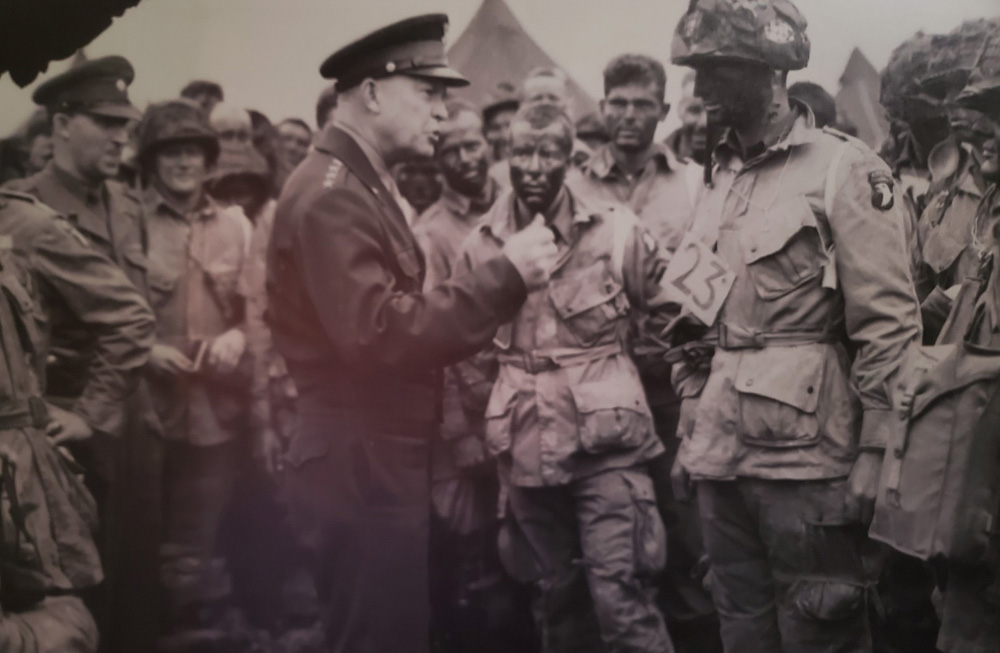
This is an emotional scene: General Dwight D. Eisenhower talking with the Screaming Eagles before the 101st took off for the Normandy invasion. “Full victory-nothing else” was the order of the day. Ike was terribly worried about the paratroopers-casualties were expected to run higher than 80 percent! The Supreme Commander had tears in his eyes as he observed the transports carrying the men to France on June 6, 1944.


This photo was reprinted from the National Archives in Washington DC.  


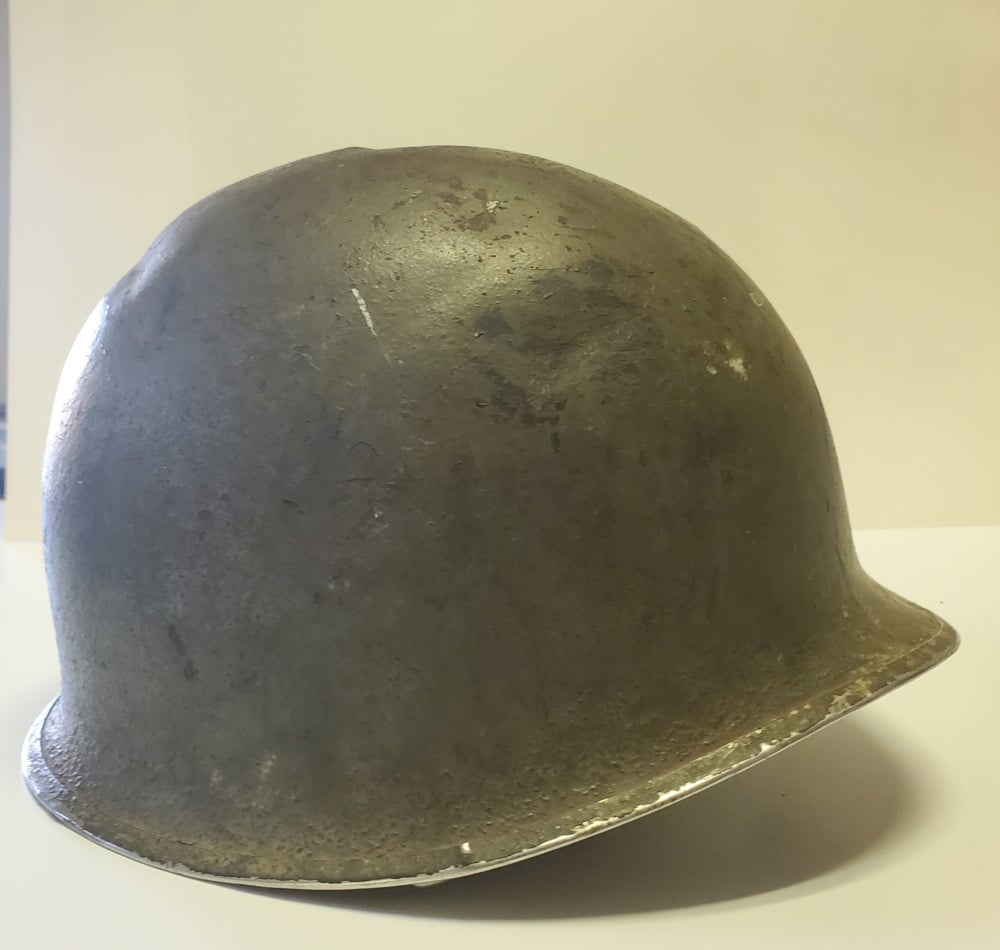
WW II U.S. Army Helmet

From Normandy to Berlin

The M1 “Steel Pot” Helmet was in use by the U.S. Armed Forces from 1941 to the mid-1980s. This unique item was gifted to the Heritage Center by Jim Wilson of Paris. Accession no.1998-025-012


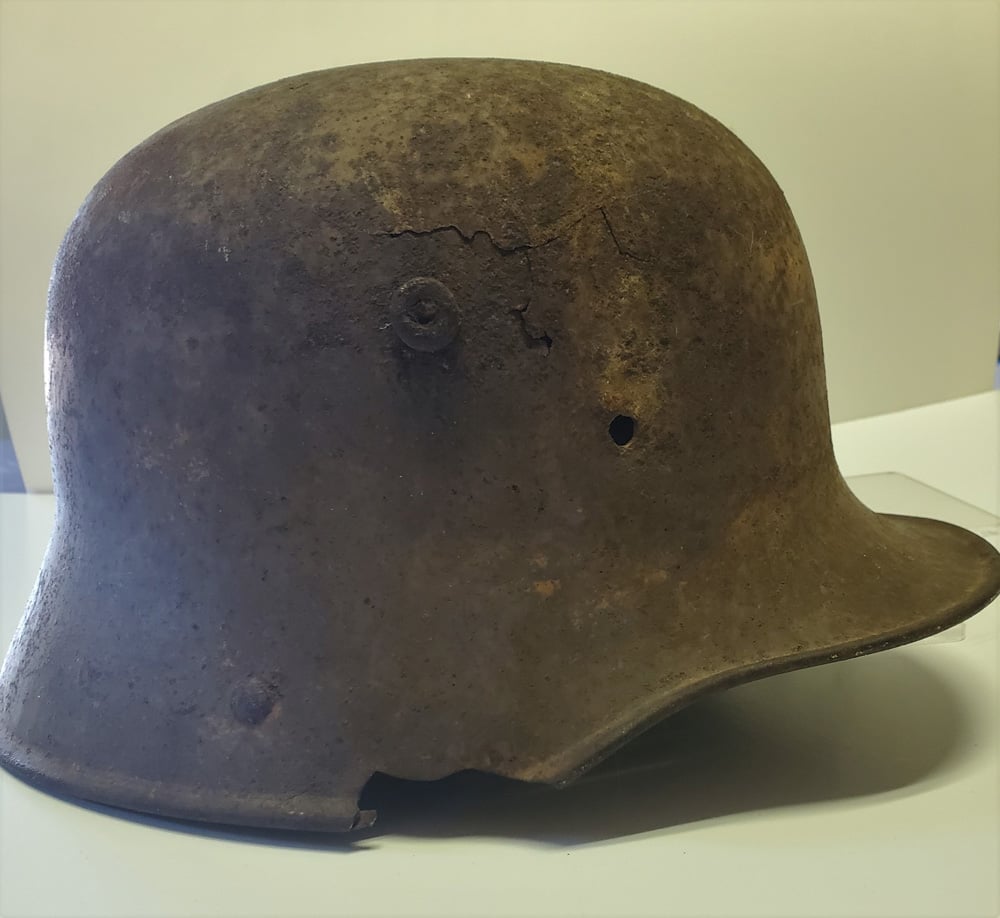
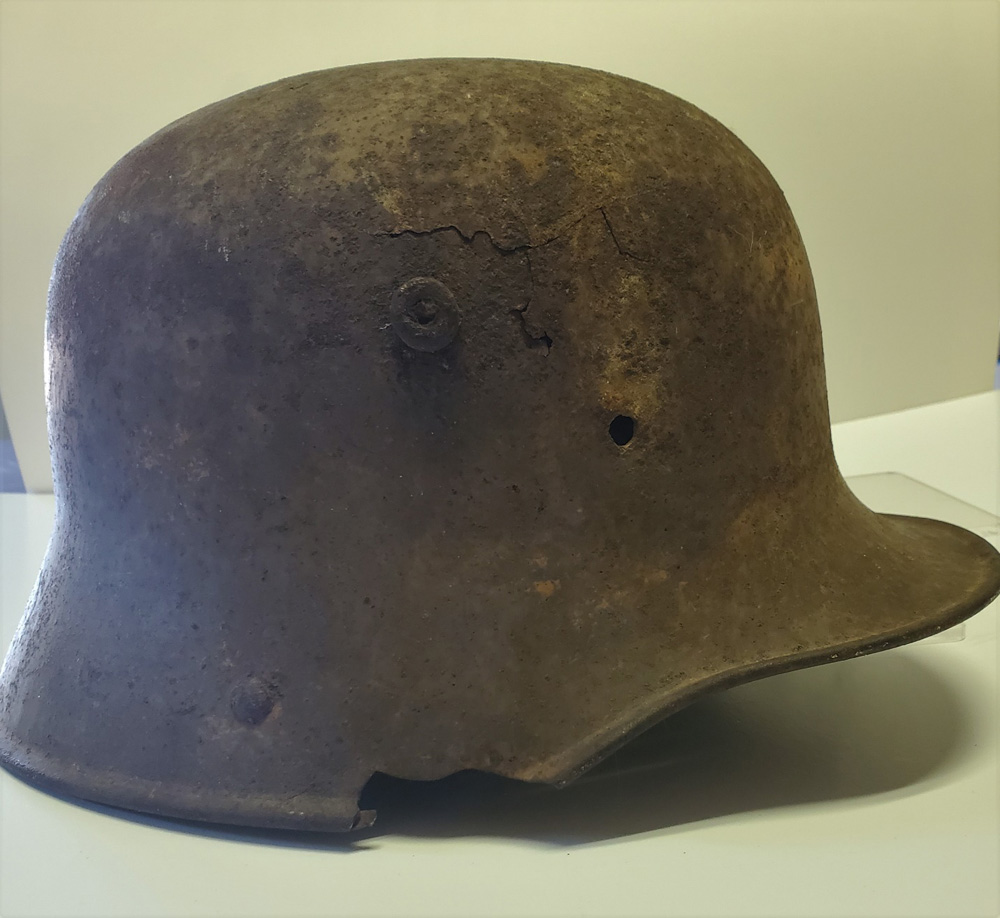
WW II German Stahlhelm

The Stahlhelm (‘steel helmet’)

This unique German helmet was used for protection against shrapnel and fragmentation.  The term Stahlhelm also refers to the distinct German design of the steel helmet. Accession no. 2002-025-001


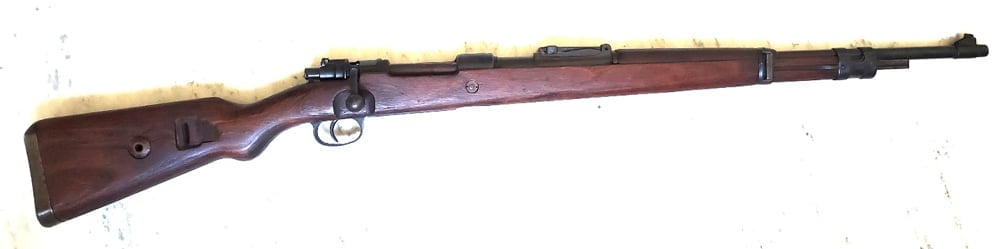
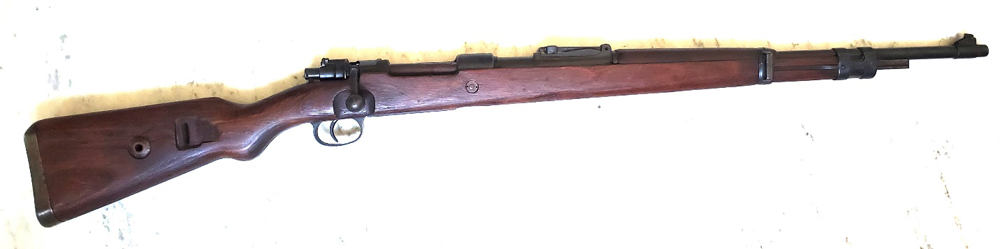
Mauser 98

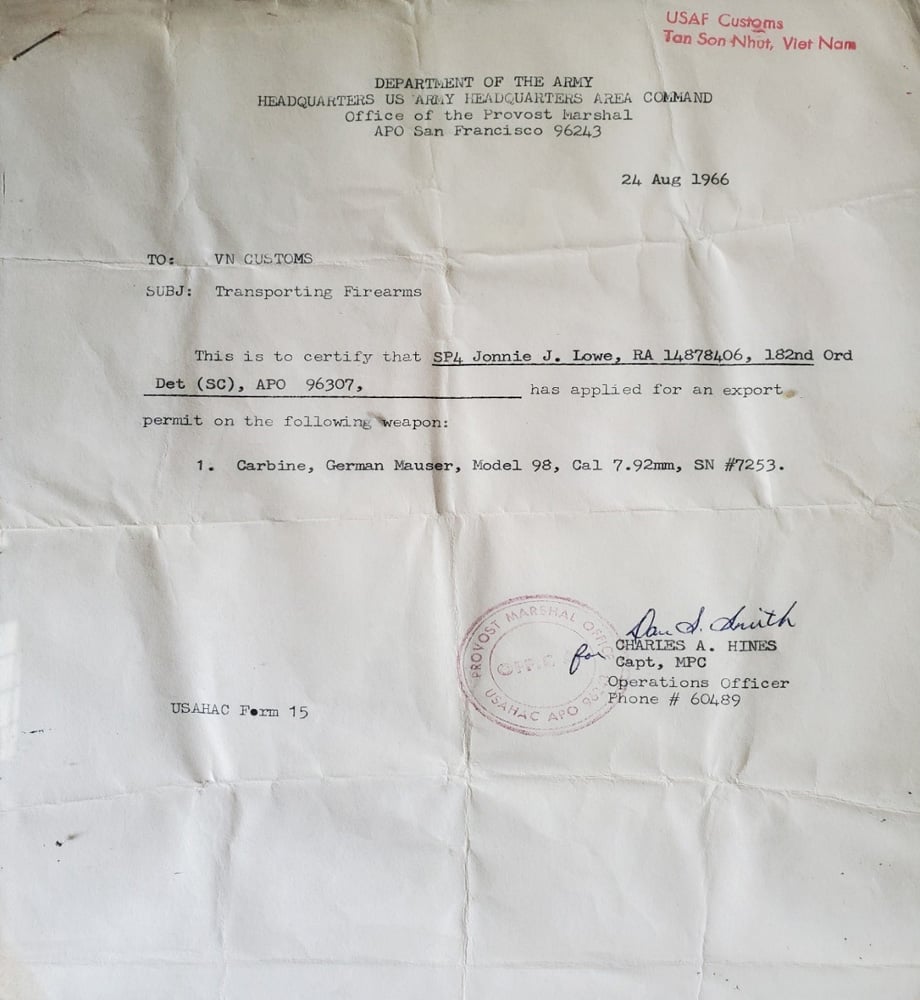
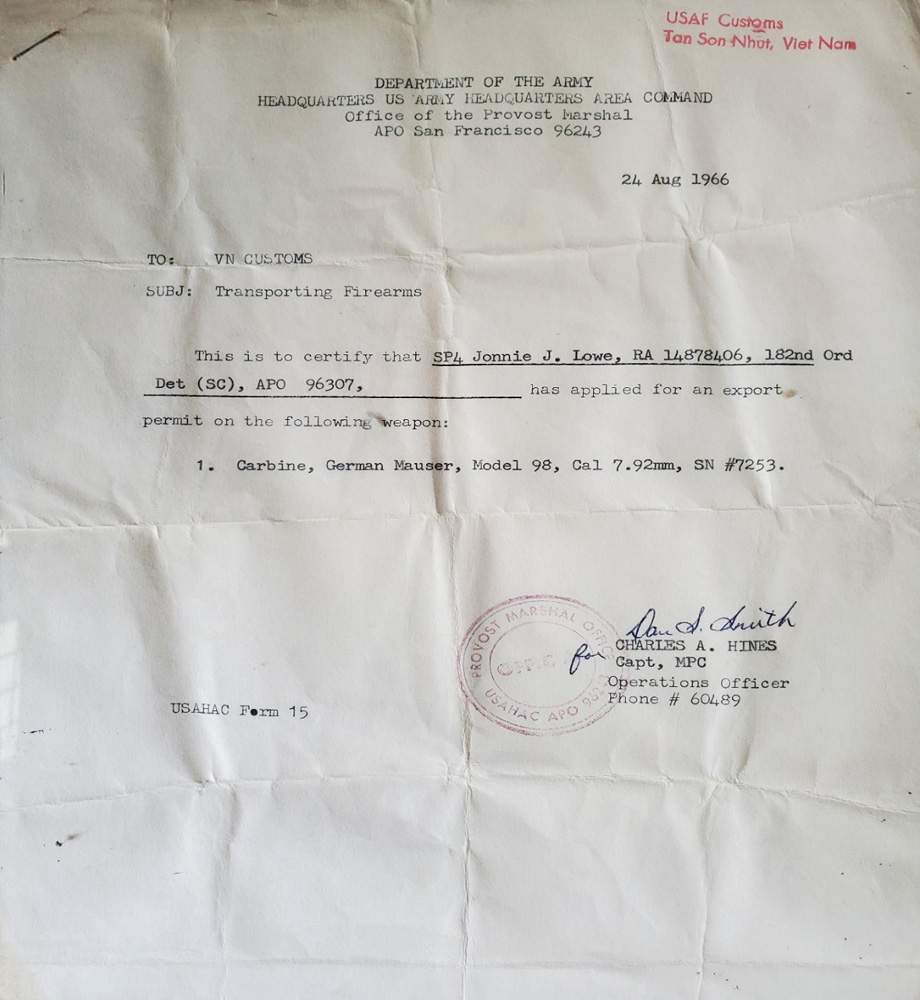
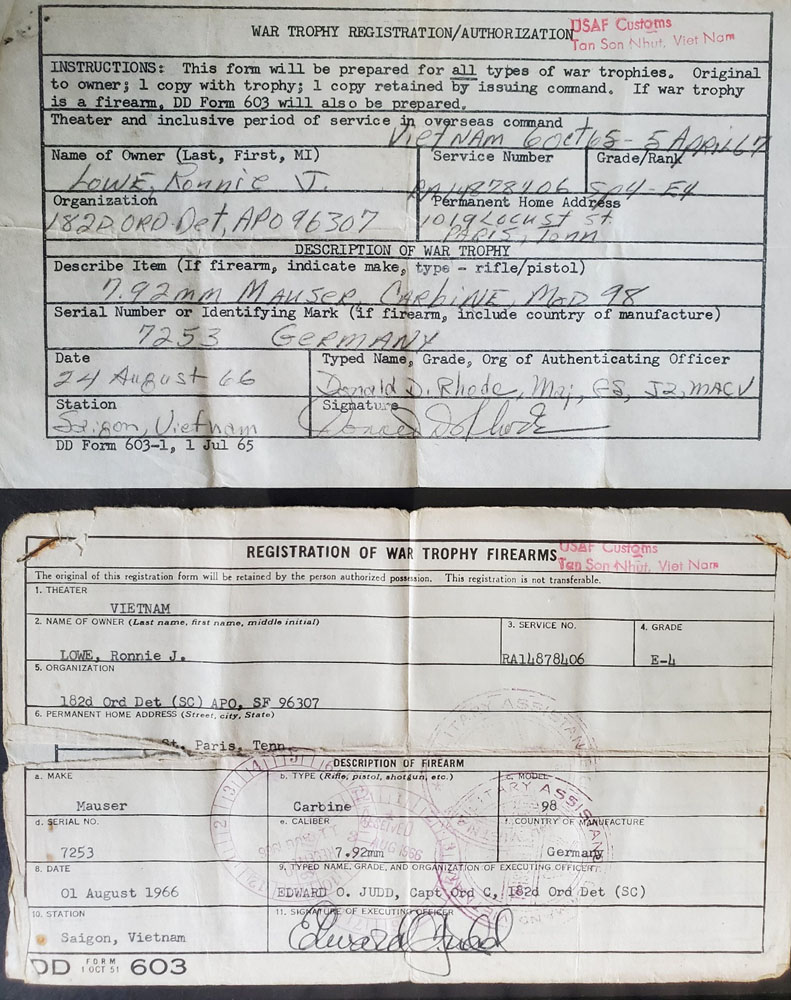
This special artifact came from Vietnam War Veteran Ronnie Lowe, of Paris, TN. and is the property of the Henry County Historical Society. The artifact is currently on display at the Heritage Center. The weapon was brought back in the early days of the war from Vietnam by Sergeant Lowe in August 1966. The Mauser 98 (M98) originated in the German Empire and was in service from 1898-1935. Over nine million Mauser’s were produced by various weapons manufactures including Sauer, Steyr and various imperial arsenals throughout the German Empire.  The weapon fires a 7.92 X 57mm round with a five round clip capacity. The serial number 7253 engraved on the rifle suggests this weapon is one of the first to be manufactured in the German Empire prior to World War I.  Accession No. 023-005-001

The original firearms transport permit from Ronnie Lowe features the weapons serial number 7253. Accession No. 023-005-003

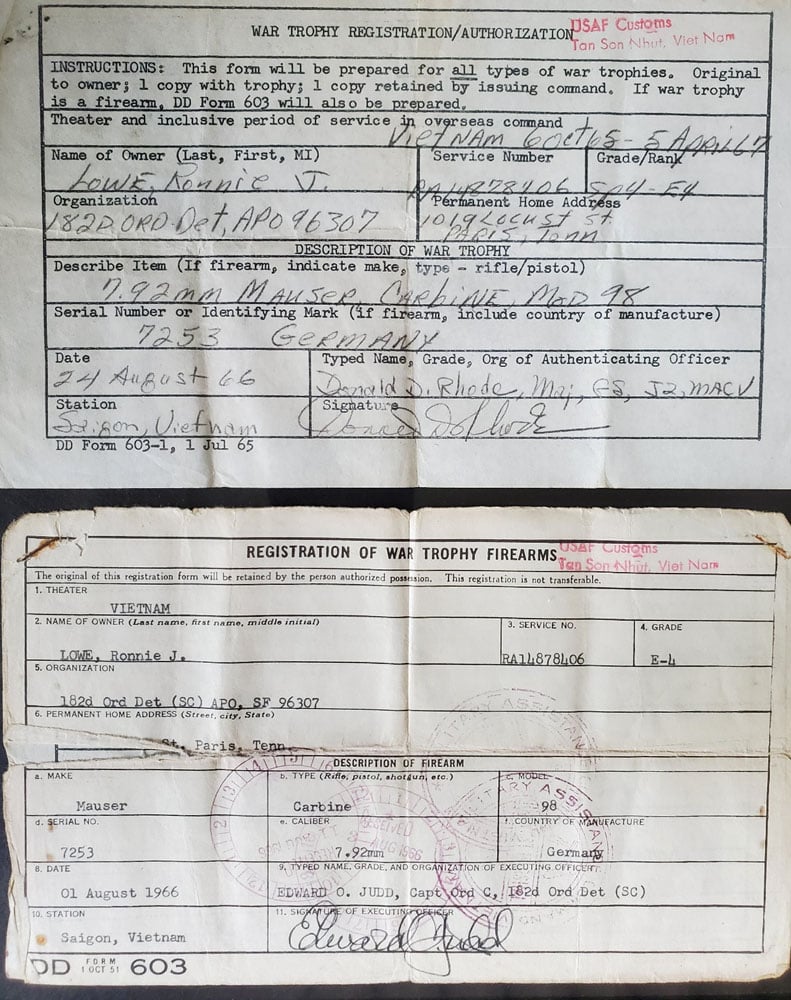
The original War Trophy Permit from Ronnie Lowe. The practice of soldiers bringing weapons home as war trophies ceased in 1968.  

Accession No. 023-005-004


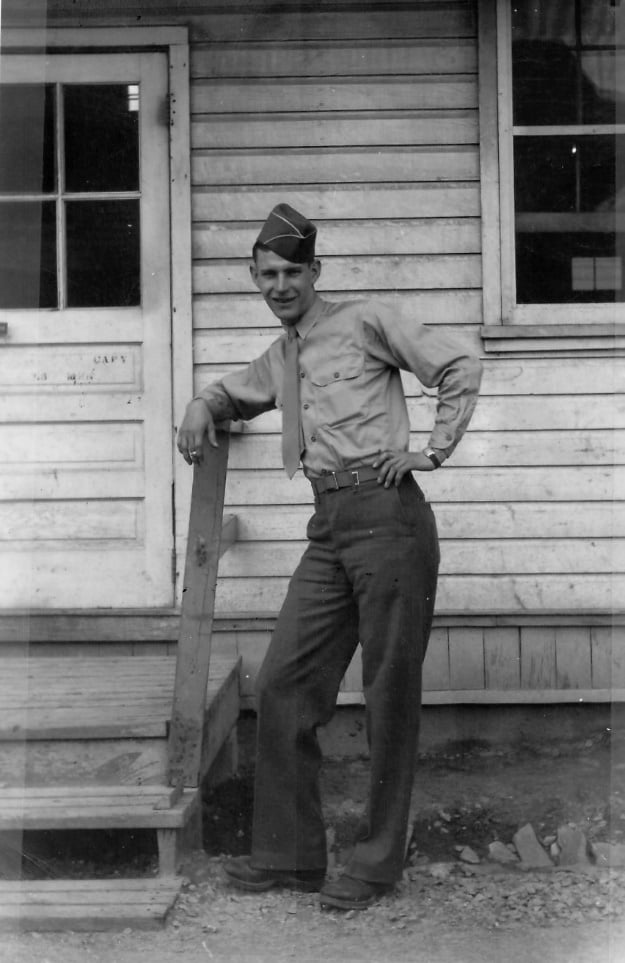
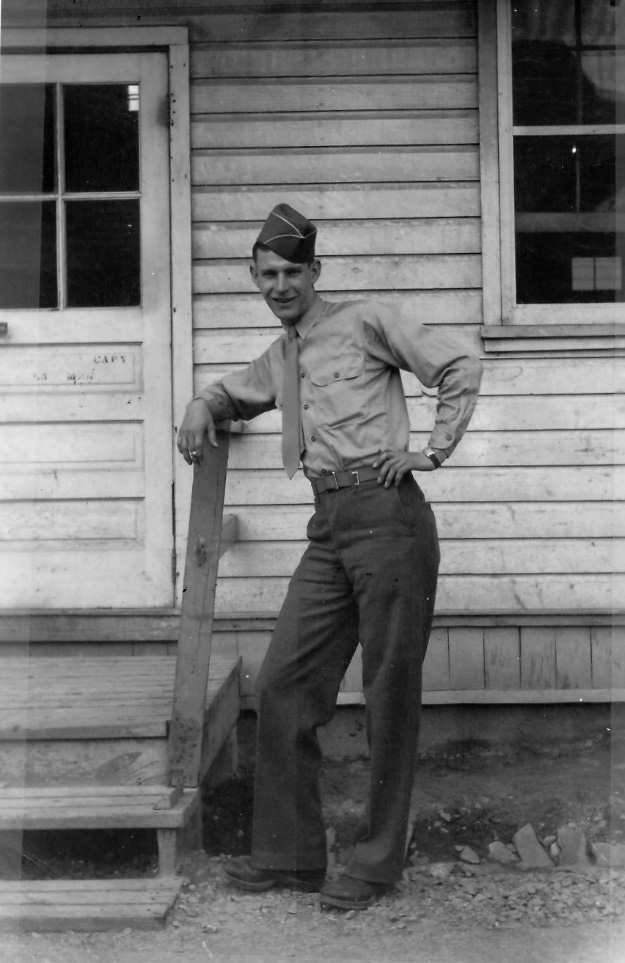
Master Sergeant Billy G. Miller

Fort Knox, KY. 1945

MSgt Billy Guerin Miller of Paris, TN. was drafted and served in the South Pacific and Japan with General Douglas MacArthur’s forces during America’s involvement in WWII.  MSgt. Miller was an embalmer by trade but also had a hobby and a keen interest in radios.  He taught himself morse code and the Army assigned Private Miller as a radio operator.  After spending time on the island of Formosa assigned to an armor unit, MSgt. Miller was then re-assigned to a Graves Registration unit on mainland Japan after VJ Day.  His assignment was to locate and identify downed airman who didn’t return from bombing missions over Japan.  MSgt Miller passed away in 1975 at the age of fifty-five.


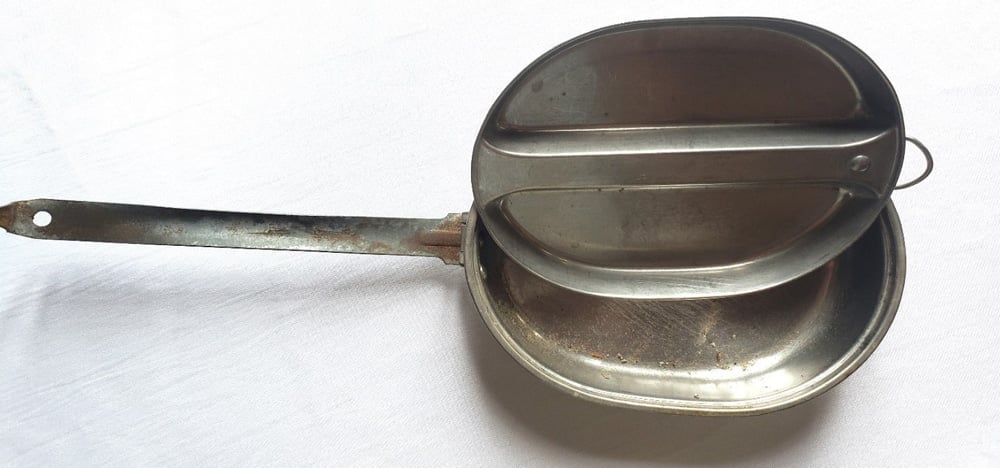
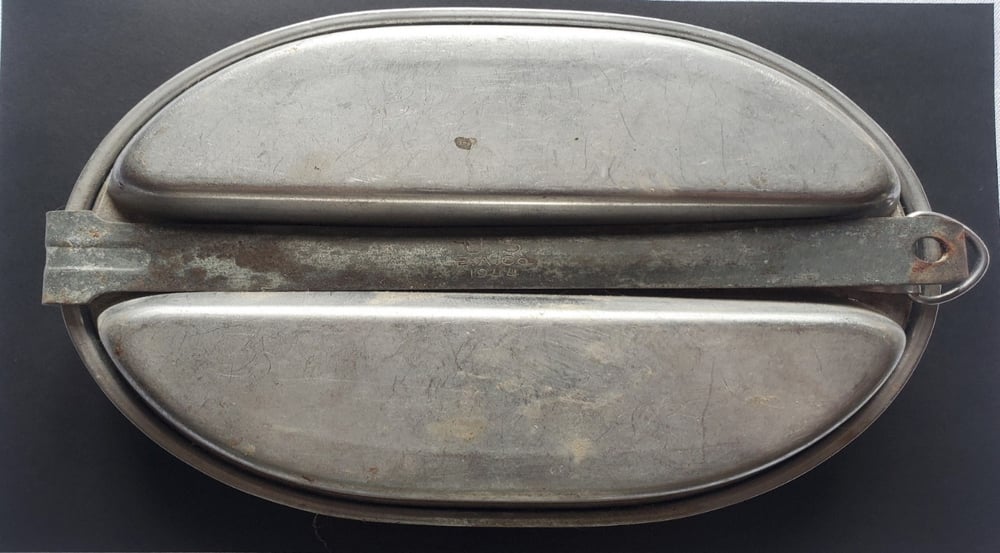
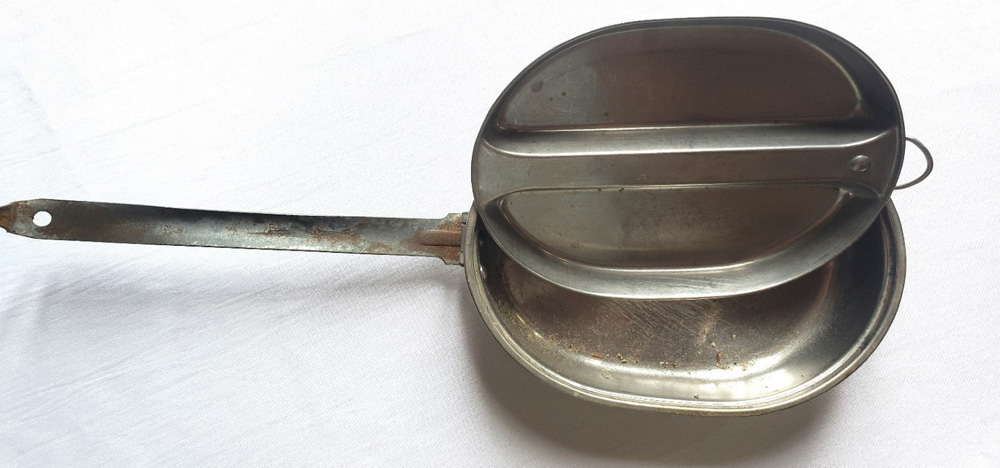
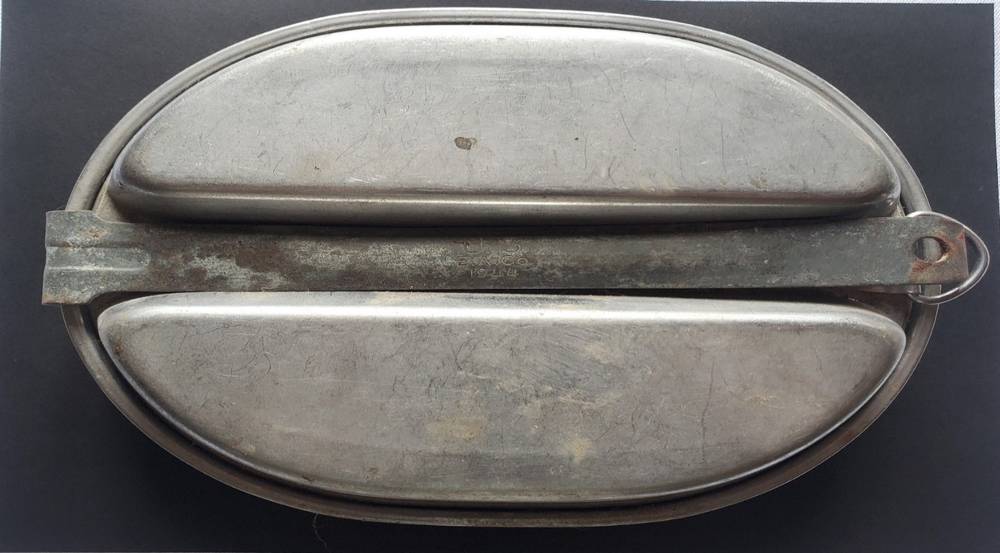
WWII G.I. Mess Kit

The G.I. Mess Kit pictured above belonged to MSgt. Miller and was used throughout his time in WWII.  Accession no. 023-006-018


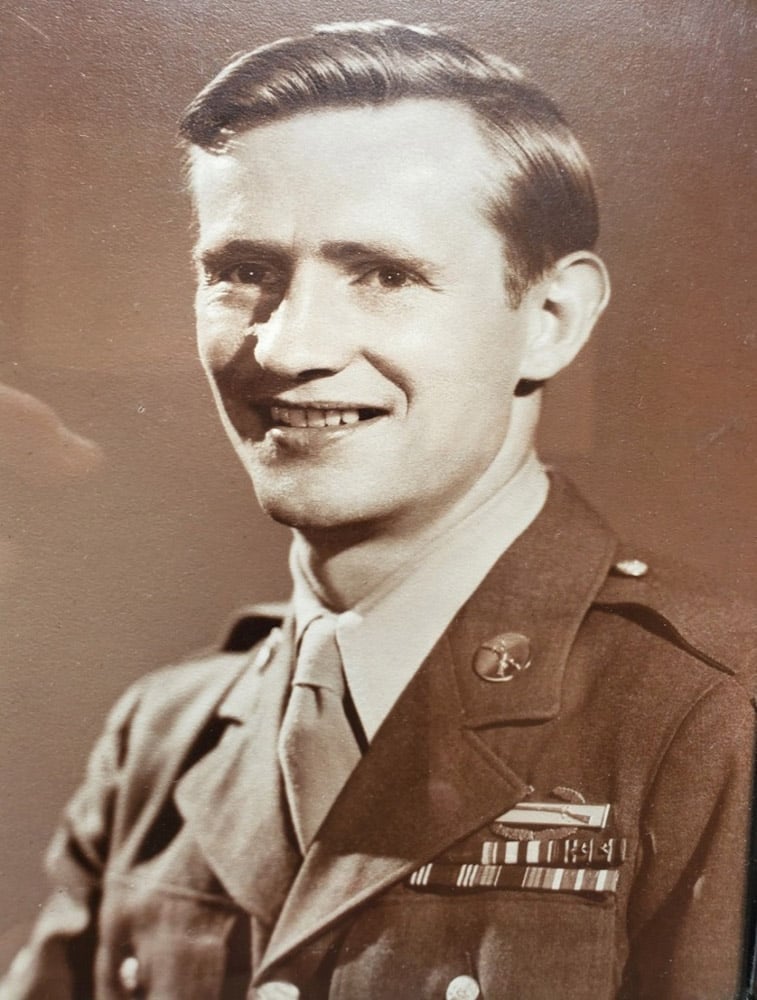
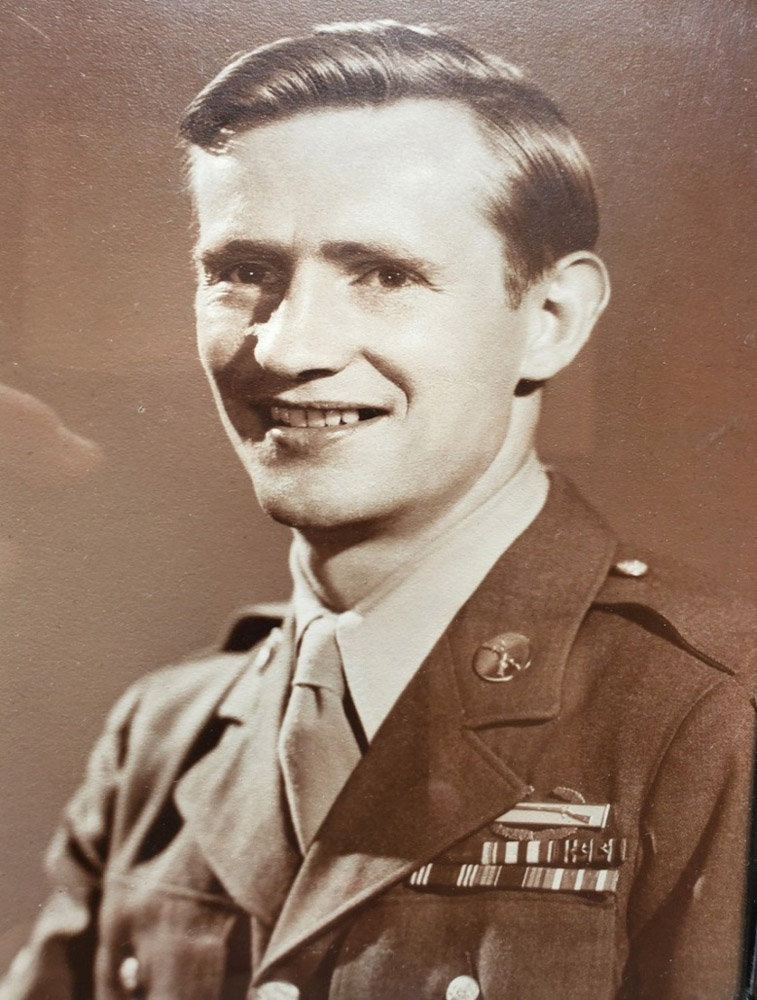
Sergeant Robert Vayden “Bob” Sinclair

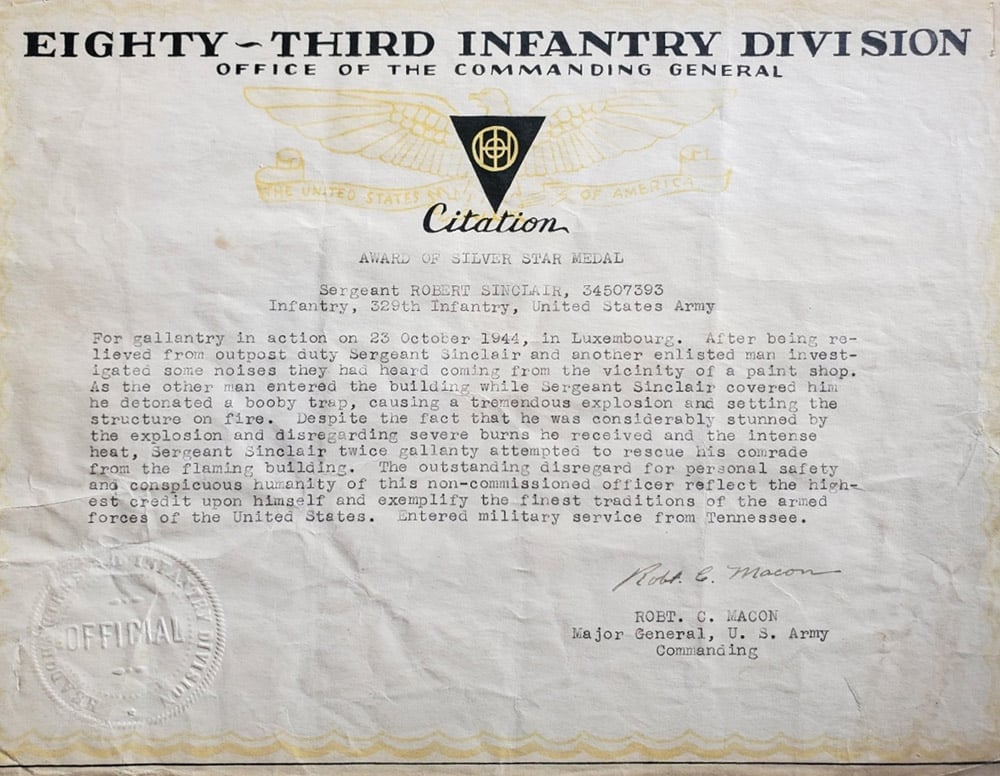
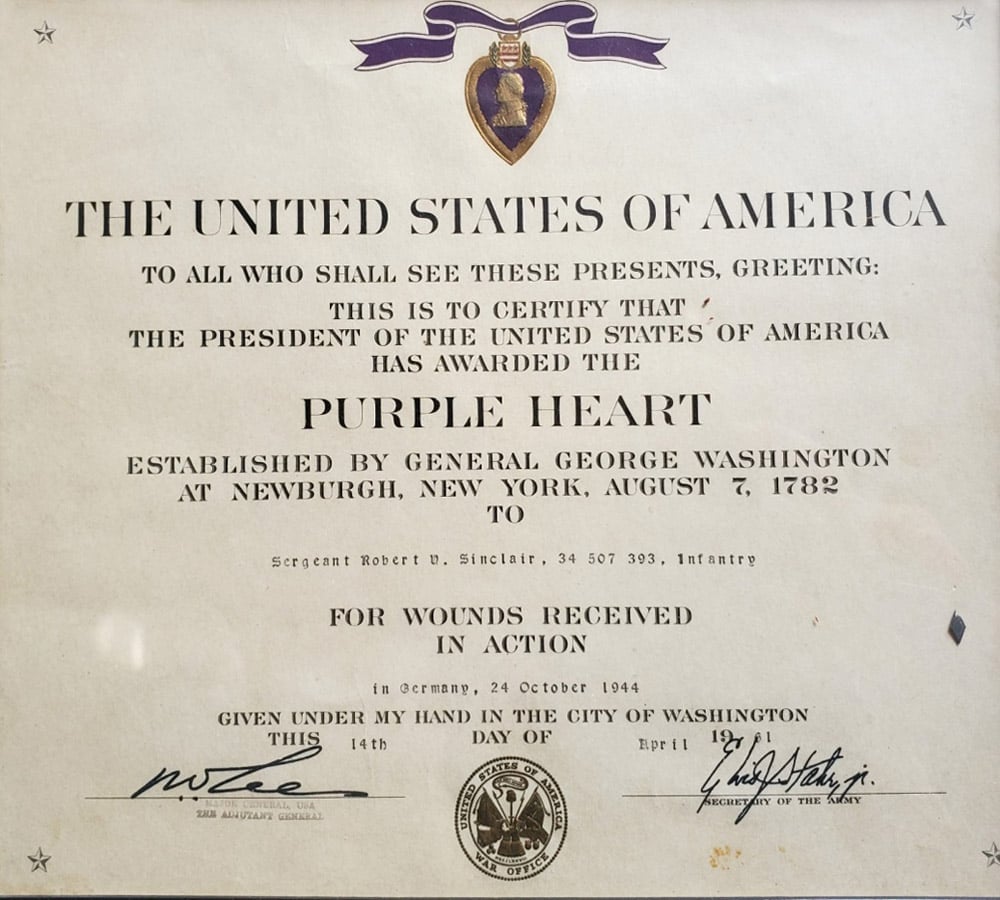
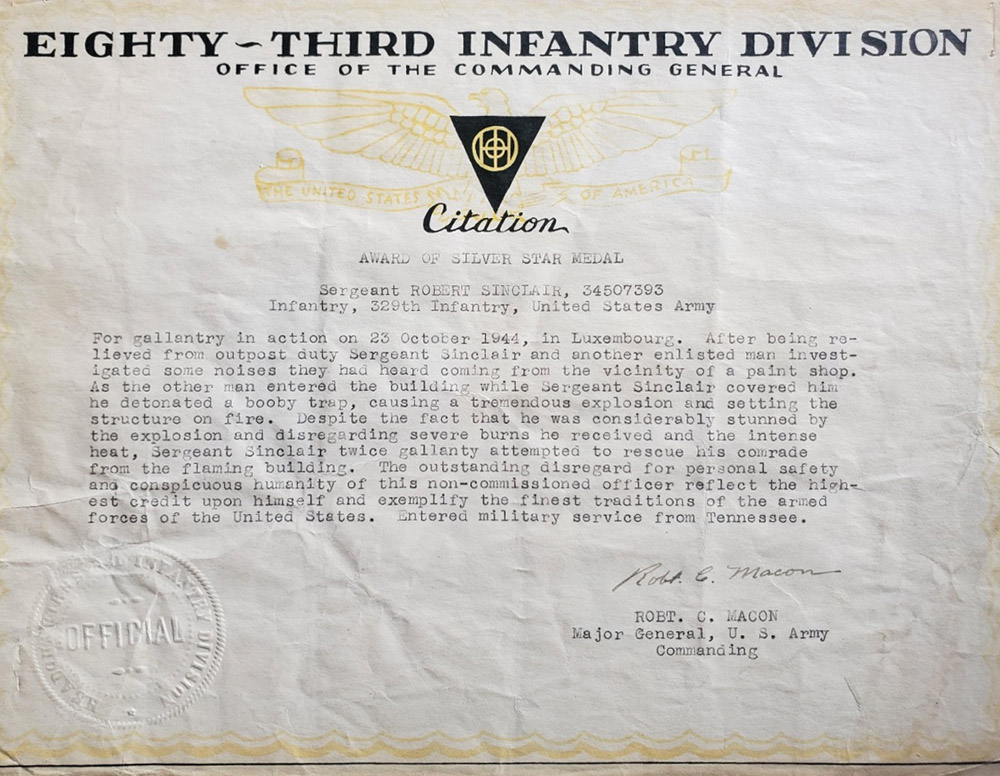
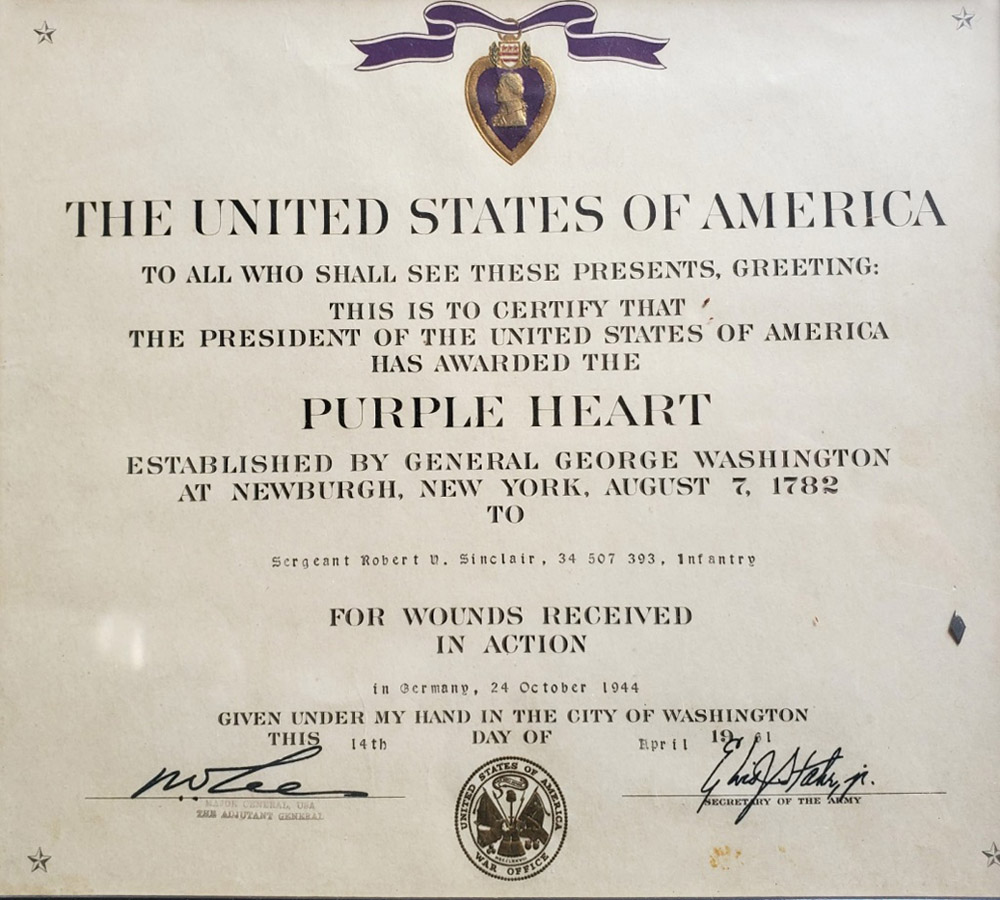
Sergeant Sinclair of Paris, Tennessee served in the Infantry with the U.S. Army, 83rd Ohio Division. Sergeant Sinclair and the 83rd engaged in 244 days of combat in WWII. Sergeant Sinclair fought from the beaches of Normandy, across Northern France, into the Rhineland and the Ardennes.  The fighting took tremendous sacrifice and courage.  He was awarded the Silver Star, Bronze Star, Purple Heart, and the Combat Infantryman Badge. The photo and citation (family Collection) were given to the Center for display.


Sergeant Sinclair’s Silver Star Citation

Sergeant Sinclair’s Purple Heart Citation

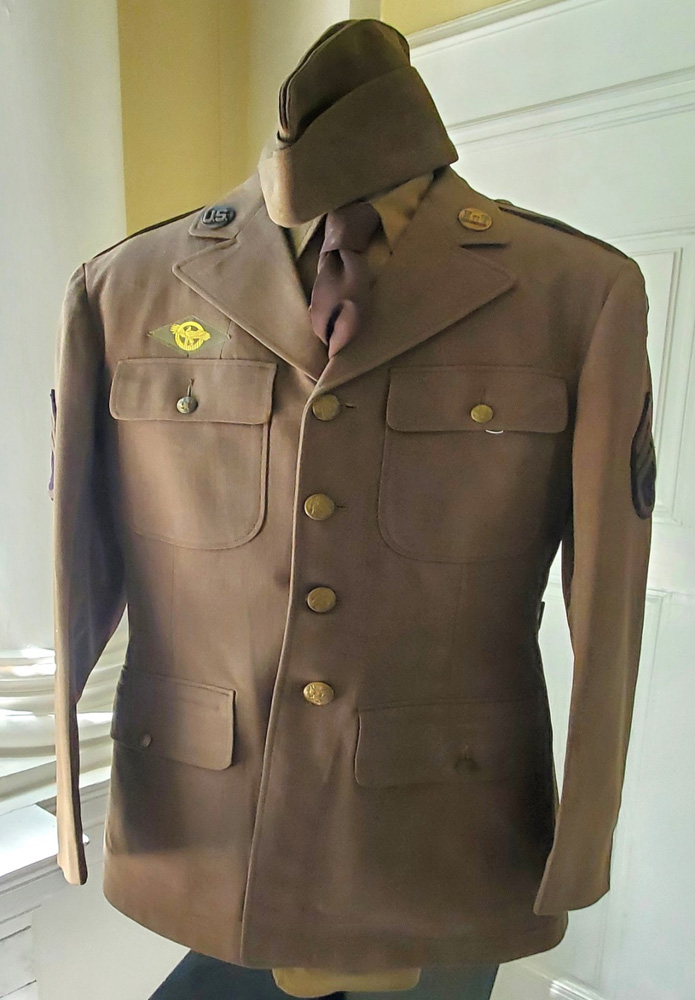
WWII Dress Uniform

Accession no 023-008-025


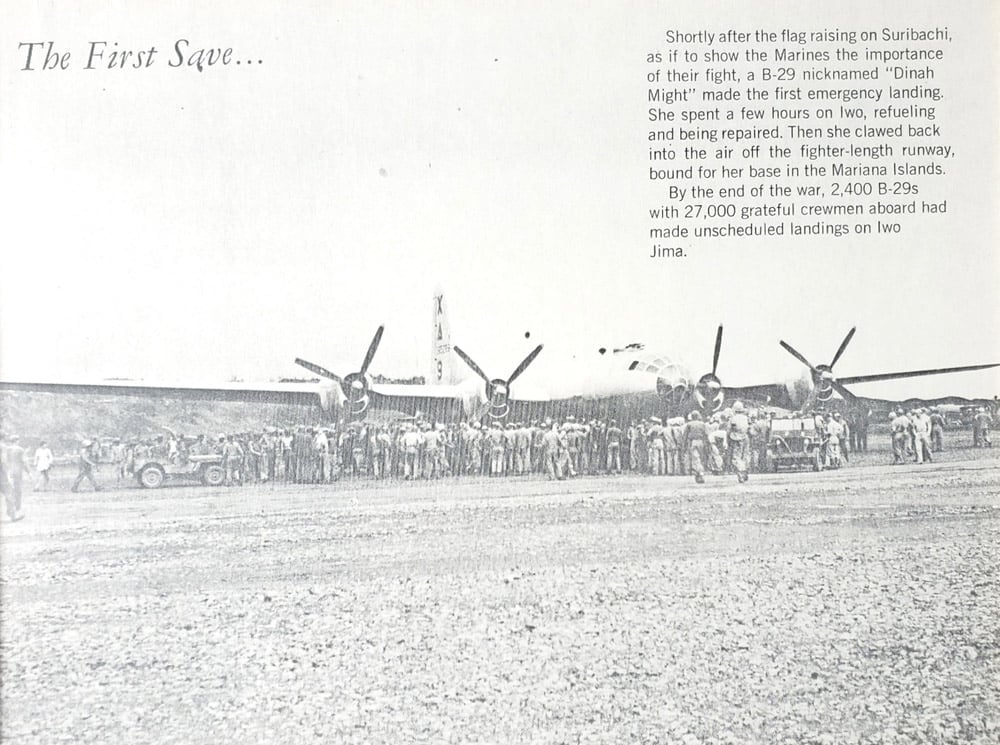
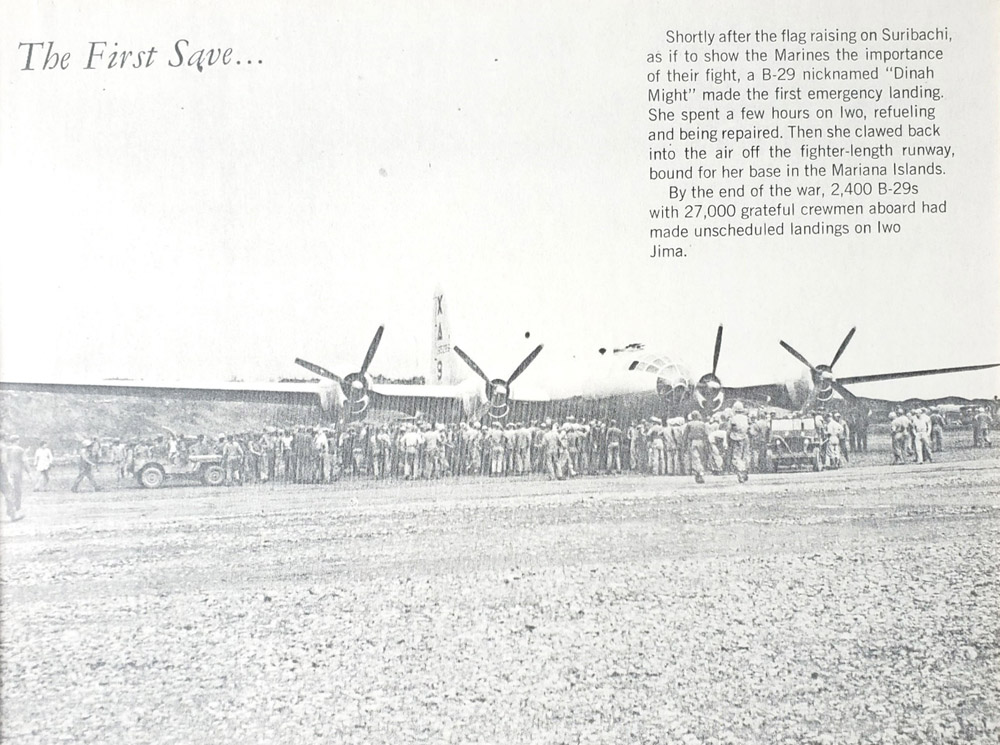
“Pacific Theater Island Hopping Campaign of WW II”

“Uncommon valor was a common virtue.”  

-Admiral Chester W. Nimitz

Paris and Henry County citizens did their share serving our country when called during WWII. Soldiers, Sailors, Airmen and Marines from the area served in both the European and Pacific theaters during WW II.  Their courage and sacrifice shall forever be honored in our hearts. The above photo was taken at a critical moment in WW II history, when the 1st Marine Division wrestled control of the island fortress Iwo Jima in the pacific.  

Accession no. 023-006-026


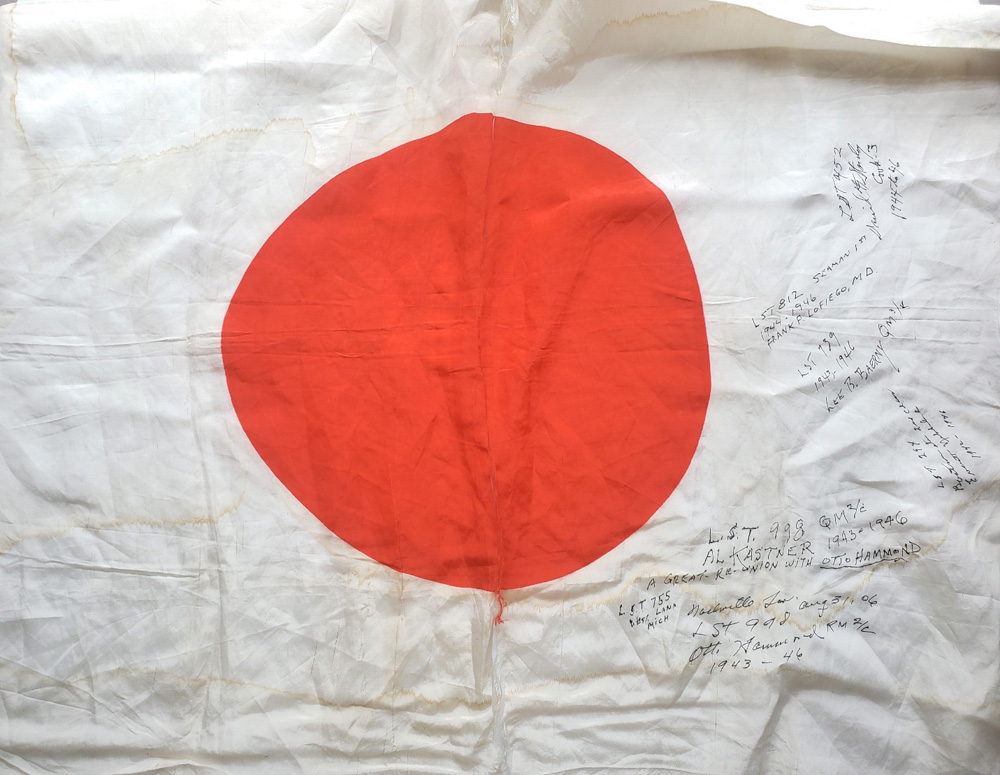
Captured WW II Japanese flag

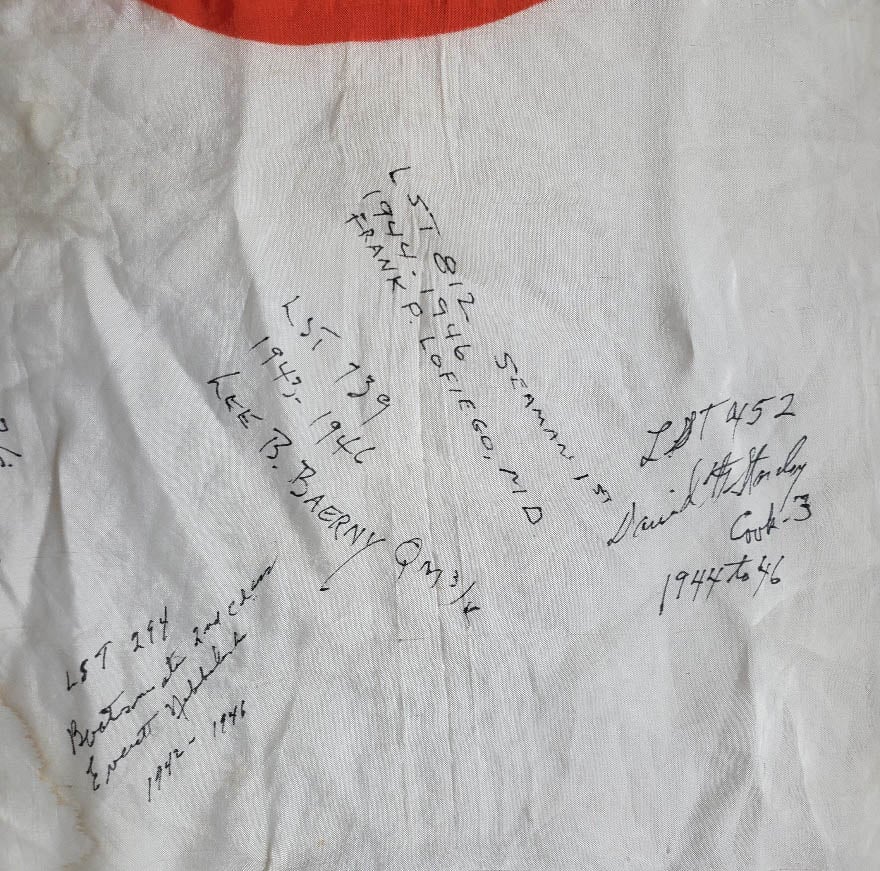
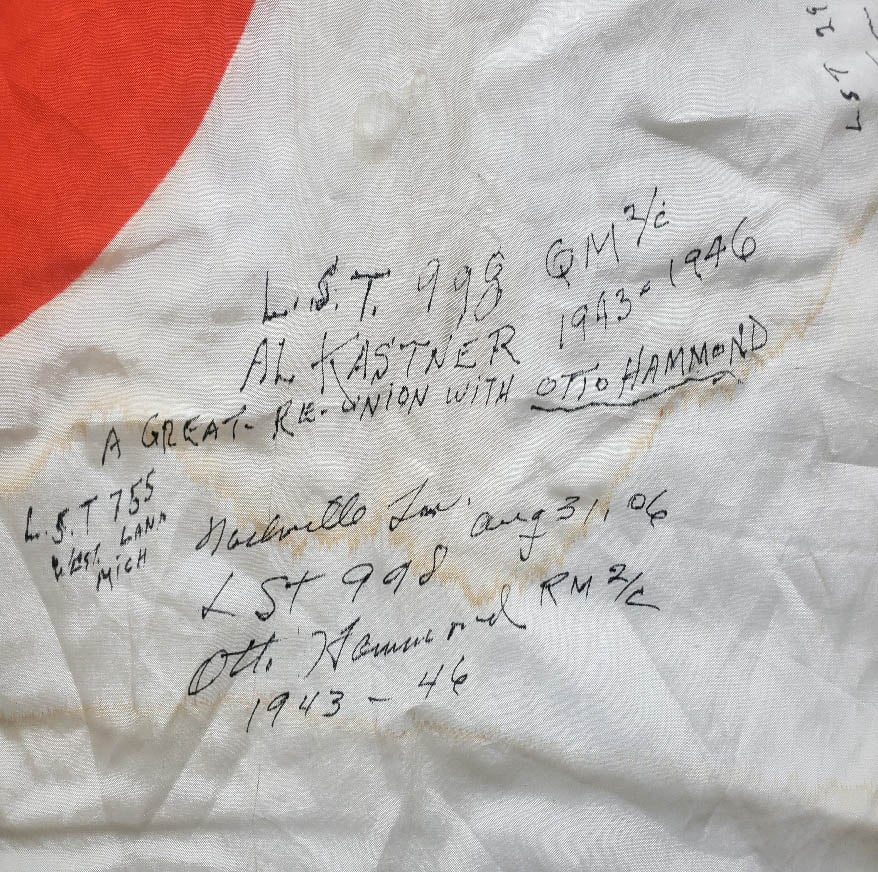
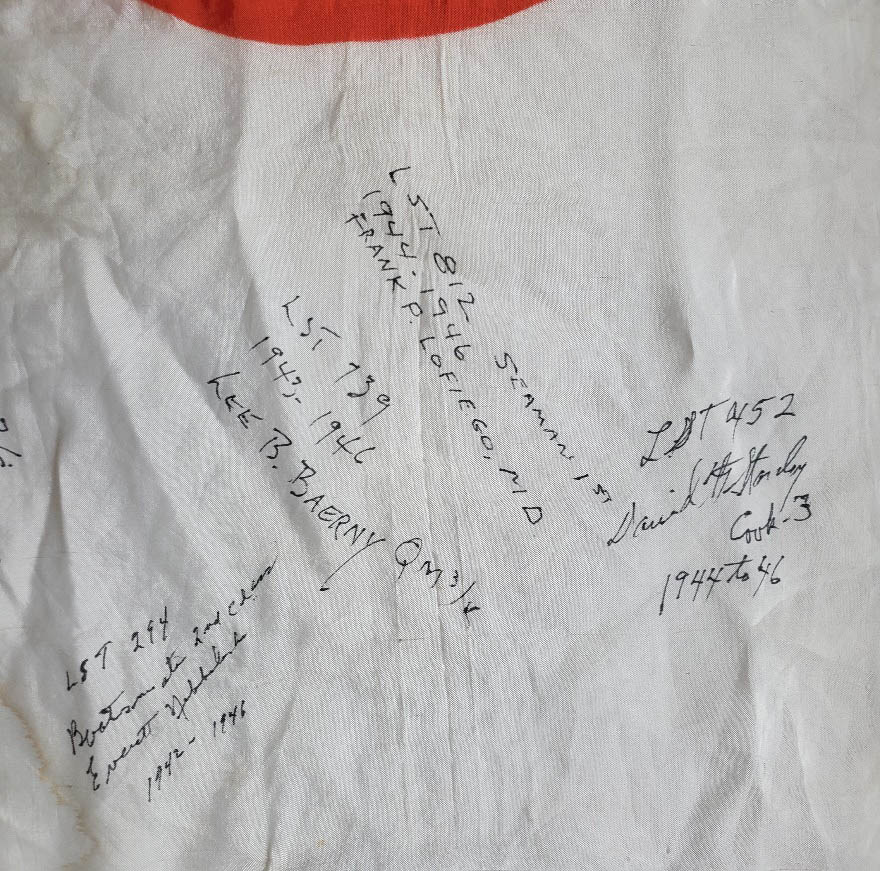
The exact details of this artifact have been lost over the years. Made of silk, this unique trophy was presented at a US Navy WW II veterans reunion held in Nashville, TN on August 31, 2006. This reunion of Navy veterans spotlighted the sailors who served aboard the famous LST (Landing Ship Tank) ships. The LST’s served as the workhorse of logistics, providing much needed supplies to the Allies success in both theaters of operations during WW II. Lower-level on display and permanent loan from Steve Cannon. Accession no. 023-006-015


“LST-998”


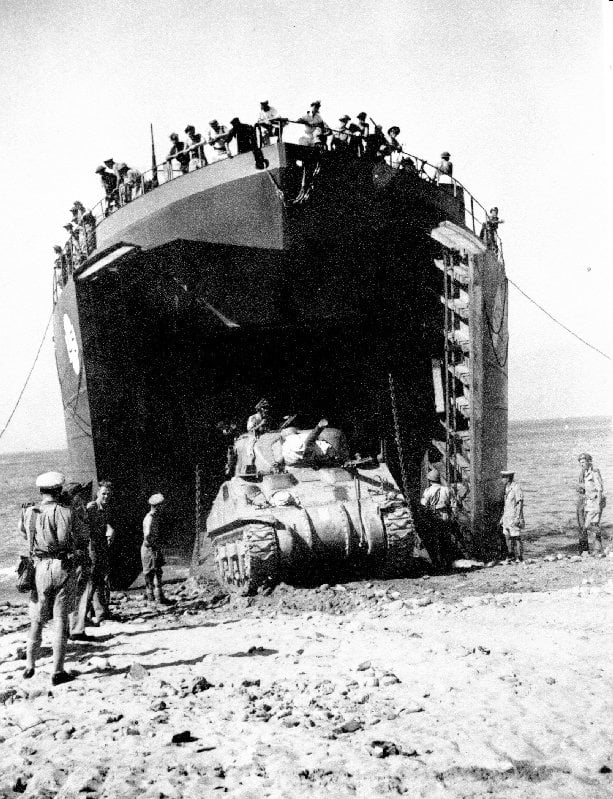
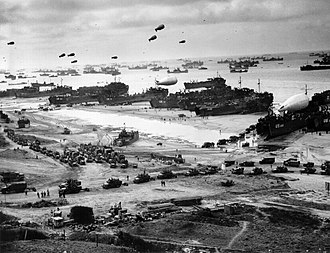
US Navy Veterans Al Kastner and Otto Hammond both served aboard LST-998. Al was a Quartermaster from 1943-1946. There were so many LST ships cast during WW II that many ships didn’t receive names and only used the official number designation. Above left is a National Archive photo depicting an LST in action offloading tanks in Sicily during WWII. Logistics wins wars, and America at the time understood hard work and sacrifice on the home front was vital to victory.


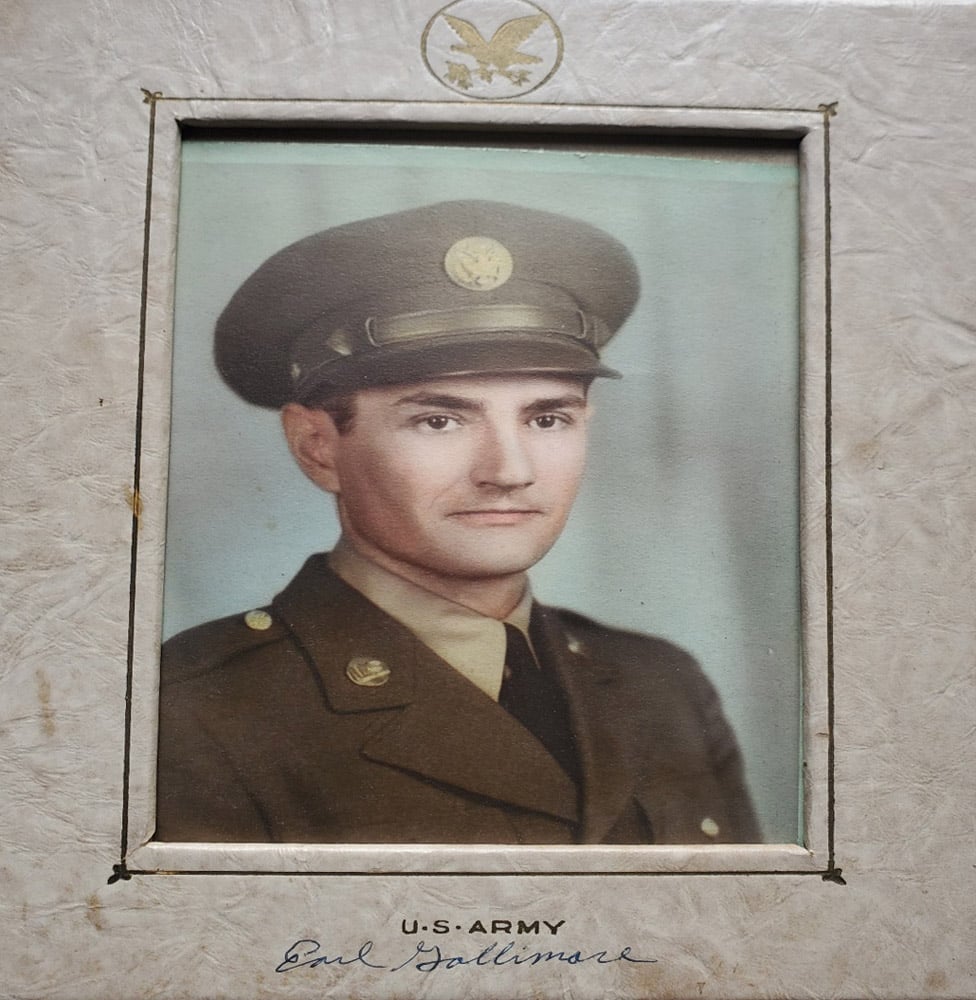
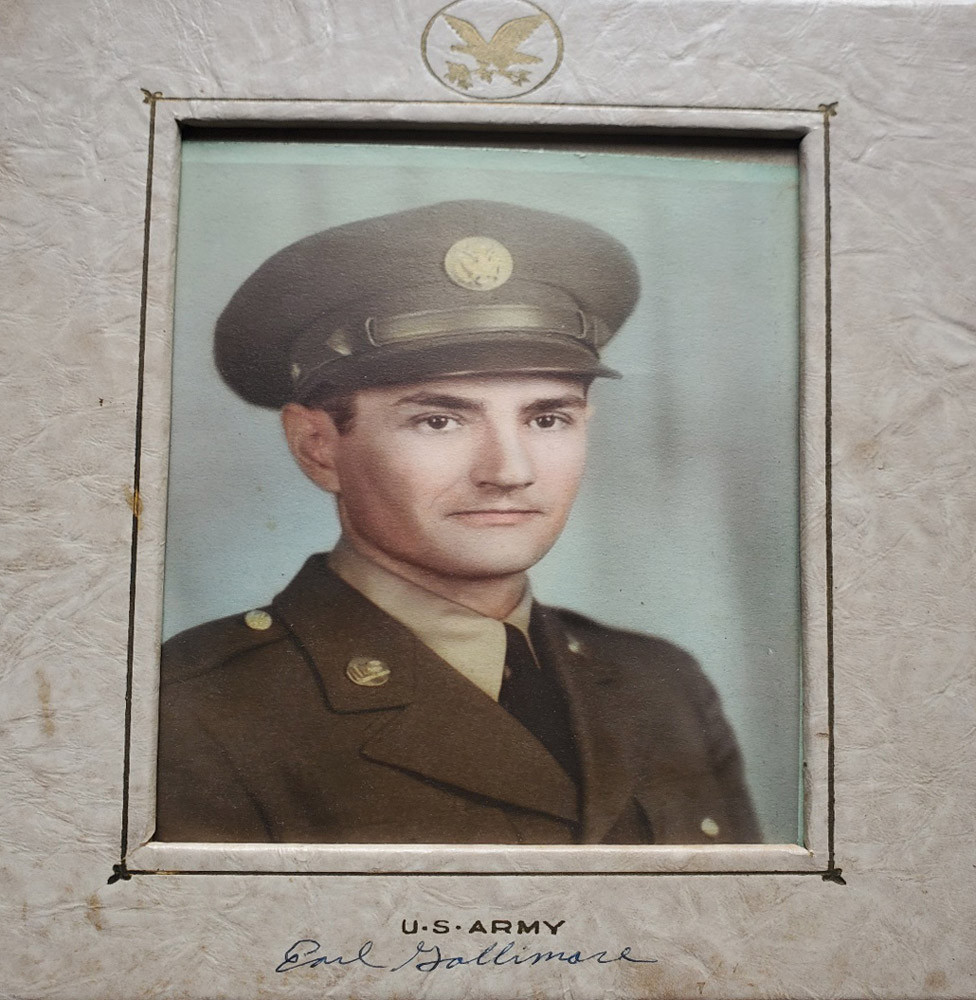
Gallimore

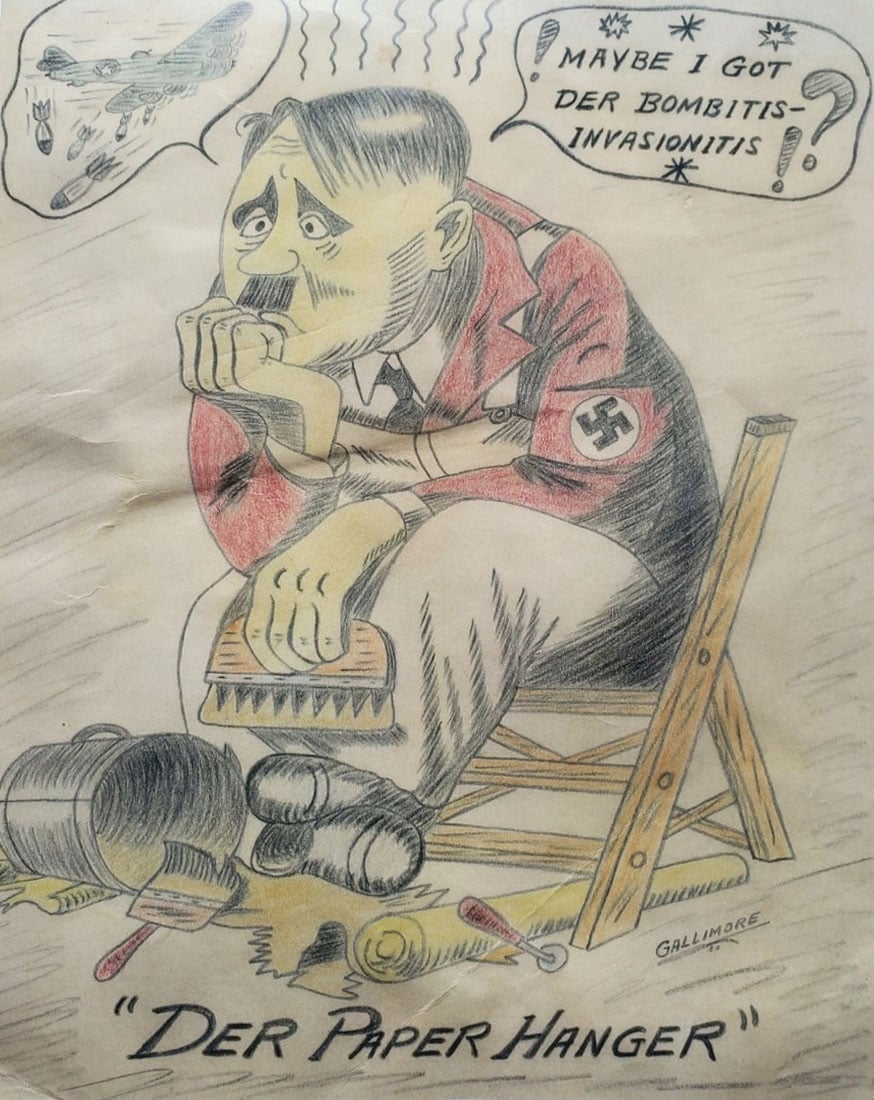
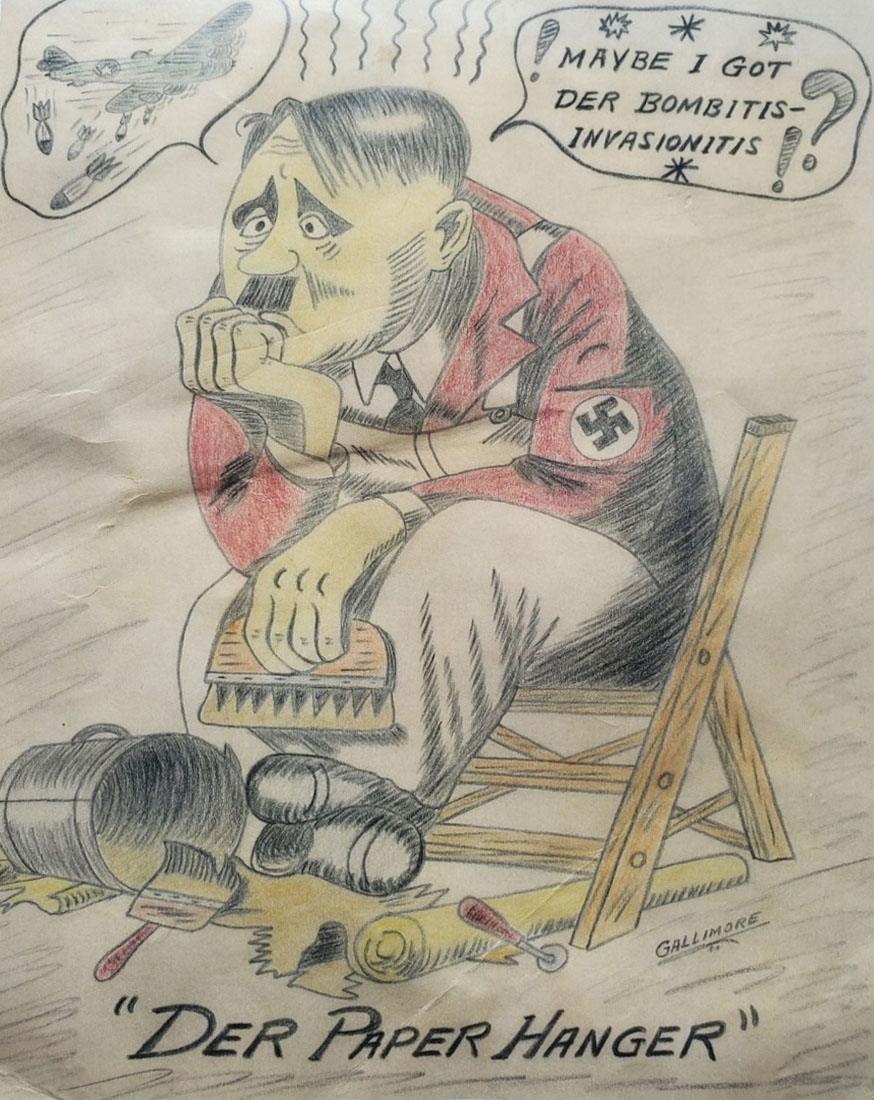
William Gallimore of Henry County, TN left his job as a bookkeeper and enlisted as a Private in the U.S. Army in December 1942. William Gallimore was thirty-seven years old at the time of his enlistment. William remained state-side in a support role during the war due to his age. He served at Camp Croft in South Carolina and Washington, D.C. William was a talented sketch artist, and one of his unique sketches is on display at the Heritage Center.


Trench Art by William Gallimore

Trench Art has been around since wars began. Soldiers and sailors will get lonesome and bored while away for long periods of time. During those times, magnificent pieces of craftsmanship and artistry swell in the ranks.  Unique to “Trench Art” is the interesting stories attached to each piece. Most objects were made from the abundance of empty brass shell casings lying about. Gallimore’s caricature of Hitler clearly displays his talents.  

Accession no. 023-006-019


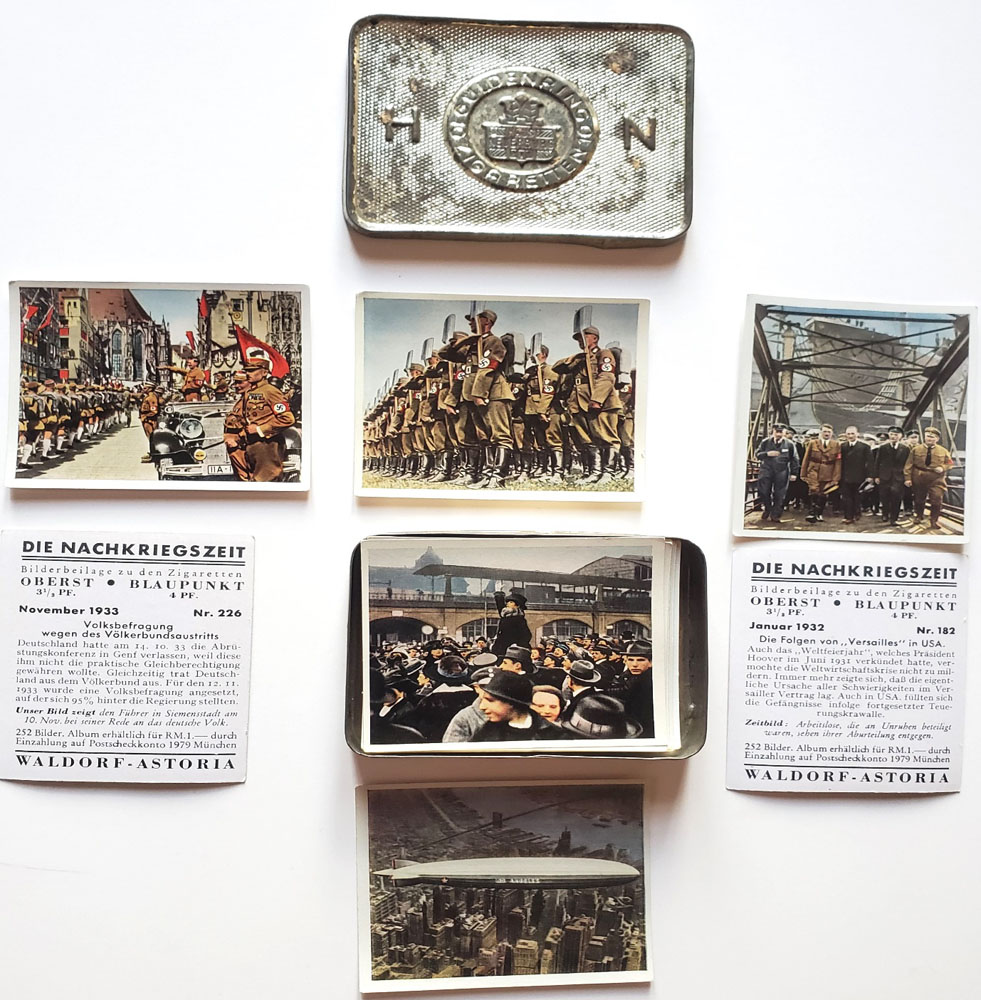
1930’s Era German Nazi Party Trading Cards

Propaganda directed against the Allied powers was a major arm of Hitler’s Nazi party as demonstrated by these wonderfully preserved trading cards. The cards came in a tin case and contained 55 trading cards. Each photo has a German narrative of the picture. Accession no. 023-006-023


Major George Carpenter U.S. Army Air Corps

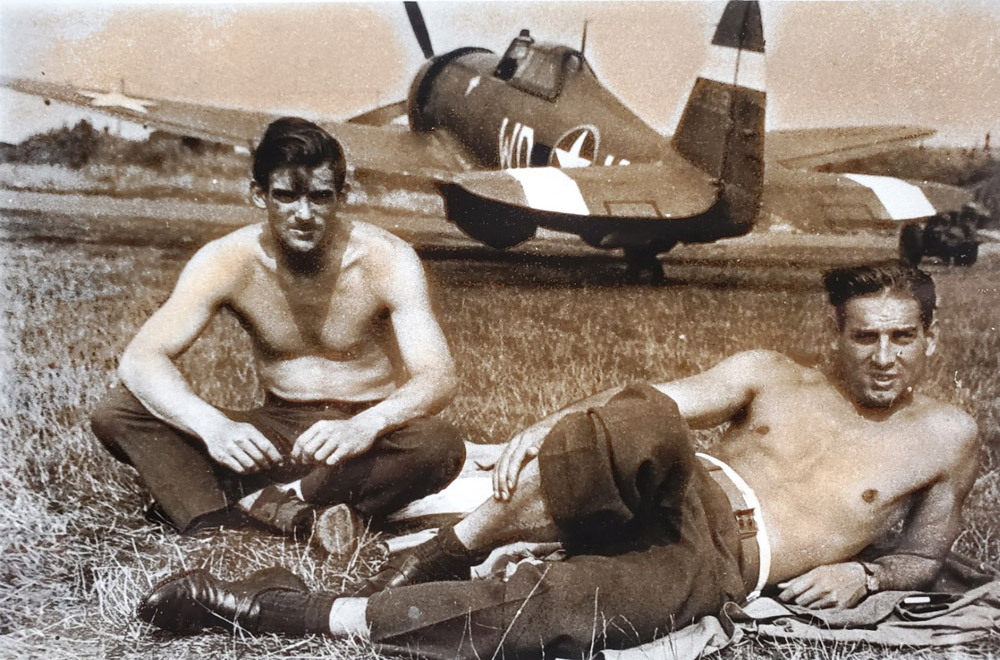
Carpenter signed up for the Air Corps and was “washed-out” of pilot training because he fell unconscious from a tetanus shot. Determined to fly and fight back against the Nazis, Carpenter went to England and became a fighter pilot with the Royal Air Force. Major Carpenter became a fighter pilot with the RAF in England before America’s Air Corps jumped into the fight. The U.S. Army Air Corps gladly accepted Major Carpenter into their ranks upon arrival. Carpenter flew the Spitfire, P-47 Thunderbolt, and the aircraft that later dominated the skies over Germany, the P-51 Mustang.  Serving with the 4th Fighter Wing, Major Carpenter was a three time “Ace” with sixteen victories. His flying came to an end on a mission over Germany in January 1944, when he was shot down and eventually captured.  Major Carpenter would spend the remainder of the war as a POW in Luftwaffe Stalag Luft III, located about 160 miles southeast of Berlin. The POWs in camp Stalag Luft II acclaimed a big victory on the night of 24/25 March 1944, when they pulled off the biggest POW escape of WWII, this resulted in diverting tremendous amounts of resources and manpower which could have been used in Germany’s war effort.  The suspenseful epic war adventure film “The Great Escape” debuted in 1963 starring Steve McQueen, depicted a Hollywood version of the facts.  Carpenter arrived two weeks after the escape and witnessed the aftermath of the attempt. Carpenter would remain in Stalag III until liberated by Russian forces in January 1945.


George Carpenter and his “Wingman.”

George Carpenter and his wingman relaxing in front of the P-51 Mustang. In an interview Carpenter would say “We now had a plane with good speed, splendid maneuverability, and unusual range; and I think that the P-51 Mustang may have been a turning point for the Allies in the air war.” Photograph on permanent loan from the family is on display.


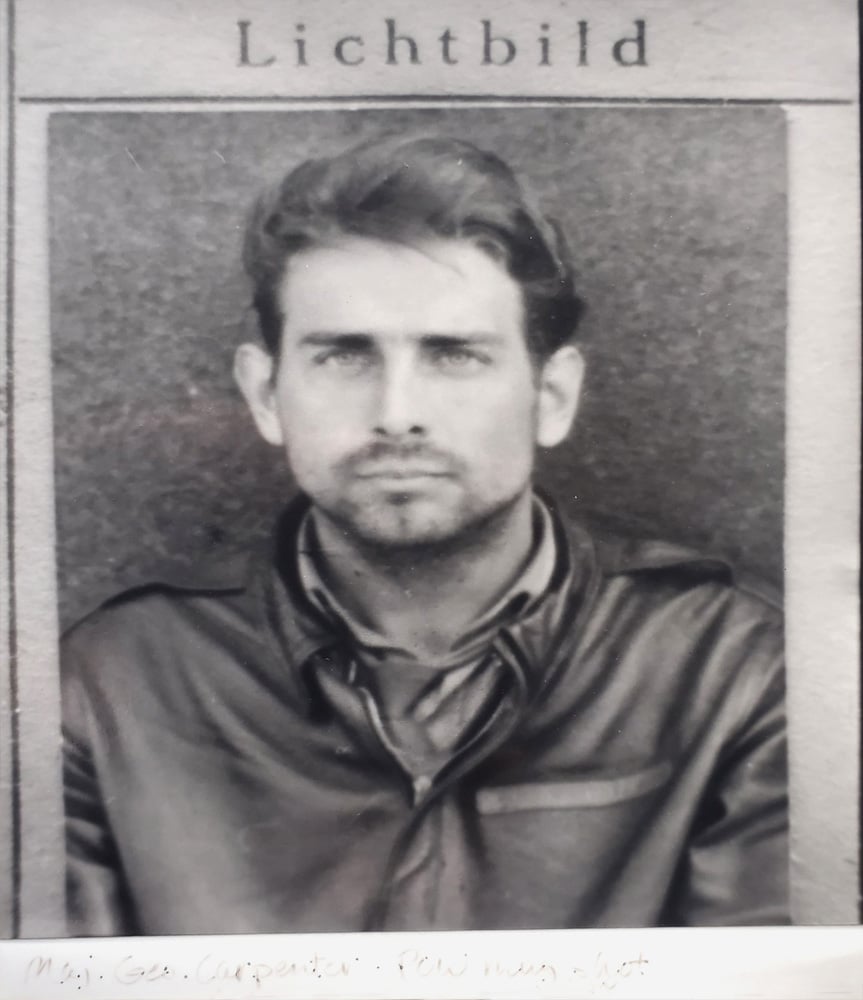
Major Carpenter

POW Stalag Luft III Germany1944-1945

Prisoner of War photograph on permanent display is on loan from the family.


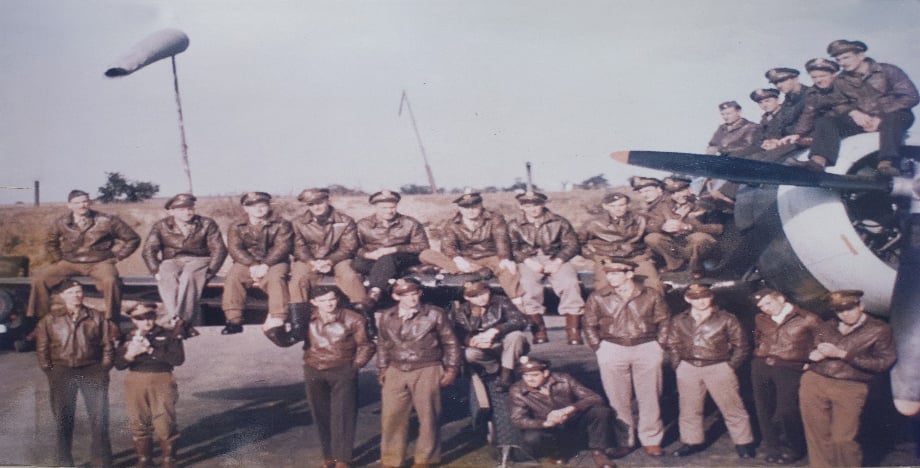
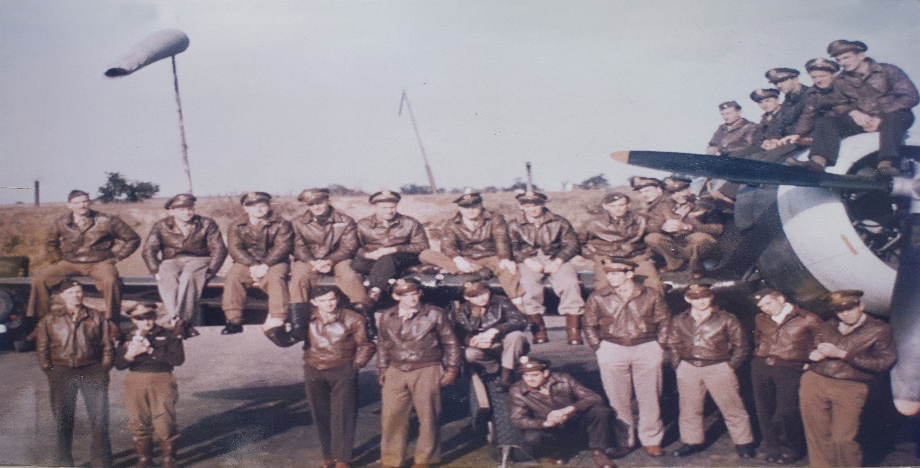
Pausing for a Collective Moment

Major Carpenter’s Squadron poses for a group photo on an English airfield between missions in the summer of 1944. Carpenter “Carp” is seventh from left standing with hands in his pockets.

After the war and after medical school, George Carpenter moved to Paris in the mid 50’s to practice medicine with his British wife Sally and their young family, making Paris their home.


Charles P. Mansfield Jr.

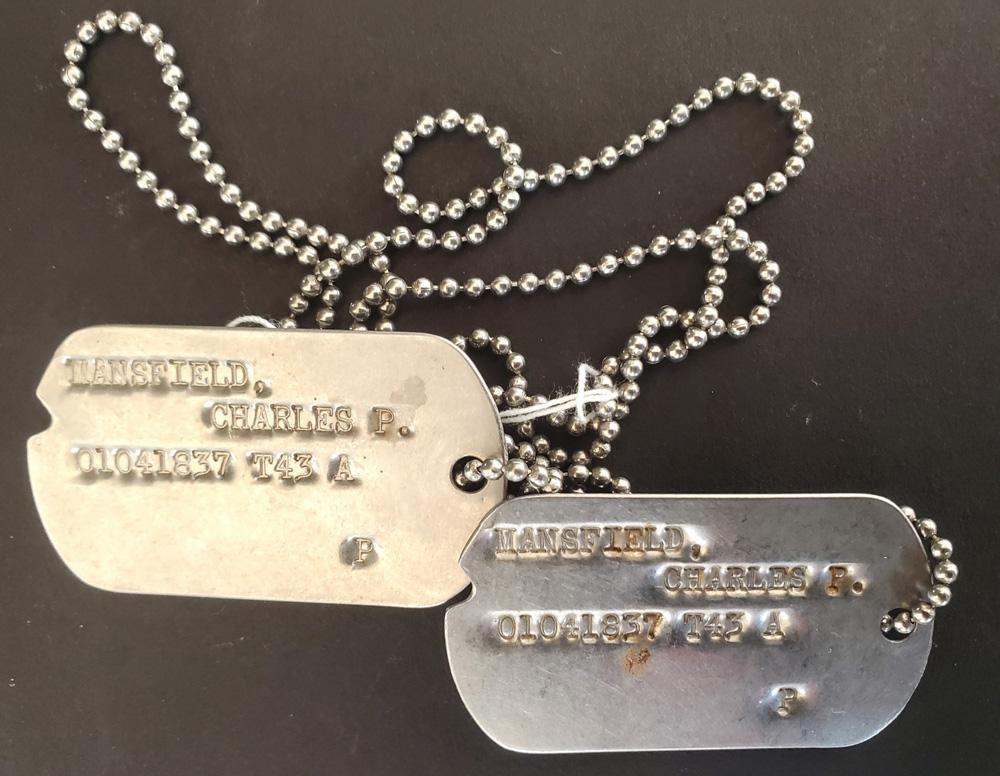
These “dog tags” on display at the Heritage Center were worn by Charles Pinkey Mansfield. Charles lived on Hudson Ave. in Paris, TN and graduated from Grove High School and Kentucky University at Lexington. Before entering service during WWII, Charles was a musician and band leader and often played at the local city auditorium in the late 1930s. While serving in the U.S. Army Captain Mansfield was an anti-aircraft battery commander on the beaches of Anzio. Mansfield’s journey also brought him to the battlefields of Sicily, Naples-Foggia, Rome-Arno and into the Rhineland. After VE-Day he was put in charge of governing a town near Berlin during occupation. Accession no. 023-006-027


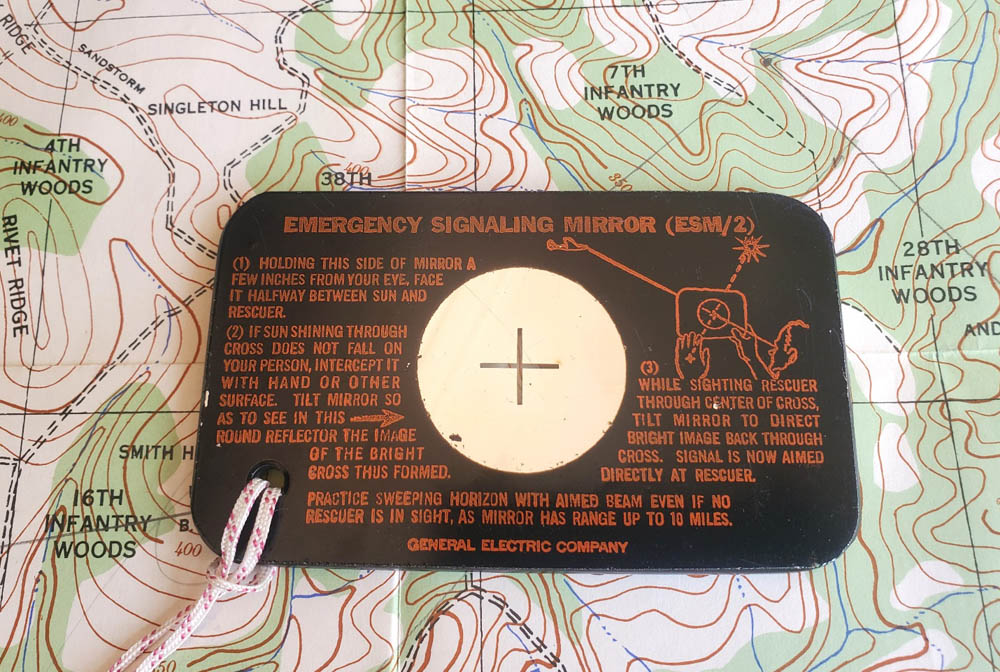
Training

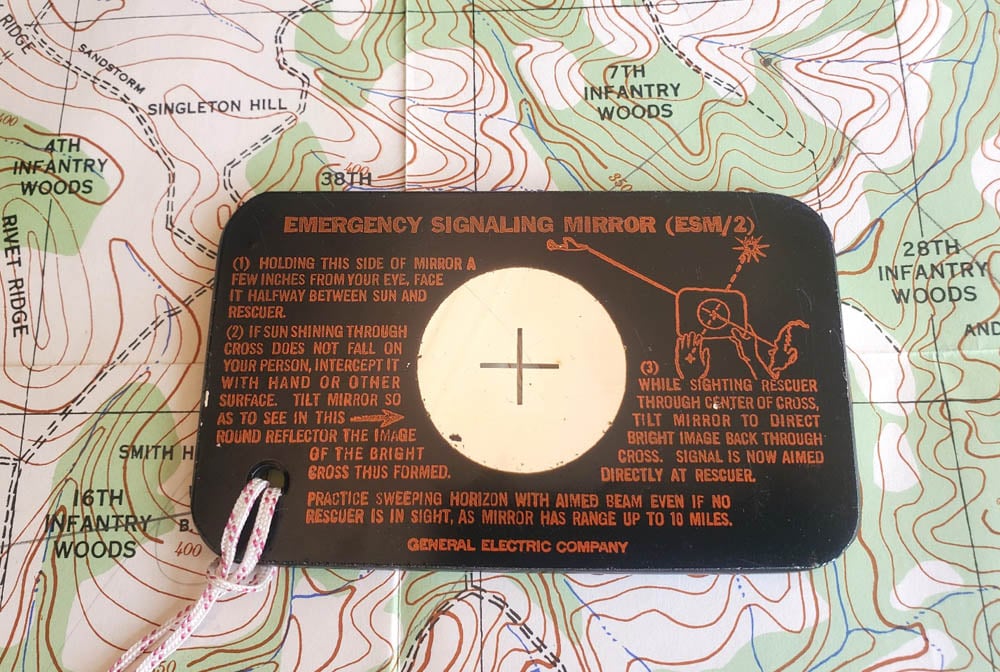
On display is a map and a signaling mirror from the 1940s. The signal mirror was used to signal aircraft for targeting and rescue emergencies. The mirror was manufactured for the war effort by the General Electric Company. The map was used by Sgt. Sinclair during his training.

Accession no. 023-006-007 


Camp Tyson

Camp Tyson


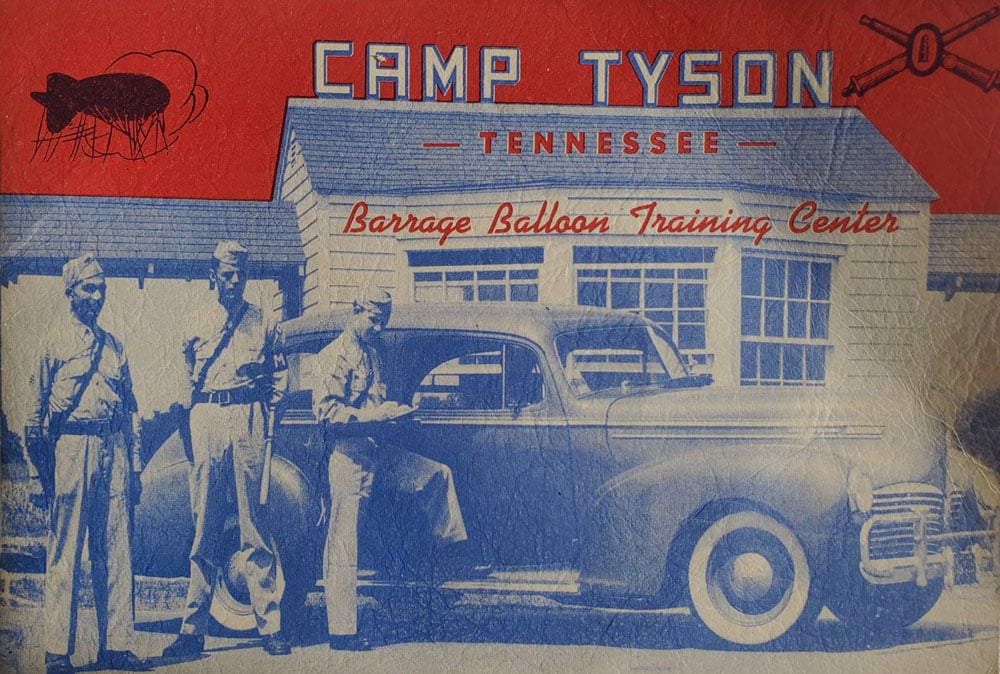
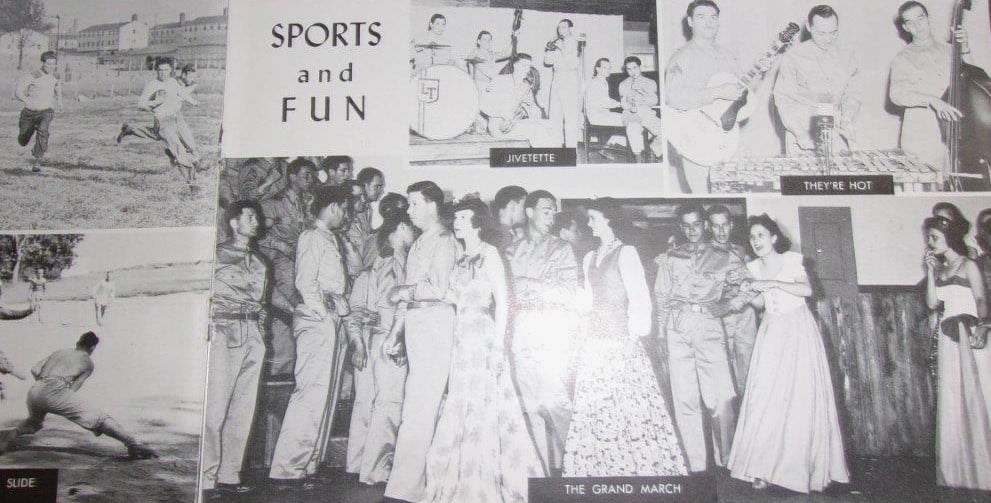
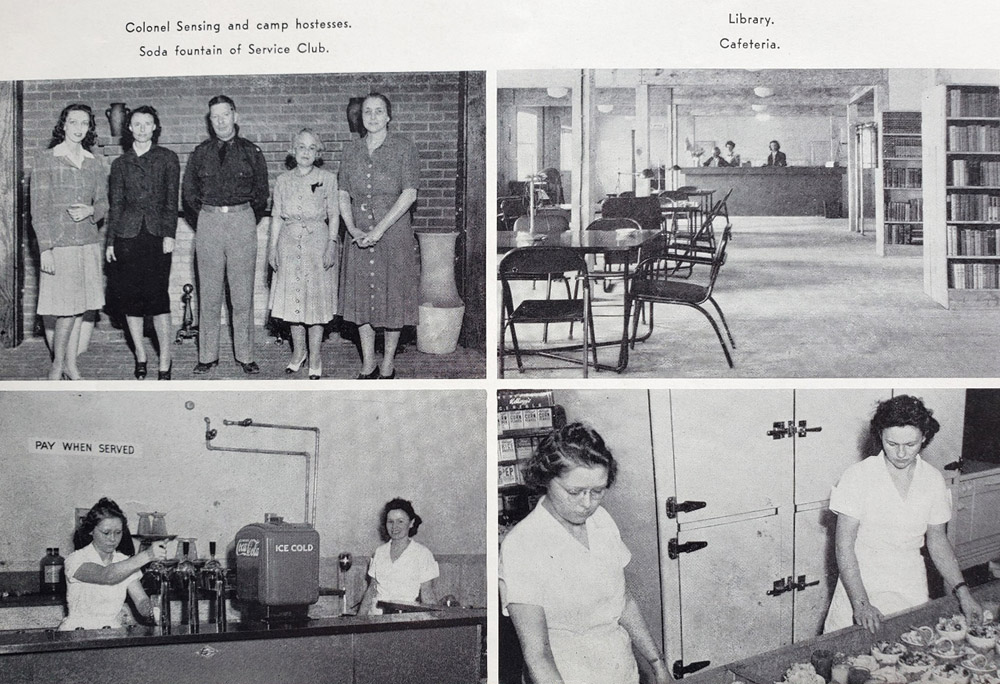
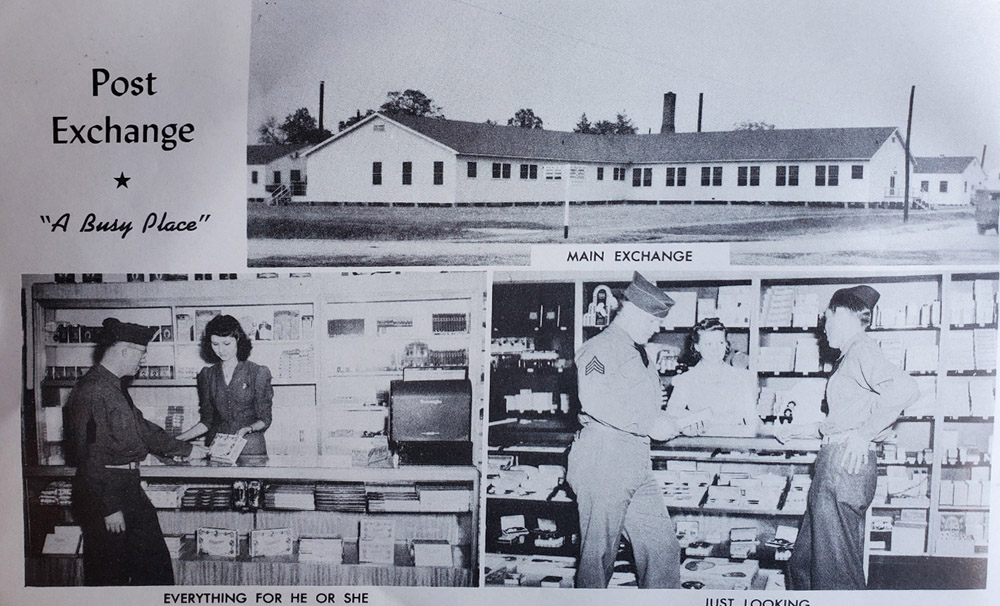
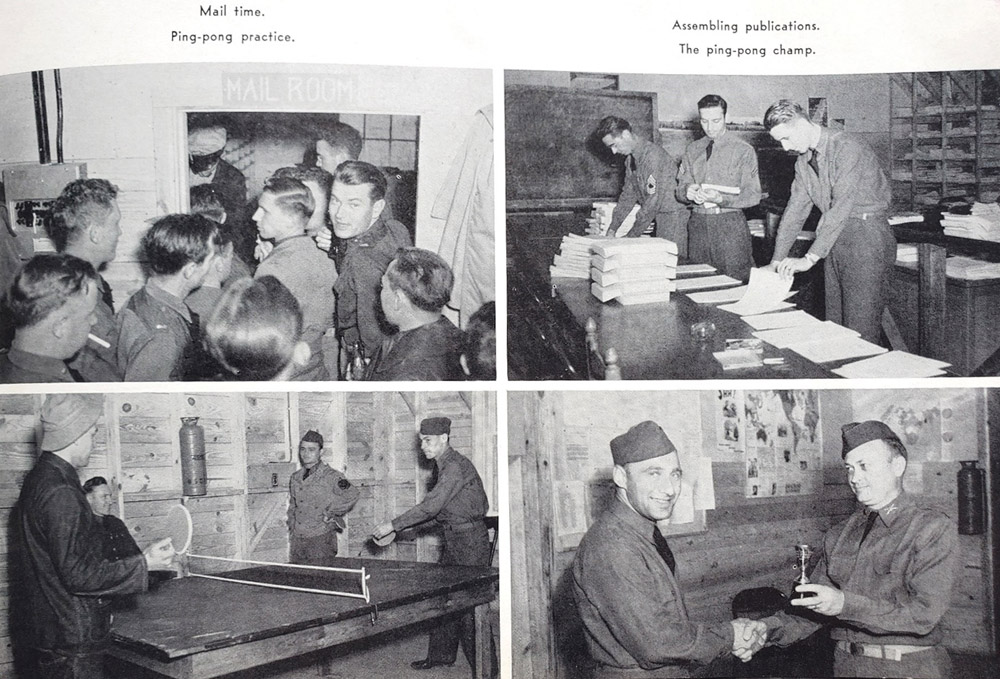
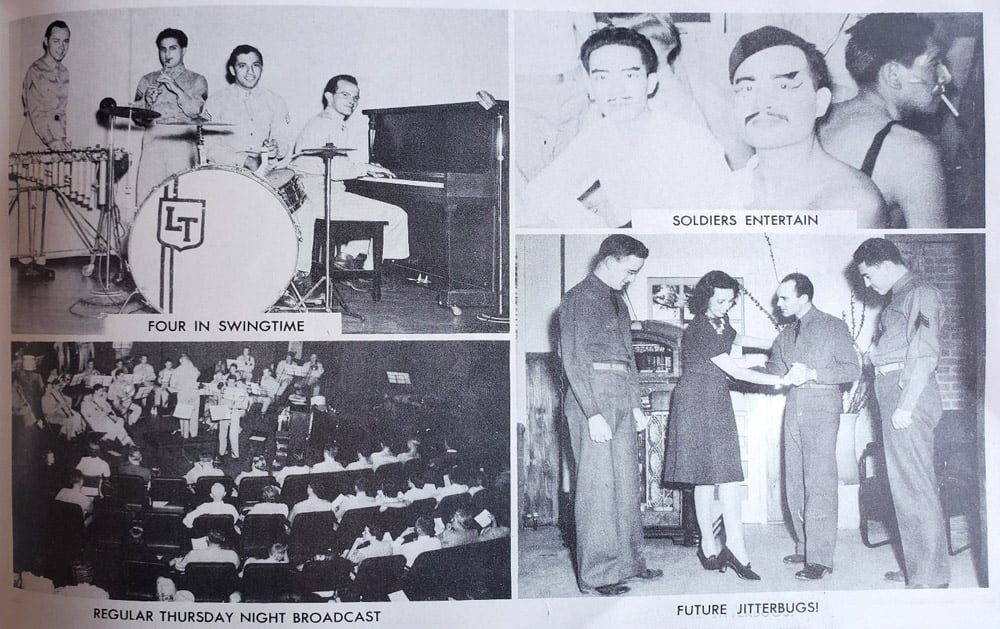
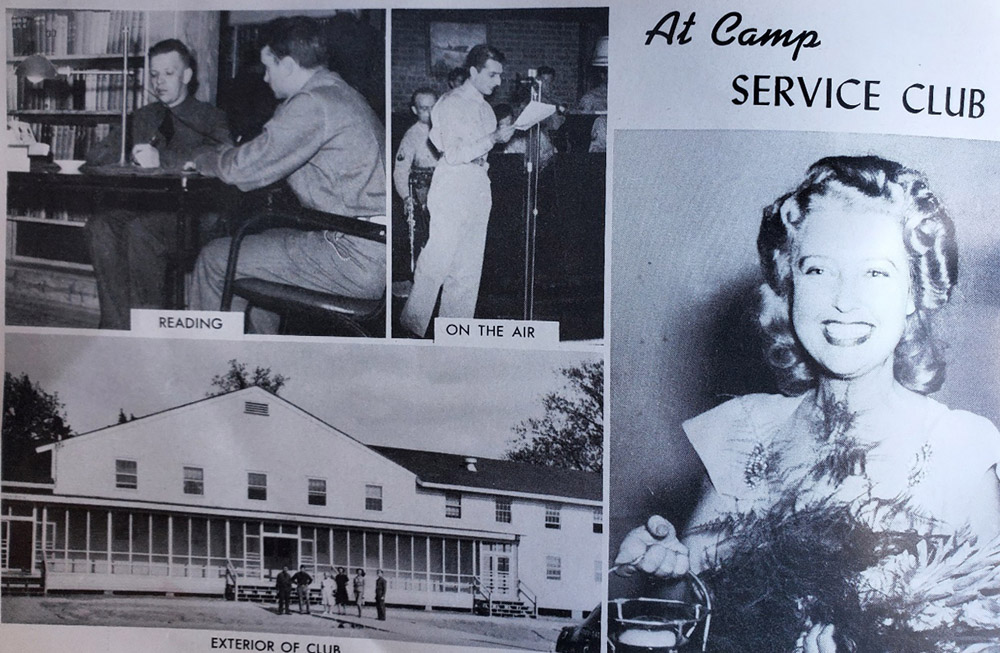
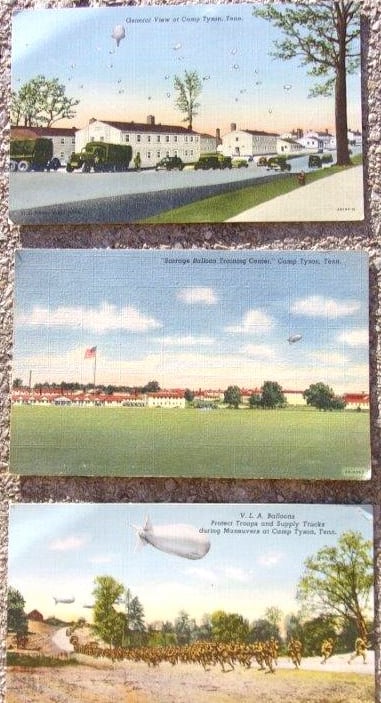
The Camp Tyson informational booklet was published by the Camp Tyson Public Relations Office in 1942. The 6 X 10 booklet offers a pictorial insight of the servicemen training and enjoying their time aboard the camp. Accession no. 024-001-031. Camp Tyson was the nation’s only WW II barrage balloon training center. It is located about six miles south of Paris, Henry County Tennessee. The camp trained service men to build, fly, and repair barrage balloons. Servicemen began to arrive in March 1942 and Paris, TN. The introduction of Camp Tyson onto the landscape positively affected economy and lifestyle, business boomed and romance blossomed. Camp Tyson was constructed by Rock City-Strider Company and associates, employing many tradesmen and laborers from the area completing the camp in record time. Cavitt Place served as headquarters for the officers while Camp Tyson was being built. The camp also served as a Prisoner of War facility for German and Italian prisoners of war. The POWs worked on the land in the area and built several roads still in use today. In full swing, the camp’s numbers soared to twenty to twenty-five thousand servicemen. After the war, the property was acquired by Harry Carothers and became H.C. Spinks Clay Co., and operates to this day as H.C. Spinks Clay Co., and as a part of L’hoist, North America.


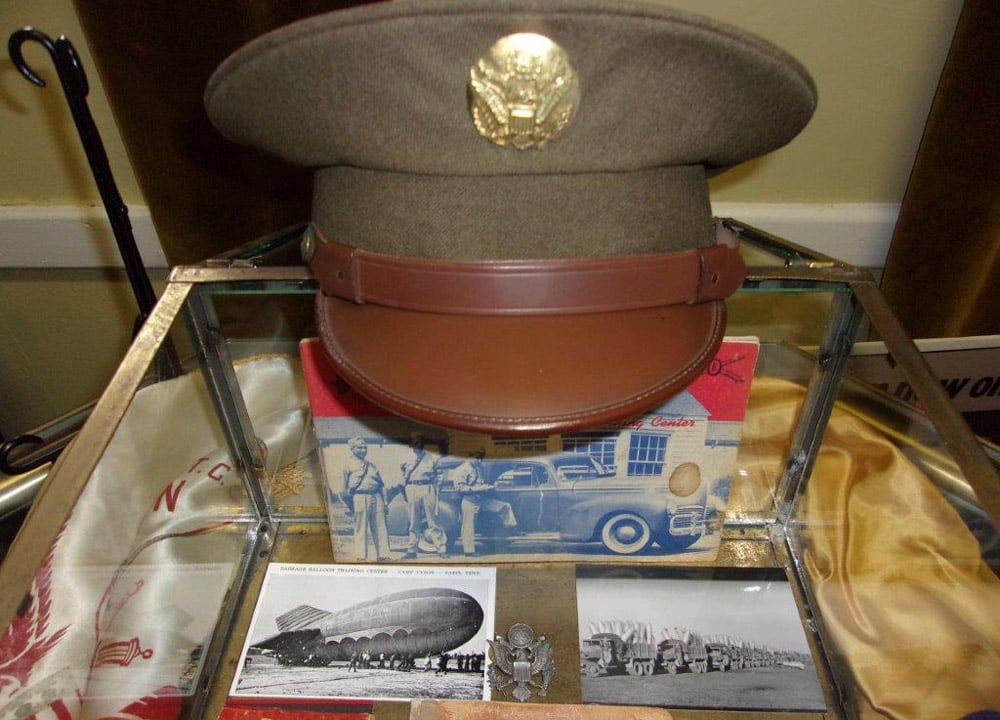
Camp Tyson memorabilia, on display at the Heritage Center


Life at Camp Tyson


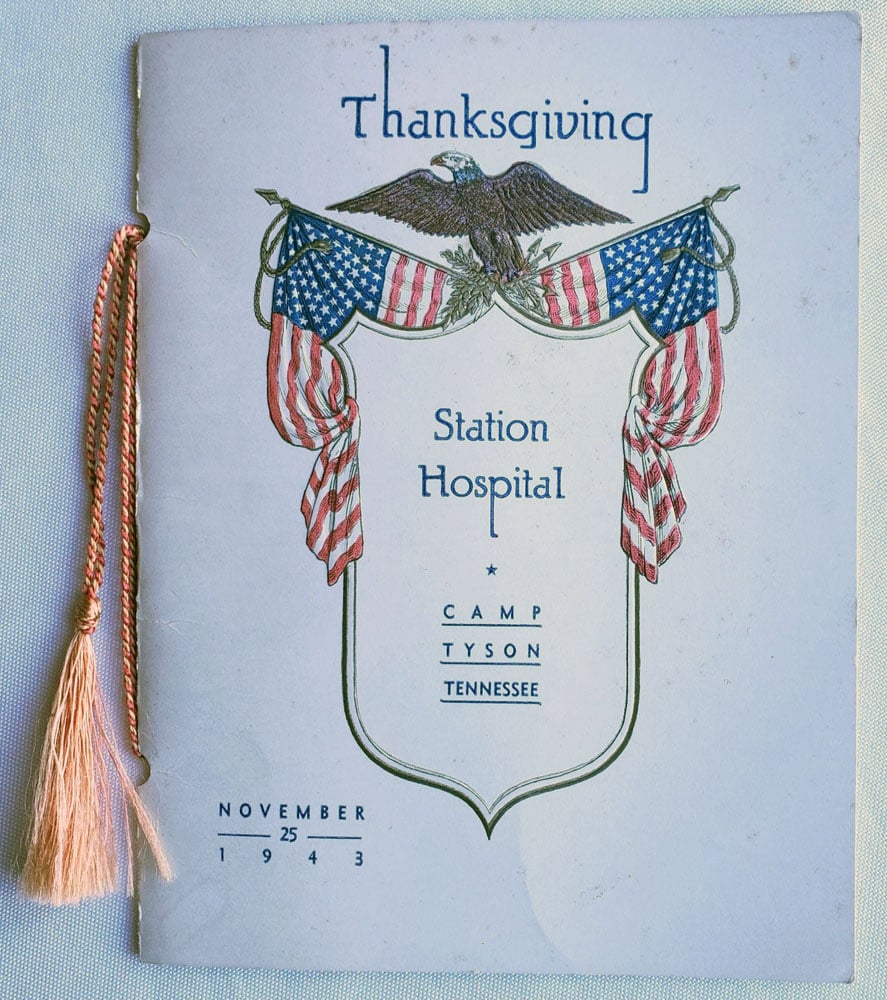
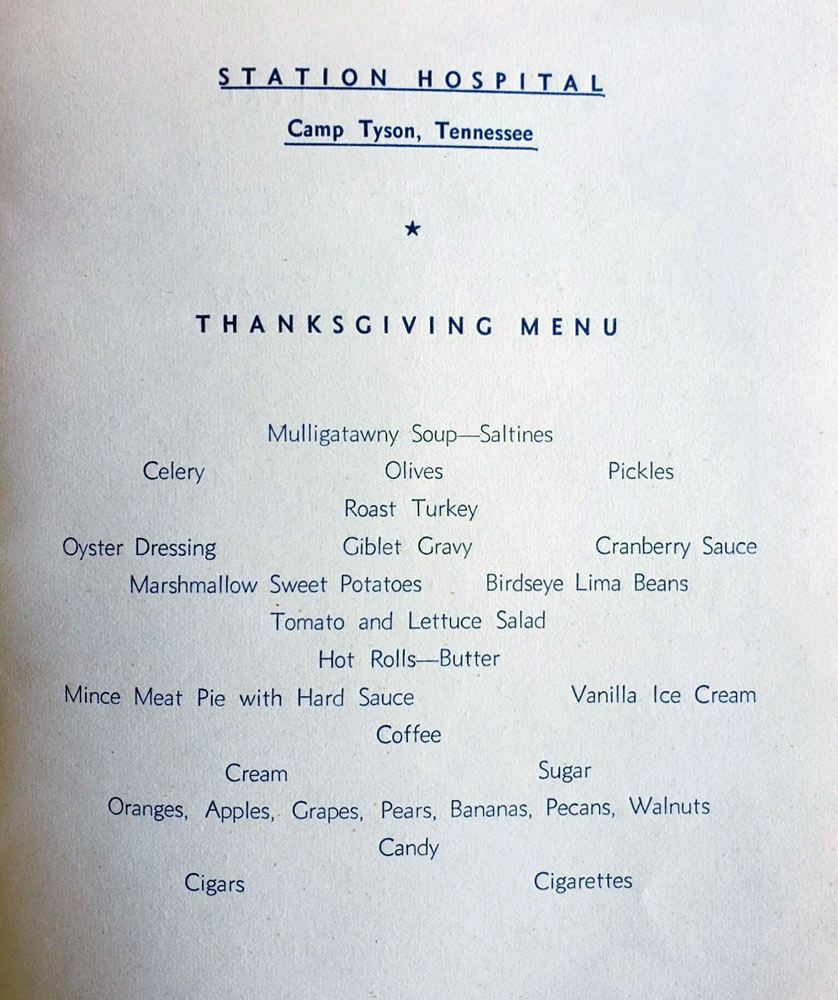
This well preserved 4X8 Thanksgiving dinner menu from Camp Tyson is on display. Accession no. 024-001-029

Photographs of Life at Camp Tyson are reprinted from the original Booklet


Camp Tyson Thanksgiving Dinner Booklet with Menu


Complete with fringe tassel, the menu booklet is a fine example of the attention to detail and offerings provided to the soldiers stationed away from home during the holidays.

Accession no. 034-001-029


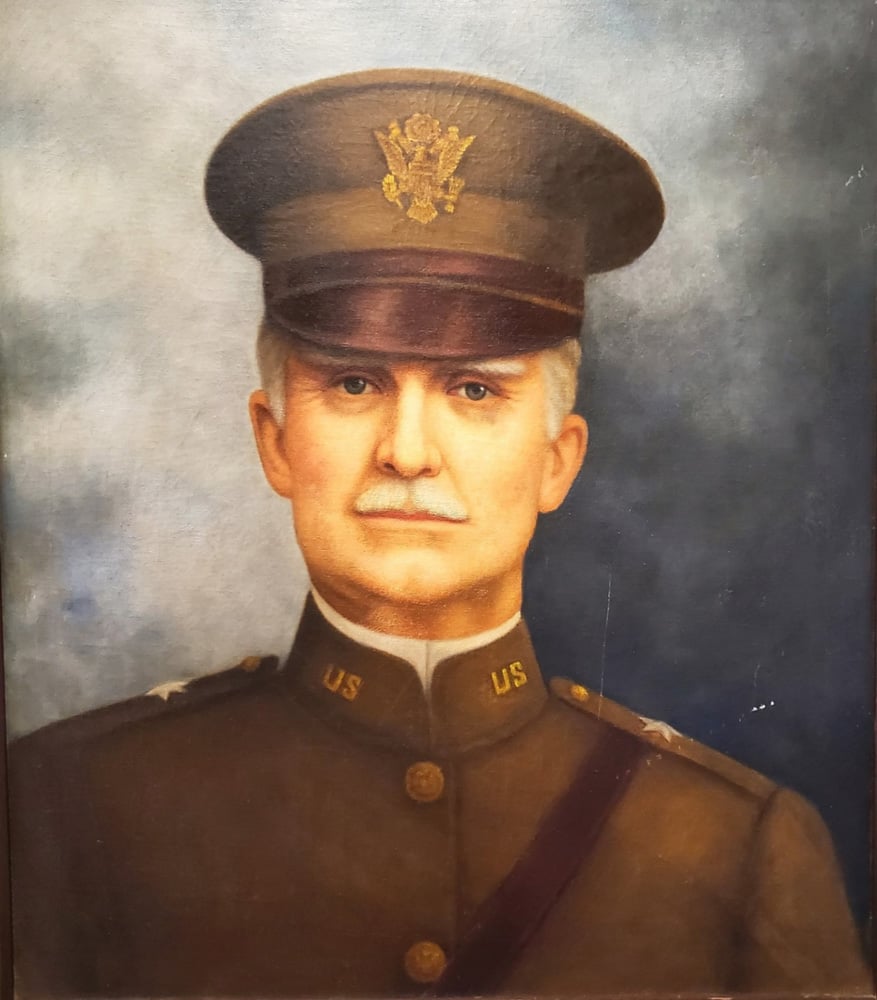
Brigadier General Lawrence D. Tyson


This large oil on canvas portrait of General Tyson, in whose honor the camp was named (posthumously). The impressive portrait was given for display at the Heritage Center by Roland Parkhill for the benefit of the community. The portrait was painted by a German POW held at Camp Tyson. General Lawerance Davis Tyson (1861-1929) graduated from the United States Military Academy at West Point, New York in 1883. When commissioned, he was sent to fight in the Apache Wars of the 1880s. Tyson was assigned as Professor of Military Science at the University of Tennessee in 1891. While at UT Tyson studied Law and graduated in 1894. Upon graduation he resigned his commission as an officer in the U.S. Army. He then practiced Law and ventured into politics. Tyson was elected as a Tennessee State Representative, going on to become a U.S. Senator for Tennessee (1925-1929). During the Spanish-American War of 1898 Tyson was recommissioned as Colonel and served as the Commanding Officer of the 6th Regiment, United States, Volunteer Infantry. When America joined the war in Europe in 1917, General Tyson became Commanding Officer of the US Army 59th Infantry Brigade, 30th Division, and led his troops during the 100 Days Offensive of WW I. The 100 Days offensive started on 8 August 1918 in Amiens France and lasted until the end of the war on 11 November 1918. The 59th Infantry Brigade distinguished itself on the battlefield as one of the first units to break through the Hindenburg Line, erasing the German gains made the previous spring.


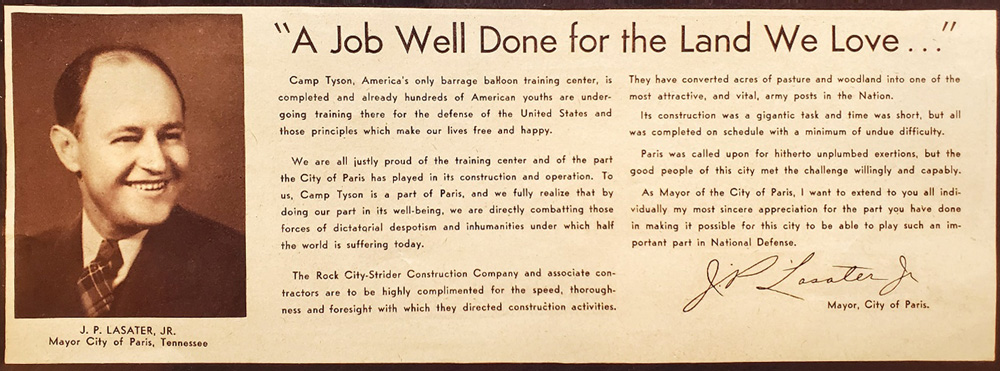
Congratulatory Excerpts from the Paris Post Intelligencer Camp Tyson Issue, 1942


Mayor J.P Lassiter of Paris, TN writes of the appreciation he and the citizens of Paris have for the troops, and the economic boon Camp Tyson provided for the community. Always forever grateful the magazine edition on display is still in remarkable condition. Accession no. 024-001-028


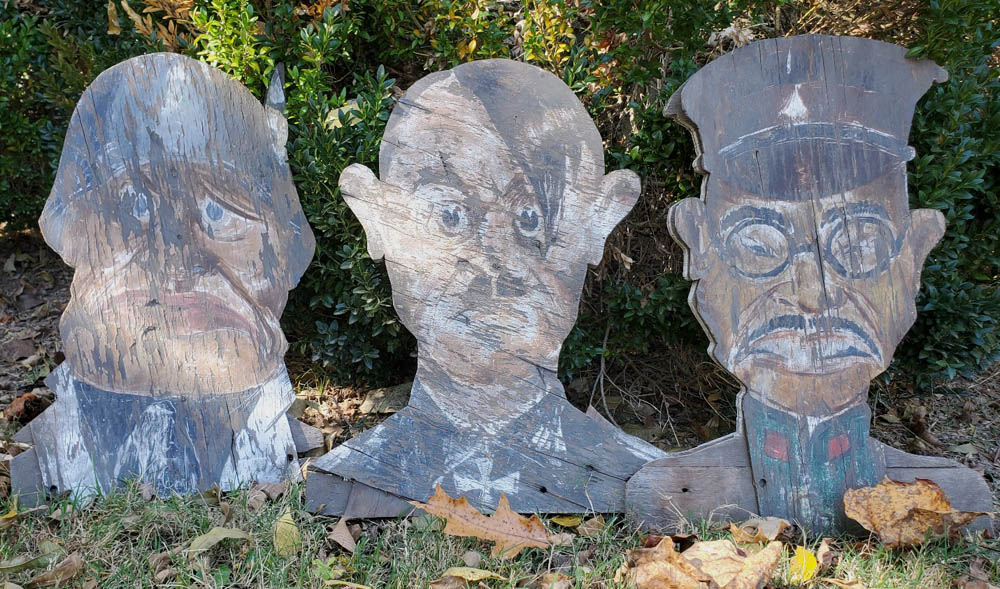
Target Practice at Camp Tyson


These portraits of the Axis power leaders, Mussolini. Hitler and Hirohito were a favorite hit at the camp. The hand-made cutout targets were used for targets. The cutout plywood targets are in excellent condition, and are on display at the Heritage Center, on loan from Shannon McFarland, Camp Tyson historian.


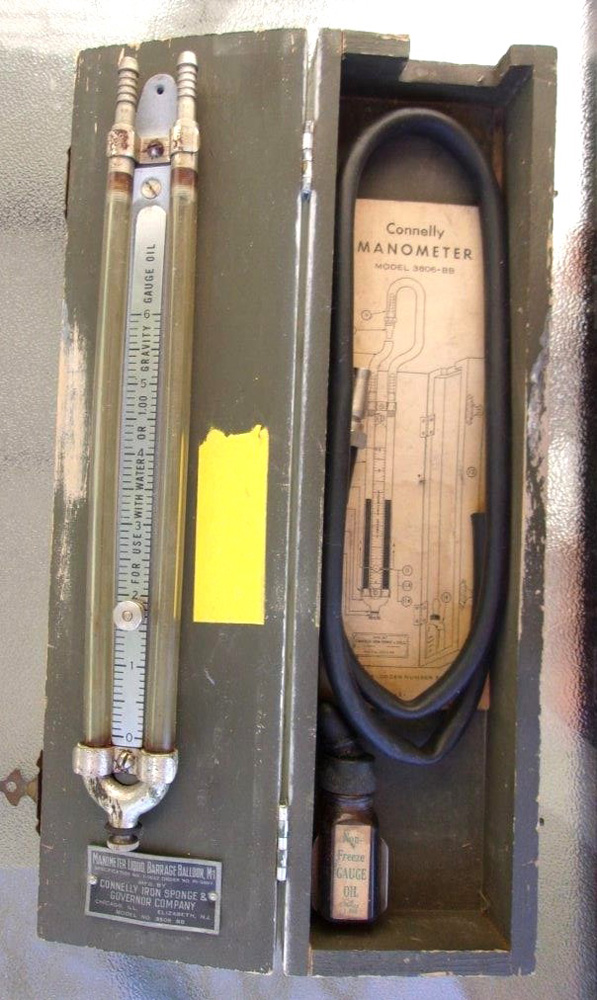
M-1 Barrage Balloon Manometer


The M-1 Barrage Balloon Liquid Manometer on display was used at Camp Tyson during WW II. Still in wonderful condition the instrument was manufactured by the Connelly Iron Sponge & Governor Company in Chicago, Illinois and Elizabeth, New Jersey. The device was used to measure the pressure inside the barrage balloons against the outside atmosphere.


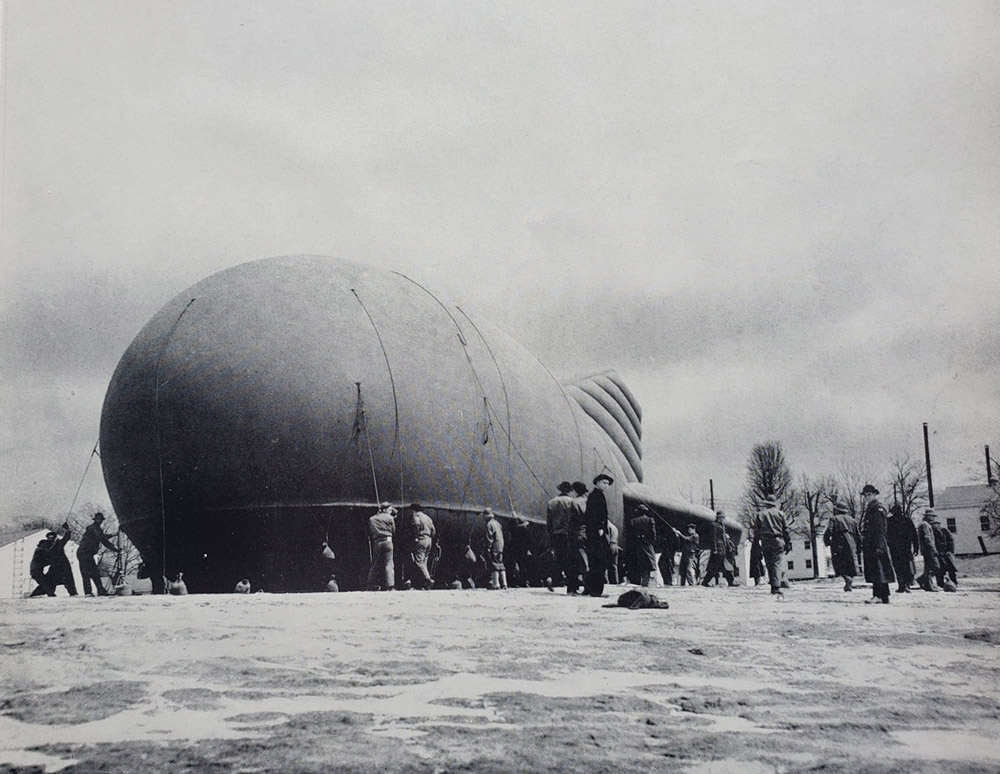
A photograph of Barrage Balloon training on Camp Tyson 1942.


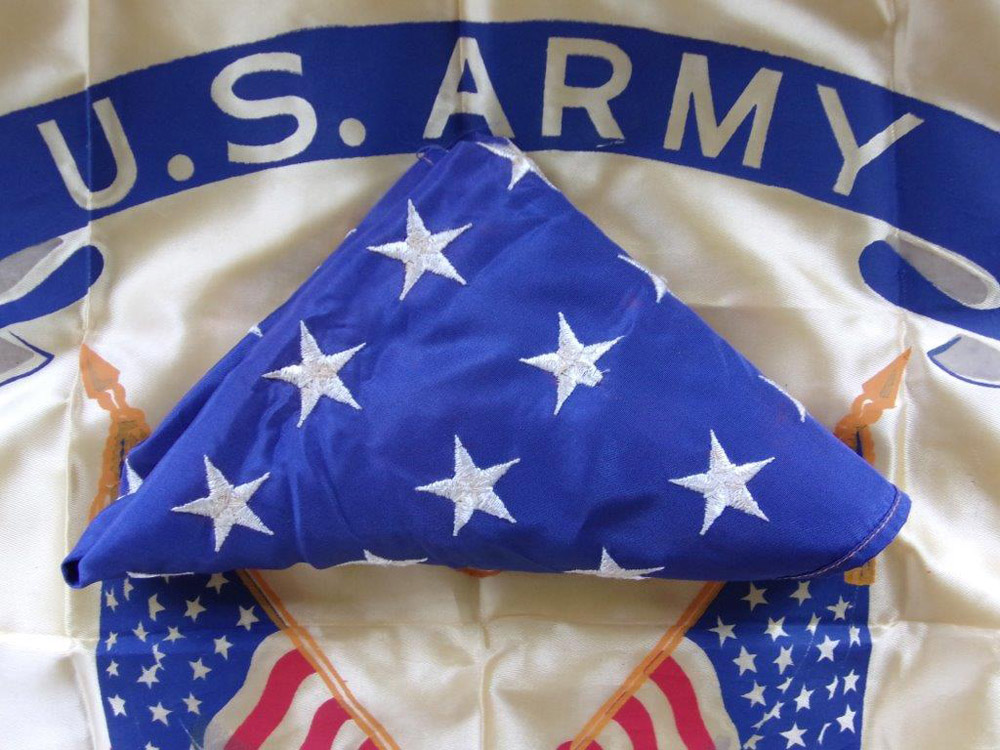
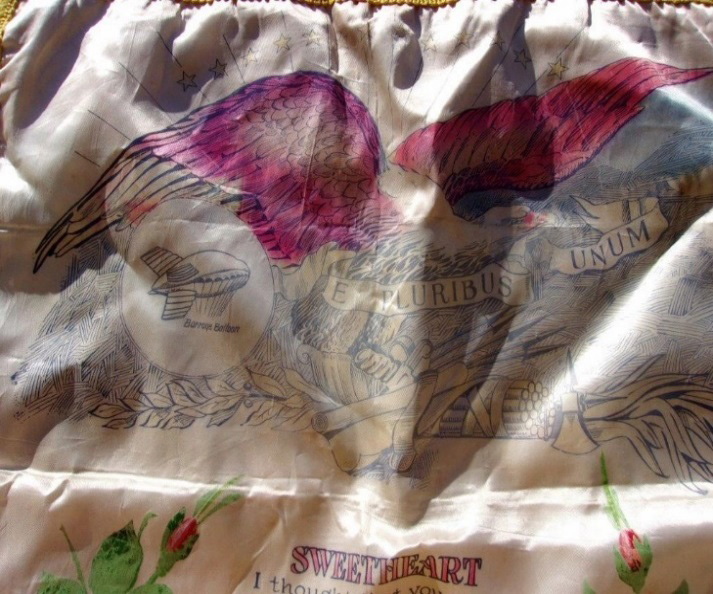
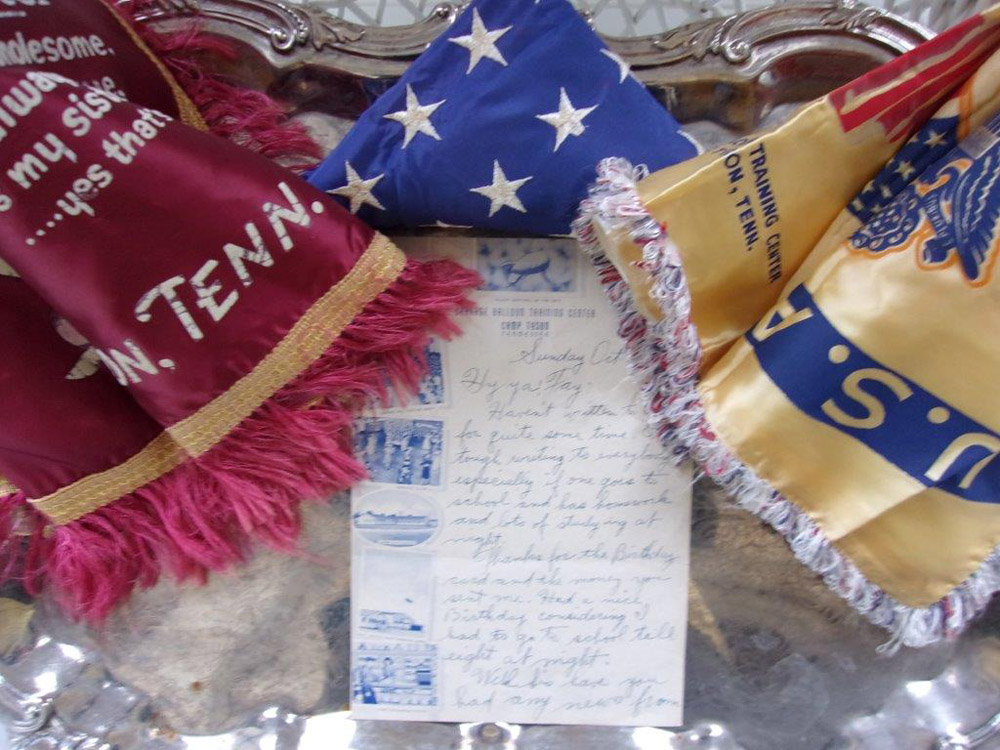
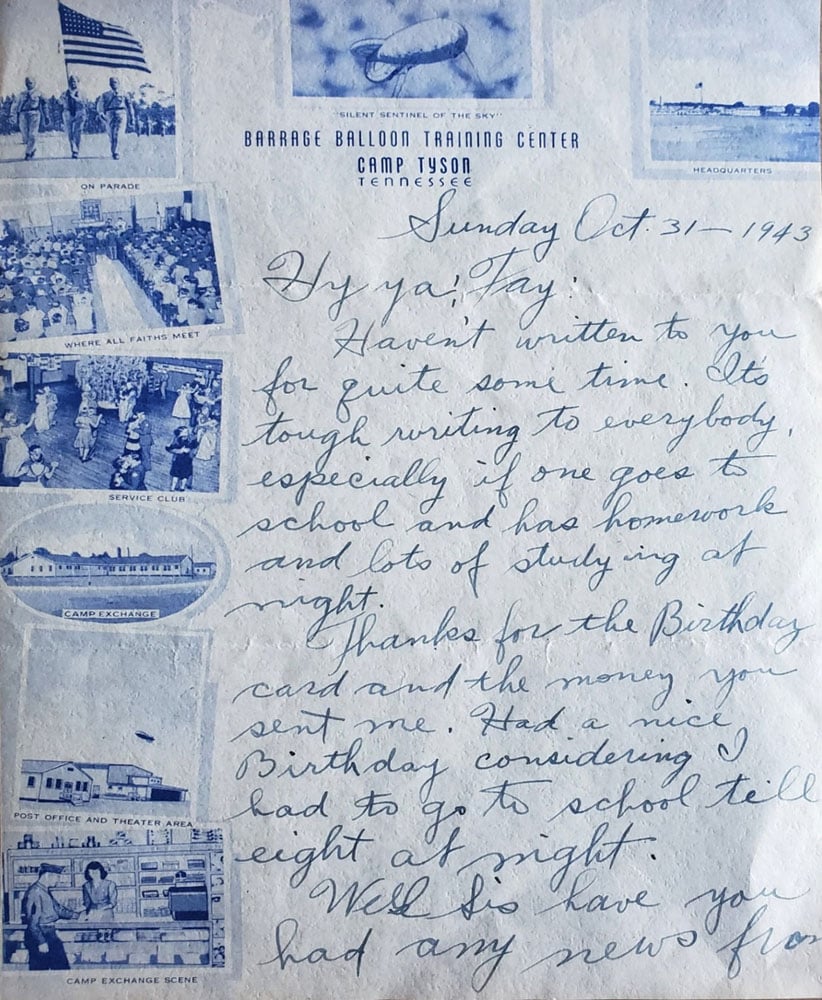
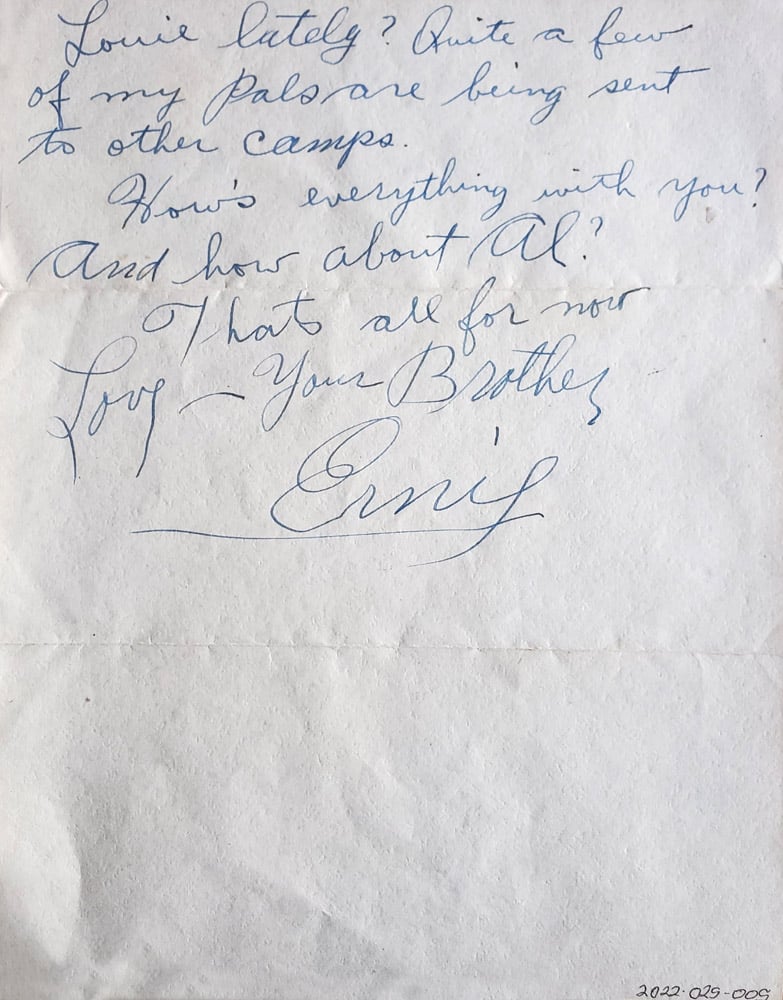
S ilk Screened fringed and embroidered satin pillow covers embellished with sentiments to loved ones back home, for sale at the camp exchange, featured here with one of several original letters and a folded satin Old Glory.


From Ernie to Fay


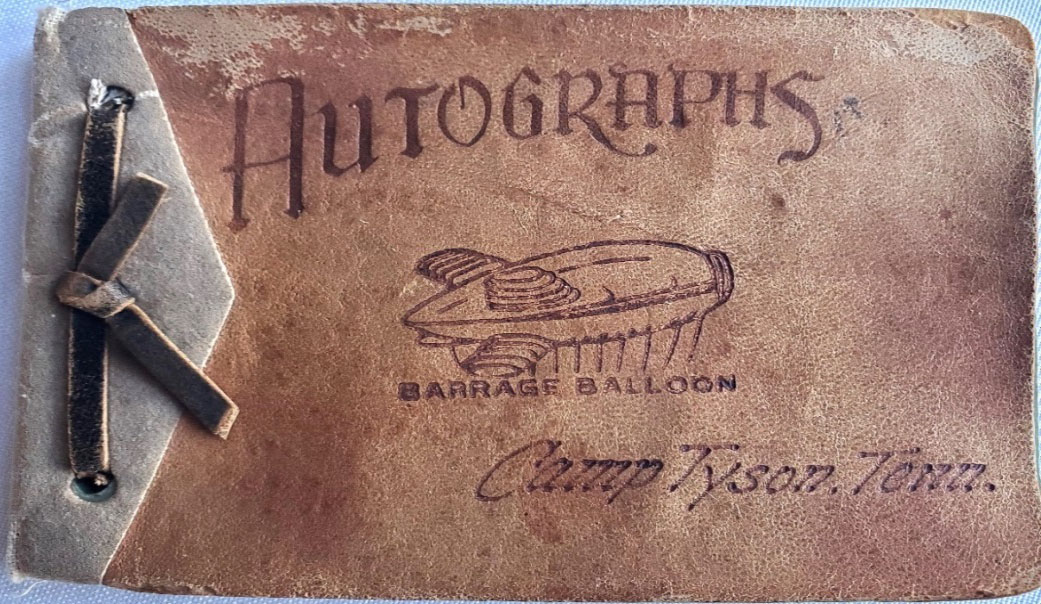
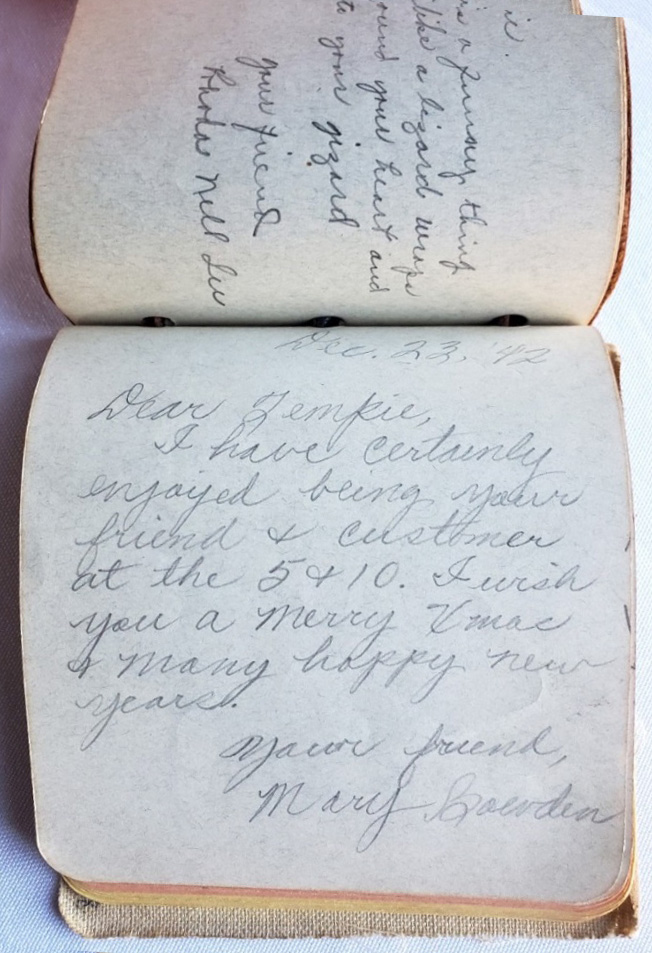
3X5 leather autograph book filled with memories, belonged to Mrs. Gene Snider, co-owner of the Red House; Accession no. 024-001-022.


Foot note: The Heritage Center’s Camp Tyson Display and collection is made available from the E.L Moody Collection. E.L. Moody was a veteran of World War II, and served in the U.S. Navy and United States Army, and was involved, at Camp Tyson. Additionally, we have a number of artifacts on loan from Shannon McFarland’s collection. The Paris notable news woman and published author lives in Paris and has penned two books on Camp Tyson.


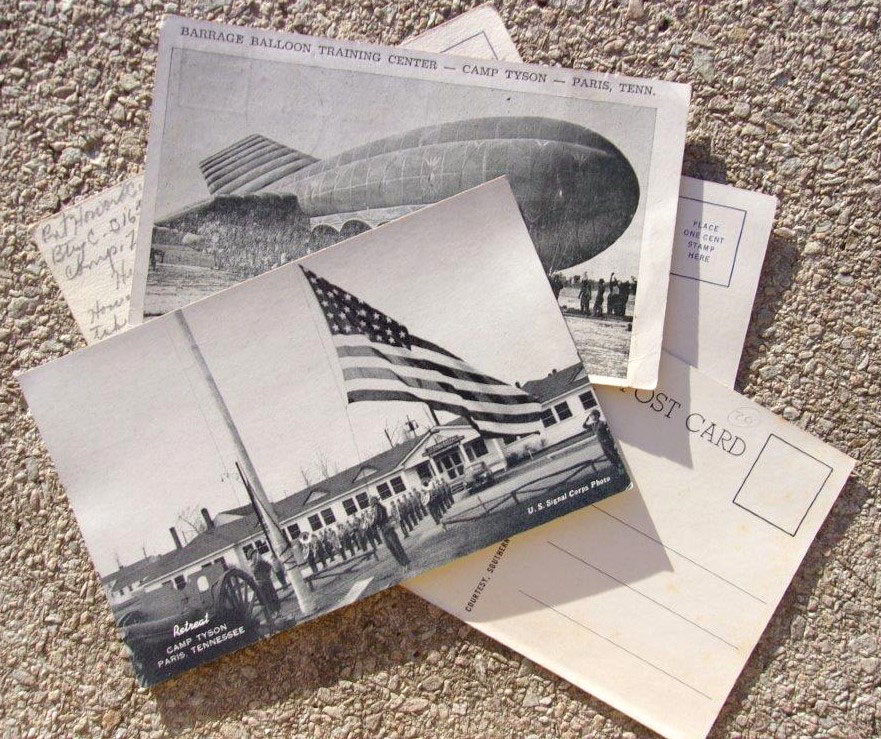
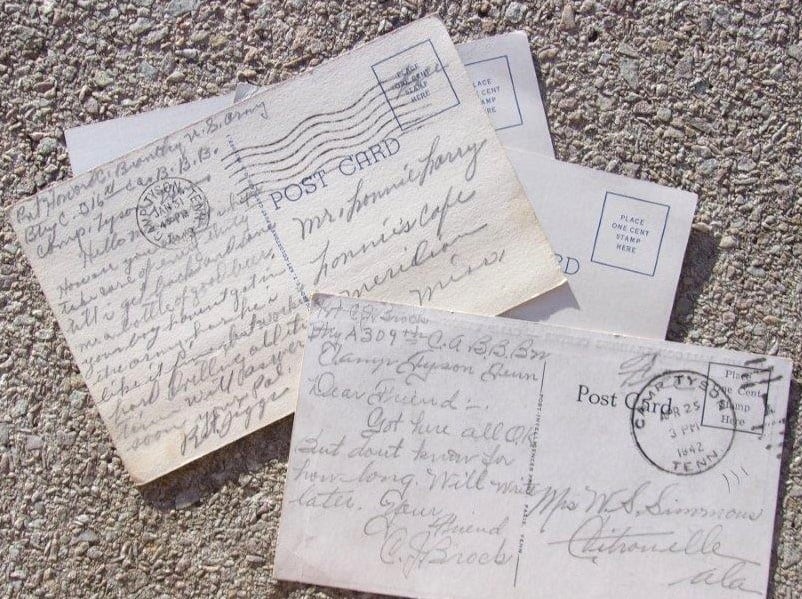
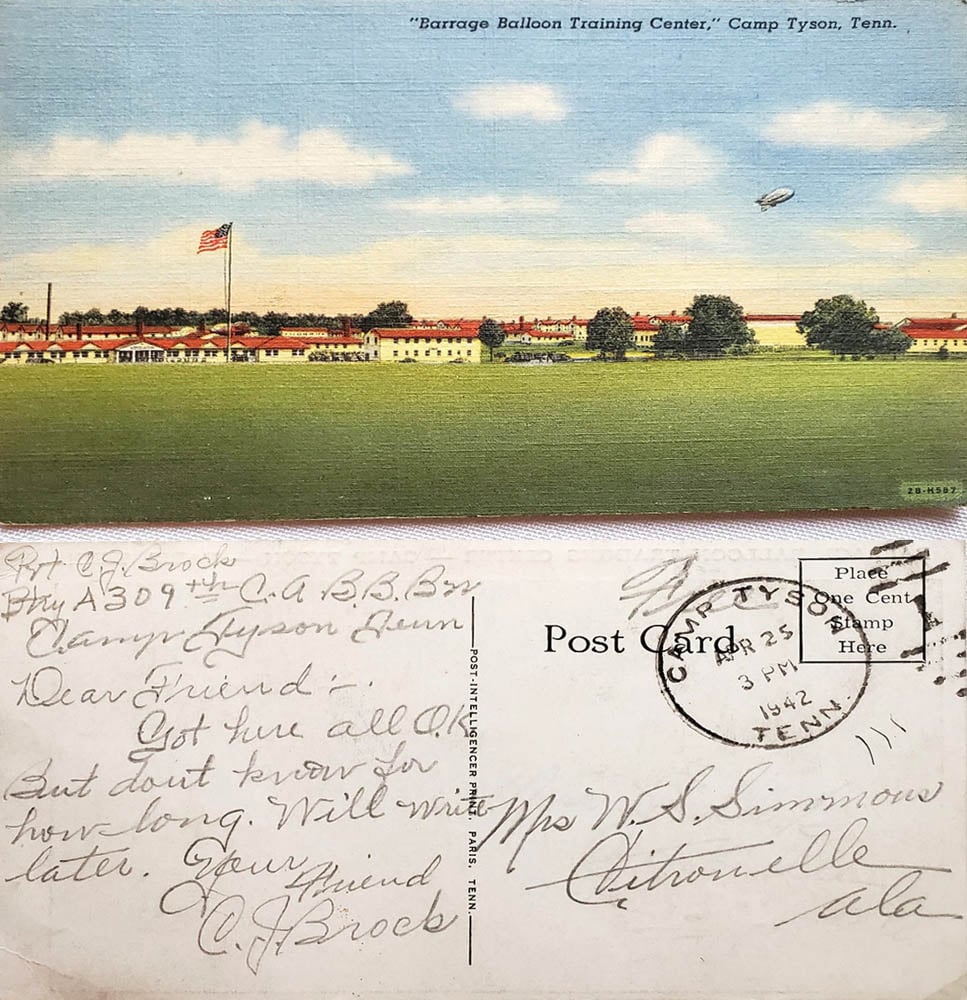
Post Cards from Camp Tyson


Quick notes home to Mom, Dad and Sis: love strung sentiments to number one; and how are you budd,y well wishes to a best pal. Postcards kept the camp’s post office busy and kept soldiers connected to those who cared and mattered most.

Accession no. 024-001-024.


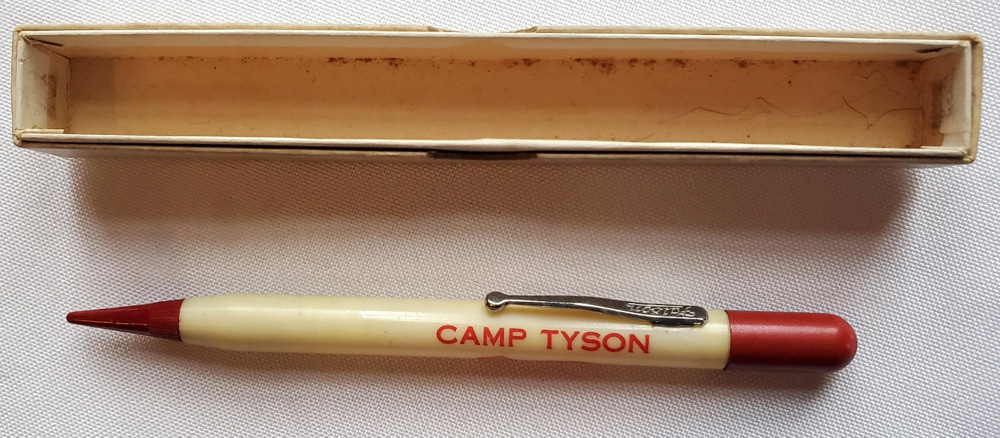
A signature Camp Tyson ink pen made by the Falcon Company in 1942. Accession no. 024-001-025


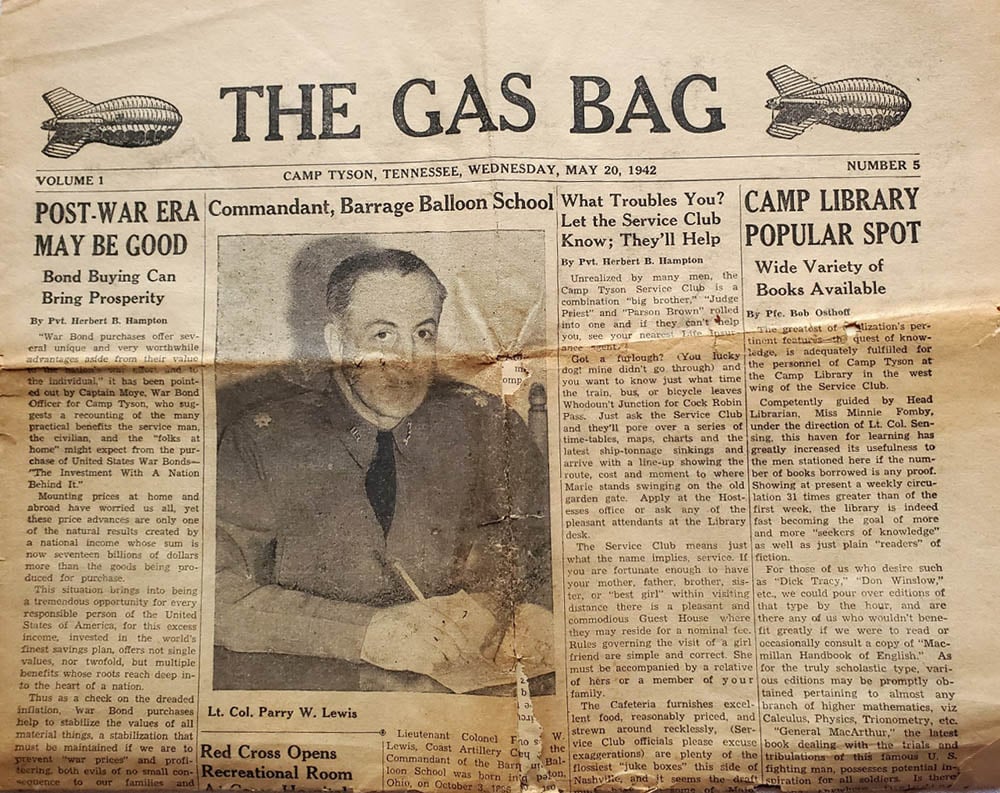
"The Gas Bag"


Camp Tyson was a large thriving military base housing thousands of troops. The camp published its own newspaper to help keep the troops informed. On display is a copy from May 20, 1942.

Accession no. 024-001-026


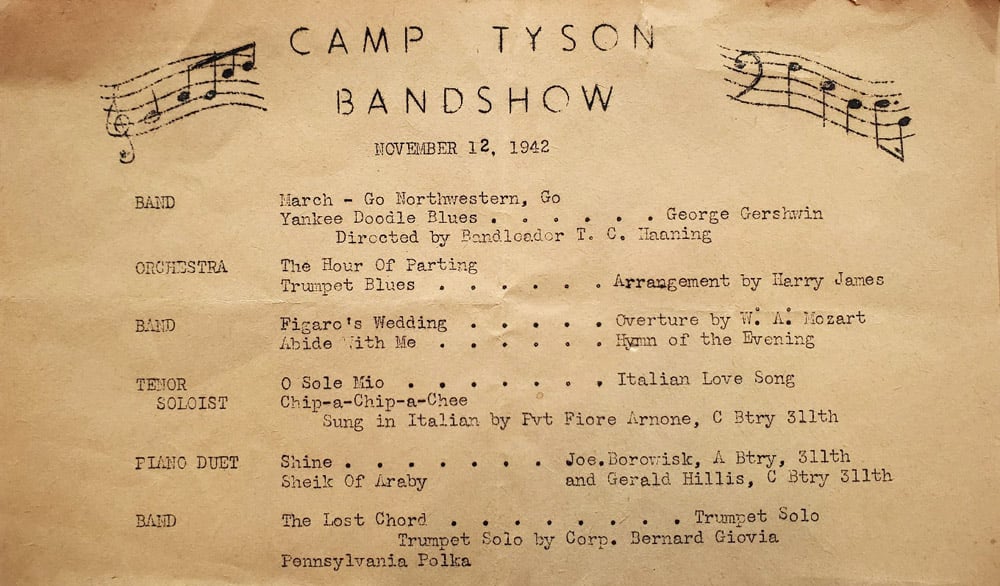
“Strike Up the Band”


Promotional pamphlet shows off the musical talent of the Camp Tyson soldiers. Band leader T.C. Haaning and musicians entertained and buoyed spirits. Big Bands and musical performances in general were a big part of moral boosting during World War II and Camp Tyson was no exception. Accession no. 024-001-027


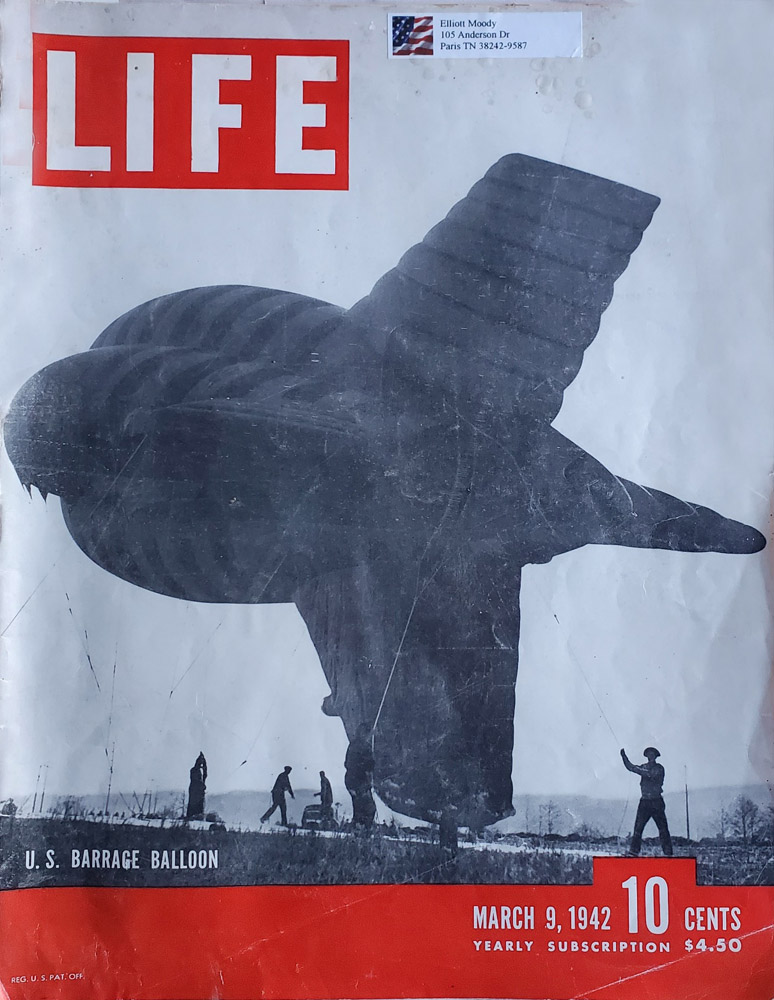
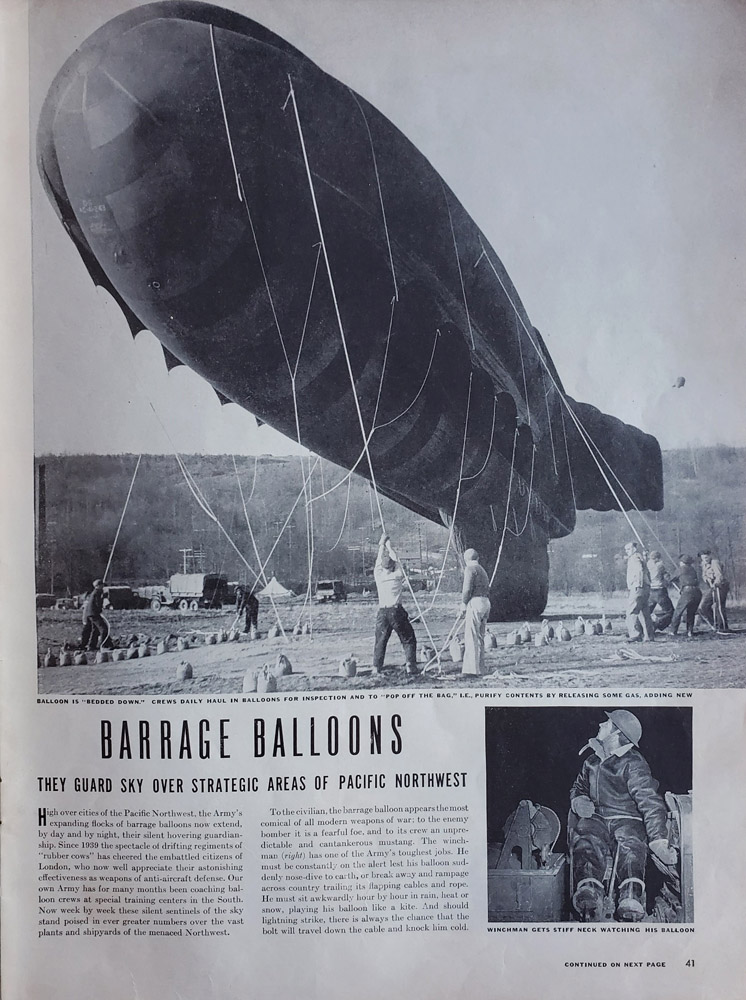
Life Magazine Feature of Camp Tyson


The nation’s only Barrage Balloon Training Center was built in Henry County, Tennessee, nine miles south of Paris, Tennessee. This 1942 Life Magazine Cover and story feature is in excellent condition. The epic issue and artifact is a part of the E.L Moody Collection given to the Heritage Center.

Accession no. 024-001-023


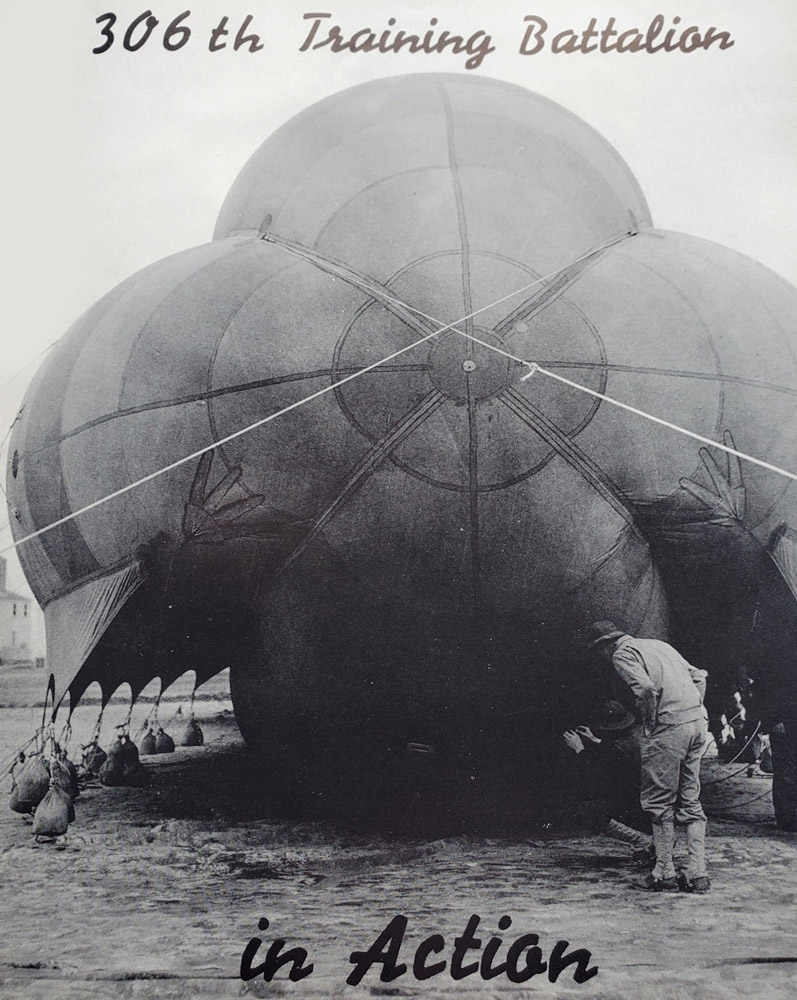
“The Silent Sentries of the Air”


Men from the 306th Barrage Balloon battery preparing to launch;


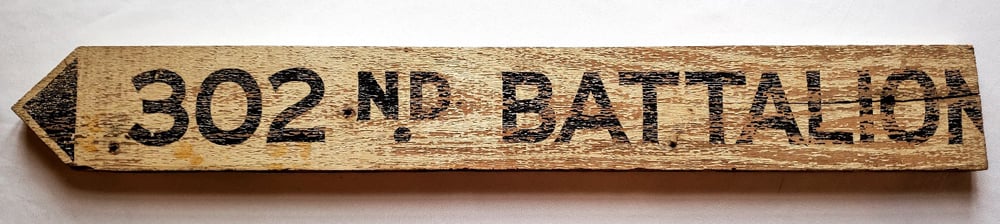
Camp Tyson Street Sign


There were several Barrage Balloon units at Camp Tyson. On display is the original 302nd street sign. These were made of wood because the U.S. needed metal to support the larger war effort.

Accession no. 1998.030.001


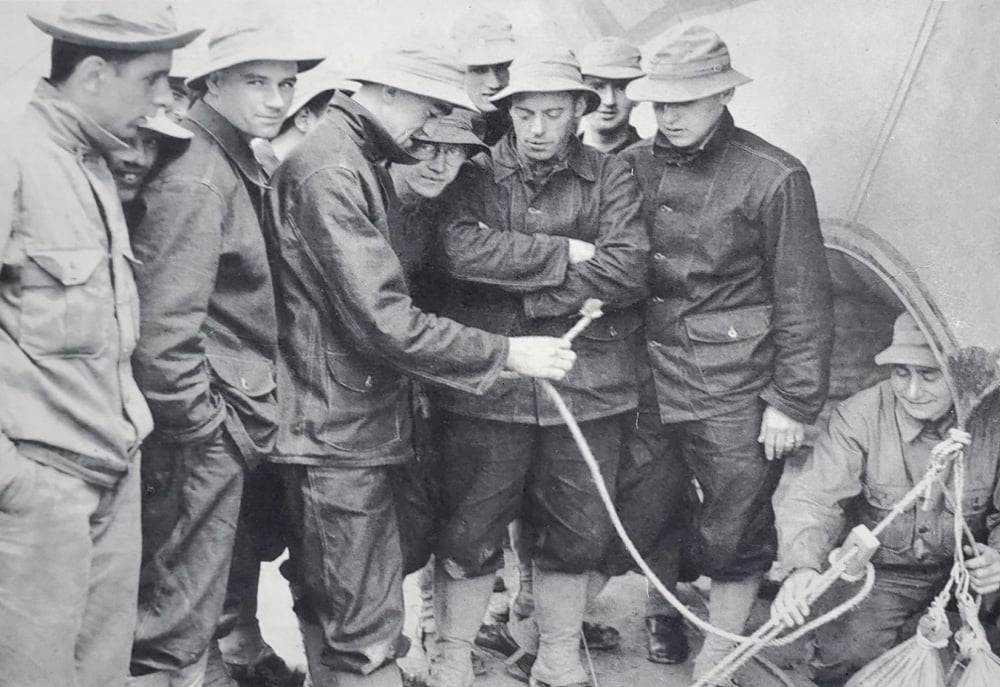
Receiving ground rigging instructions at Camp Tyson c.1942

320th Barrage Balloon Battery on D-Day June 6, 1944


From training at Camp Tyson, the men from the 320th Barrage Balloon Battery made up the only African American unit to land in Europe on D-Day. The 320th landed 621 troops on Omaha and Utah beaches. The Supreme Allied Commander Gen. Dwight D. Eisenhower cited the unit for its courage and determination; “ their effort proved an important element to the Air-Defense team.”


Hervieux, Linda (2015). Forgotten: The Untold Story of D-Day's Black Heroes, At Home and at War.

United States: HarperCollins. External link opens in new tab or windowISBN External link opens in new tab or window978-0-06-231379-9.


Artifact

Clovis


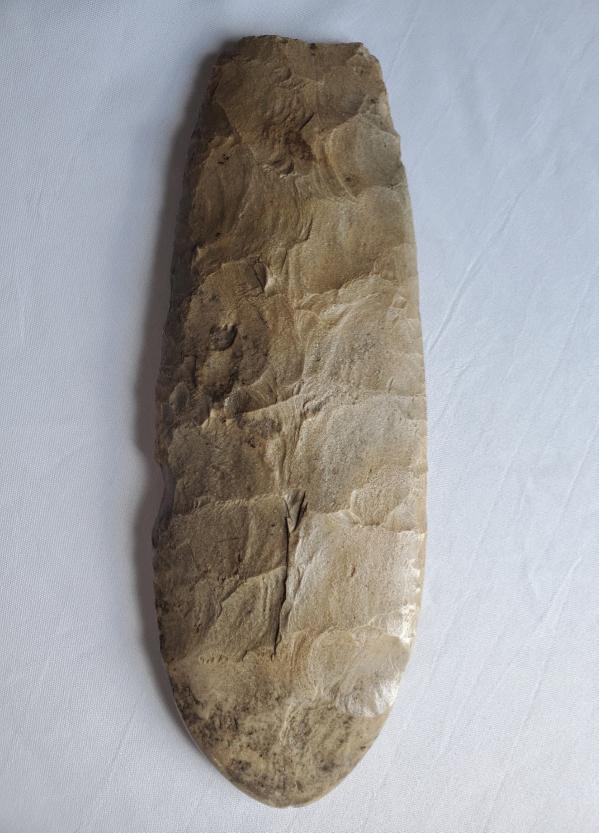
Side one of tool


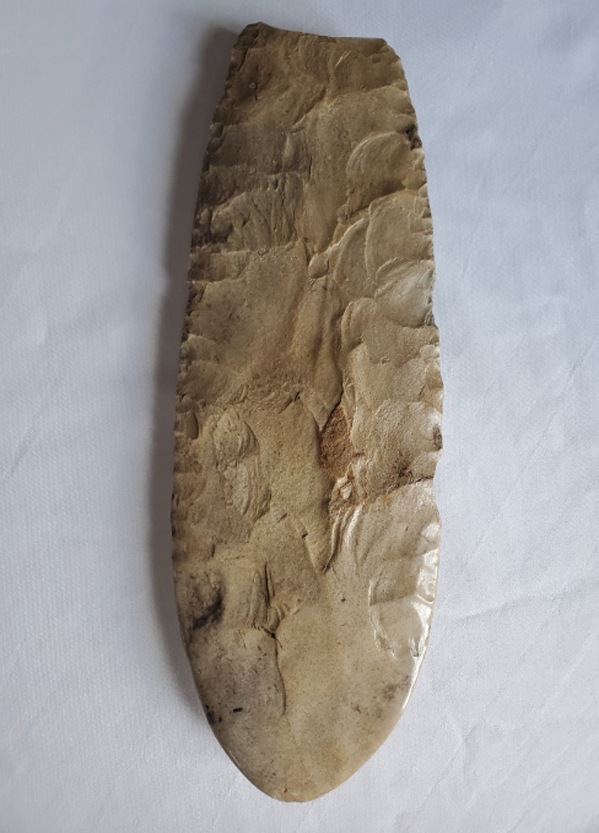
Side 2 of Tool


Clovis refers to the Paleo-Indian culture that spread rapidly across North America, west to east, more than 13,000 years ago. The name comes from stone tools found near Clovis, New Mexico, in the 1920s. Originating in northeast Asia, the Clovis people were the ancestors of most indigenous American populations, information gathered from the Cleveland Museum of Natural History. This precious artifact of jasper, tooled over 13,000 years ago was discovered by Mr. Hutson in Buchanan, TN.  It measures 14X5 inches, larger than most Clovis points. The Clovis point was given to the Heritage Center by Joyce Hutson, his daughter. Accession  #1998-001-024.


VI Civil Rights Act of 1964

VI Civil Rights Act of 1964


TITLE VI PLAN

PARIS-HENRY COUNTY HERITAGE CENTER

BOX 822
614 NORTH POPLAR STREET

PARIS, TN., 38242

External link opens in new tab or windowdirector@phchc.com; External link opens in new tab or window731-642-1030


SECTION II

TITLE VI AND NONDISCRIMINATION POLICY STATEMENT

Title VI of the Civil Rights Act of 1964prohibits discrimination on the basis of race, color and National Origin.in all federally assisted programs, Section 601 of Tittle VI of the Civil Rights Act of 1964,42U.S.C.200d et seq,\.,and its implementing regulations providence person in the United States shall, on the basis of race, color or National Origin, be excluded from participation in, be denied the benefits of or be otherwise subjected to discrimination under any program or activity that receives Federal financial assistance.


Paris-Henry County Heritage Center (PHCHC) is a Non-profit institution that provides cultural and historical enrichment to Henry County. It is the policy of PHCHC to ensure compliance of the Title VI of the Civil Rights Act of 1964 and all relative statutes or regulations in all programs and activities.


The Board of the PHCHC is committed to and support taking all steps to ensure that no person or groups of persons shall on the grounds of race, color or national origin*, be excluded from participation in, be denied the benefits of, or be otherwise subjected to discrimination under any and all programs, services, or activities administered by PHCHC.


The director is appointed as the Title VI Liaison Officer and is granted the authority to administer and to monitor the Title VI and Nondiscrimination program as promulgated under Title VI of the 1964 Civil Rights Act., and any subsequent legislation. The Title VI Liaison Officer will provide assistance as needed.


PHCHC recognizes the need for and provides Title VI training for PHCHC personnel.


Anyone who believes he or she has been discriminated against should contact the PHCHC Director at 731-642-1030.


*Title VI of the Civil Rights Act of 1964 governs race, color, and national origin.


Executive Director & Board of Trustees, Paris-Henry County Heritage Center, 11/5/2017-11/25/2023 current.


SECTION III

PROGRAM ADMINISTRATION

PHCHC Executive Director shall be responsible for coordinating the overall administration of the Title VI and Nondiscrimination Program, plan, and assurances.


COMPLAINTS

If any individual believes that she or he or any program beneficiaries have been subjected to unequal treatment or discrimination in their receipt of benefits and/or services, or on the grounds of race, color or national origin or limited English proficiencies, she, he may exercise their right to file a complaint. All complaints will be recorded on a complaint log. Paris-Henry County Heritage Center (PHCHC) has had no complaints or lawsuits filed under Title VI. In the event of a complaint or a lawsuit a file with log will be kept with date of complaint/ lawsuit was filed; summary of allegation; current status; and actions to include actions in response or final findings related to the investigation/compliant/lawsuit as applies to the allegation, and action taken provided to the client within 90 days.


MONITOR & REVIEW

PHCHC monitors Title VI compliance by conducting annual program reviews. PHCHC has developed a process for conducting Title VI reviews of program areas and sub recipients to determine the effectiveness of programs at all levels.


TRAINING PROGRAM

The director shall receive annual Title VI training. The training provides comprehensive information on Title VI and related nondiscrimination provisions, its applications to programs, operations, identification of Title VI issues, and resolution of complaints. All training will be documented by the training topics, location, time, date, hours and participants.


LIMITED ENGLISH PROFICIENCY PLAN

Limited English Proficiency is a term used to describe people who are not proficient in the English language. According to the US Census, Henry County is home to a small number of individuals who are not proficient in the English language. Executive order 13166, improving access for services for persons who are not proficient in the English language, August 2000, is directed at implementation of protections afforded by Title VI of the Civil Rights Act of 1964. PHCHC is committed to affording individuals affected by activity(s) with meaningful access to programs and services through the development and implementation of OFI’s Limited English Proficiency Plan.


ENVIRONMENTAL JUSTICE

A 1964 Presidential Executive Order directed every Federal agency to make environmental justice part of its mission by identifying and addressing the effects of all programs, policies and activities on minority populations and low-income populations. In order to comply with this order, PHCHC must appropriately address the concerns of individuals potentially affected by our activities. Those individuals must appropriately be involved in the development of services that fit harmoniously within their communities without sacrificing safety or mobility.


TITLE VI PLAN UPDATE, ACCOMPLISHMENTS & GOALS

The Title VI liaison officer will be responsible for coordination and preparation of the Title VI program Update, including a report on goals and accomplishments for the preceding year, and goals for the coming year. Title VI Specialists will prepare and submit annual reports for clients including Title VI responsibilities, operational guidelines, goals and annual accomplishments for the past year, and goals for the coming year.


REVIEW, SELECTION AND PROCEDURES

PHCHC will have an annual compliance review


  1. If deficiencies are found during the review, the Director will be given a certain number of days to fix the deficiencies.
  2. Send deficiency Notice with corrective actions including a ninety day window for correction; and possible sanctions:
    1. Failure of recipient to comply within allotted time
    2. Notice of Non-compliance identifying specific details of deficiencies
  3. Title VI Review Schedule will be maintained to document the following:

(1) Date of last review:

(2) Date Review Notice (sent)

(3) Date Review conducted

(4) Date of Notice of Compliance

(5) Date of Notice of Deficiency, if any

a. Date of follow up review meeting with recipient

b. Date of Notice of Non-compliance

c. Date of last review


SECTION IV

TITLE VI COMPLAINT PROCESS

Scope of Title VI Complaints

The scope of Title Vi complaints covers all PHCHC programs. Adverse impacts from Title VI complaints can arise from many sources, For example, complaints can originate from an individual(s) alleging inability to access services.


Formal Title VI Complaint Procedure

PHCHC’S Title Vi policy is as outlined in Title VI and Non-discriminatory programs , assuring that no person(s) shall, on the grounds of color, race or origin be excluded from participation in any and all of our programs or otherwise be subjected to discrimination under any and all programs, services and activities at PHCHC.


PHCHC uses the following detailed, internal procedures for prompt processing of all Title VI complaints received under Title VI. These procedures include but are not limited to:


1. Any person(s) who believe they have been aggrieved by an unlawful discriminatory practice falling under title VI may file a complaint on their own or through a legally authorized representative, make & sign a complaint and file with Title VI Liaison Officer. *Allegations do not have to use the words complaint, Civil Rights, discrimination or their near equivalents. It is sufficient to if such allegations imply any form of unequal treatment in programs, services for it to be considered and processed pursuant to allegation of a discriminatory practice.


2. The complaint must be filed no later than 180 days after the alleged date discrimination.


3. The complaint may also be filed with the State of Tennessee. The complaint must be filed in writing no later than 180 days after the date of the alleged discrimination


4. Upon receiving a Title VI complaint, the Liaison Officer for Title VI for PHCHC will determine a course of possible actions as follows, while not limited to:


(a) Title VI complaint(s) are referred to the State of Tennessee


(b) A copy of the complaint with a copy of PHCHC’s report of the investigation and recommendations, are forwarded to the state within 60 days of receipt of the complaint received by PHCHC.

5. The Executive Director reviews and determines the appropriate action regarding any every complaint. The PHCHC will recommend that the state not proceed with or continue a complaint investigation if:


(a) The complaint is on its face, without merit.


(b) The same allegations and issues of the complaint have been addressed in a recently closed investigation.


(c) The complainant’s or injured party’s refusal to cooperate (including refusal to give permission to disclose his or her identity) has made it impossible to investigate further.


6. If an investigation is to be initiated, the Director determines the time frame in which the investigation should be completed based on the date the complaint was filed. The entire investigation process, including the submission of the report of the investigation and recommendations to the State must be carried out in a period not to exceed 60 days.


7. The Director determines the time frame the investigation should be followed up on and completed based on the date the complaint was filed. The entire investigation to include submission of the report and the investigation report’s findings and recommendation to the state is to be carried out in a period of time not to exceed 60 calendar days from the date of the original complaint received by PHCHC.


8. The Title VI Liaison Officer acknowledges receipt of the allegation within ten (10) working days. The complainant is notified of the proposed action to be taken to process the allegation(s). The notification letter contains:


(a) The basis for the complaint.


(b) A brief statement of the allegations over which PHCHC Board had jurisdiction, and


(c) A brief statement over PHCHC’s jurisdiction over the recipient to investigate the complaint;


(d) An indication of when the parties will be contacted.


(e) Depending upon the nature of the complaint, the complaint will be referred to the following or final decision:


PHCHC BOARD


STATE OF TENNESSEE


U.S. DEPARTMENT OF JUSTICE (USDOJ)


9. The Title VI Liaison Officer also notifies the State within 24 hours of receipt of the allegation the following information is included in the notification to state.


(a) Name, address and phone of the complainant.


(b) Name(s) and address of persons alleged to be involved in the act.


(c) Basis of alleged discrimination (i.e., race, color, national origin)


(d) Date of alleged discriminatory act(s).


(e) Date complaint was received by PHCHC.


(f) A brief statement concerning the nature of the complaint.


(g) Other agencies, Federal, State and local with which the complaint has been filed.


(h) An explanation of the actions PHCHC proposes to take to resolve the issues given raise in the complaint.

~

Any person believing they have been subjected to discrimination as noted below may file a written complaint with the Board of Directors. Complainant(s) have the right to complain directly to the appropriate federal agency. Federal and state law requires that complaints be filed within 180 days of the last alleged incident.


1. Within five calendar days of receipt of a written Title VI complaint the Board of Directors of PHCHC will notify their Executive Director of the complaint.


2. The complaint detail will be entered into the investigation database. Complaints summarily resolved will be entered into the complaint data base (log) and a file (record) of documents kept. If more thorough investigation is required a written investigation report will be prepared by the investigator. The report shall include a narrative description of the incident, identification of person(s) interviewed, findings and recommendations for disposition.


3. The investigation report and recommendations and corrective actions taken will be forwarded within 60 days of the date the complaint was received PHCHC, to State.


4. Complainants will be advised of their appeal rights to the appropriate state agency.


Military Engagement - Through the Years

Military Engagement


Civil War

The Conway Bible


The Commander of “C” Company 5th Tennessee Infantry Regiment Captain Thomas Conway and his troops were presented this beautiful, gilded bible by the “ladies of Paris” on May 20, 1861, before marching off to fight in the American Civil War. The Company included many native sons of Henry County and Paris, TN. Captain Conway was killed in action at the Battle of Shiloh in 1862 and the bible was then presented to Captain Conway’s widow.


The Conway Bible was published in 1860 by J.B. Lippincott & Company and is one of the incredible historical artifacts at the Heritage Center. Captain Conway wrote valuable handwritten accounts about his soldiers into the margins of this beautiful burgundy leather-bound bible with absolute dazzling gild trim. There is a gold gilded image of Jesus on the cover that reflects the sun coming in from the grand entranceway. Conway recorded the names of his soldiers that were promoted, discharged, killed or wounded in battle etc. thus providing exciting primary source historical information on some of Paris and Henry County Confederate Soldiers. There were ninety-two native sons on the original roster of “C” Company 5th Tennessee Volunteers from Paris and Henry County.


The Henry County Historical Society purchased the Conway Bible and presented it to the Paris Henry County Heritage Center to maintain its preservation and display for the local community. Recently the Bible has had a museum pedestal case built for its special housing and presentation. accession # 2022-033-21


Civil War

Henry County Commands

By

Lt. Edwin H. Rennolds


A History of Henry County Commands which served in the Confederate States Army, including rosters of the various companies enlisted in Henry County, TENN. The book was published in 1904 and includes some but not all of the portraits of past Commanders. The Author served with Company “K” 5th Tennessee Infantry. accession # 2022-033-08


The Battle of Paris Tennessee


A depiction featuring The Battle of Paris TN. Which occurred early on during the American Civil War on March 11th, 1862, accession # 2022-033-28


Doctor S.H. Caldwell is a native of Henry County and served as a medical doctor during the American Civil War. Many of his artifacts are currently on display at the Heritage Center here in Henry County.


Dr. Caldwell is photographed wearing his Civil War frock coat. Made of heavy wool the garment has been well preserved and is on display at the Paris Henry County Heritage Center. The buttons are from the time period but are not original to Dr. Caldwell’s frock. accession # 2022-033-23,24


Civil War Surgical Instrument Carrier


This surgical instrument case belonged to Dr. Caldwell and was used by him during the Civil War. accession # 2022-033-26


Civil War Horse Saddle Medicine Carrier


Doctor Caldwell used the horse saddle medicine carrier during the Civil War. accession # 2022-033-25,26


Henry County Confederate States Army Soldier


Photography was a relatively new technology during the American Civil War and was the first major conflict to be extensively photographed. This photo was done using the daguerreotype process of capturing an image, which was available and widely used in the 1840s – 1860s. The name of this young confederate officer from Henry County is unknown. accession no. 2022-033-012


Henry County Confederate States Army Soldier


This unknown Henry County CSA soldier is holding the popular colt revolver used by both sides during the American Civil War. accession # 2022-033-16


South-Western Telegraph Company

May 23, 1861


May 23, 1861

From Col. Travis to Major General Pillows

“We have no tents or camping equipment! Let me have your orders by telegraph immediately”


South-Western Telegraph Company
May 23, 1861


From Col. Travis to General Pillows

“My Regiment can start tomorrow, give me definite orders. Our guns are expected on today’s train”


South-Western Telegraph Company
May 24, 1861


From Col. Travis to General Pillows

“The right-wing of my regiment reached here this evening, the left will be here tomorrow”


Rare Reprint of an 1861 Confederate Soldiers Field Cookbook


This unique document authored by Jefferson Davis Freeman and Published by Pioneer Press of Harriman Tennessee. Resources were scarce for the average soldier in the south and “The Confederate Cookbook” provides an insight as to how the CSA soldier survived their daily life during the war. Below are some examples of what’s inside the cover. Accession # 2022-033-31


United Daughters of the Confederacy


Inside are the minutes of the 8th Annual United Daughters of the Confederacy Convention held in Paris Tennessee on May 11, 1904


Company F 154th Infantry Regiment CSA
“Paris Blues”


Courthouse Square Paris Tennessee July 9, 1909, Company F CSA Veterans march to the statue dedication. accession # 2022-033-27


The Paris Blues was one of the best outfits from Tennessee during the Civil War.  Company F was formed in Paris about a year before the war’s outbreak.  Henry Countians fought gallantly in fifteen major battles throughout the war. The men in the photo gathered here in July 1909 for a reunion and memorial dedication on the Paris courthouse lawn.  Below are the handwritten names of the veterans on the back of the photo. This unique discovery was taken in July 1909, forty-four years after the hostilities of the Civil War ceased.


Back of photograph with veterans’ names.


The Century War Book Vol. I & II


The Century War Book is full of time period sketches. Published in 1885 by J.H. Brown Publishing co., New York. Eight different artist contributed to these books and were edited by the Generals and commanders on both sides of the conflict. The above sketches are of President Lincoln, General Grant and the Battle of Lookout Mountain in East Tennessee. accession# 2022-033-10,11


54th Massachusetts Free Negro Volunteers
Soldiers Identification Tag


U.S.C.T (United States Colored Troops)

Corps d’Afrique

“For every drop of blood drawn with the lash

Shall be paid by another drawn with the sword.”

The 54th USCT (United States Colored Troops) formed in Mass. and took part in the heroic and tragic assault on Fort Wagner, S.C. in July 1863. acc# 2022-033-03


54th Free Negro Infantry Regiment Uniform Belt Buckle


The 54th USCT(United States Colored Troops) formed in Boston Massachutes and took part in the heroic and tragic assault on Fort Wagner, S.C. in July, 1863. accession # 2022-33-02


WWI, The Great War


On display are some rare and unique items including authentic time period gas mask, helmet and a 1907 bayonet. Also displayed are two special items from the Spanish American War featuring Paris native Captain Travis’s S&W .32 caliber revolver, an ammo case and a chaplain’s field hat from the Spanish American War. We also have on display original photographs of local “doughboys” in France and original enlistment contracts.


World War I M2 Gas Mask


The M2 gas mask was made by the French and used by French, British and US troops. In such great condition, the instruction manual is still attached. Accession # 2022-034-06


WW I Bayonet


The Sword Pattern 1907 Short Magazine Lee Enfield (SMLE) Bayonet was used extensively by Allis forces throughout WWI and WWII. The seventeen-inch blade came with a scabbard. The 1907 SMLE Bayonet was intended to provide an advantage to the soldier in close fighting. accession # 2022-034-01


WW I “Doughboy” Helmet


Designed and patented by John Brodie, a Londoner in 1915, the British Mark I Steel helmet was adopted by the Americans and stamped M1917 Shrapnel - Helmet. The British and American soldiers soon found more colorful names for their helmets such as “the battle bowler, Tommy helmet, tin hat and doughboy helmet.” Although advances in personal protection on the battlefield had come a long way since WW I, the Mark I helmet offered some protection for the troops in the trenches of WW I. More than offering protection the Doughboys often used the helmet for their own personal daily hygiene such as shaving and washing. accession # 2022-034-03


WW I Soldiers of the United States


Motor Parts Division, Support Depot

23. Rue St. Martin Nevers, France

The United States congress declared war on Germany on 6 April 1917. The U.S. deployed the American Expeditionary Brigade to France. Known as “doughboys” the American involvement helped the war come to a speedy end with an Allis victory on 11 November 1918. accession # 2022-034-02


Enlistment Record of Jerry C. Fitch


Jerry Fitch from Springville Tennessee enlisted in the U.S. Army at the onset of America’s involvement in June 1916. Fitch enlisted in Big Sandy and listed his occupation as farmer. Fitch served in the American Expeditionary Force (AEF) during WW I and participated in numerous offenses. Honorably discharged at the end of hostilities, he returned home and settled in Springville, TN.


Jerry C. Fitch

France ca. 1917


Honorable Discharge of Corporal Jerry C. Fitch U.S. Army


The E.C. Sanders Family of Dunlap Street Paris, TN


Dal Sanders of Paris served in the U.S. 6th Army Division in WW I


Oye Sanders, the big brother of Dal served in the 79th Division in WW I


Tragically, within a year upon their return to the U.S. the brothers would succumb to tuberculosis. Within a year their mother and brother would die a week of apart. Henry the youngest was only sixteen when he passed away from TB.


Captain Travis’s .38 Smith & Wesson Revolver


Smith & Wesson’s .32 and .38 Double Action Revolvers were extremely popular during the late 19th and early 20th centuries with nearly 1.5 million sold, peaking between the years 1881 and 1910. accession # 2022-033-07


Captain Travis’s S &W .38 ammo carrying case accession #2022-033-04


Chaplains Field Cap from Spanish American War


The Heritage Center in Paris is proud to display this unique artifact dating to the Spanish American War in 1898 accession # 2022-033-05


Stay abreast for additional postings as our collection swells with artifacts donated from our friends, family and community, from here at home and afar.


This Collection's Page is made possible by a Humanities 2022 Sharp Grant received in the spring. The grant was created for just such a time as this: to jump start robust and broad reach programing as we made our way past the pandemic to regain momentum. A thanks to  Humanities Tennessee and the National Endowment for the Humanities,  Your generous spirit and funding has inspired us to continue on through 2023 to further build out the collection and its presence on the web Collections page. Humanities Tennessee 2022 Sharp Grant has created work for those who photographed and documented our collection for download onto our website to enhance and expand our visibility and our outreach.


WW II

The United States in World War II 1941-1945

This is an emotional scene: General Dwight D. Eisenhower talking with the Screaming Eagles before the 101st took off for the Normandy invasion. “Full victory-nothing else” was the order of the day. Ike was terribly worried about the paratroopers-casualties were expected to run higher than 80 percent! The Supreme Commander had tears in his eyes as he observed the transports carrying the men to France on June 6, 1944.


This photo was reprinted from the National Archives in Washington DC.  


WW II U.S. Army Helmet

From Normandy to Berlin

The M1 “Steel Pot” Helmet was in use by the U.S. Armed Forces from 1941 to the mid-1980s. This unique item was gifted to the Heritage Center by Jim Wilson of Paris. Accession no.1998-025-012


WW II German Stahlhelm

The Stahlhelm (‘steel helmet’)

This unique German helmet was used for protection against shrapnel and fragmentation.  The term Stahlhelm also refers to the distinct German design of the steel helmet. Accession no. 2002-025-001


Mauser 98

This special artifact came from Vietnam War Veteran Ronnie Lowe, of Paris, TN. and is the property of the Henry County Historical Society. The artifact is currently on display at the Heritage Center. The weapon was brought back in the early days of the war from Vietnam by Sergeant Lowe in August 1966. The Mauser 98 (M98) originated in the German Empire and was in service from 1898-1935. Over nine million Mauser’s were produced by various weapons manufactures including Sauer, Steyr and various imperial arsenals throughout the German Empire.  The weapon fires a 7.92 X 57mm round with a five round clip capacity. The serial number 7253 engraved on the rifle suggests this weapon is one of the first to be manufactured in the German Empire prior to World War I.  Accession No. 023-005-001

The original firearms transport permit from Ronnie Lowe features the weapons serial number 7253. Accession No. 023-005-003

The original War Trophy Permit from Ronnie Lowe. The practice of soldiers bringing weapons home as war trophies ceased in 1968.  

Accession No. 023-005-004


Master Sergeant Billy G. Miller

Fort Knox, KY. 1945

MSgt Billy Guerin Miller of Paris, TN. was drafted and served in the South Pacific and Japan with General Douglas MacArthur’s forces during America’s involvement in WWII.  MSgt. Miller was an embalmer by trade but also had a hobby and a keen interest in radios.  He taught himself morse code and the Army assigned Private Miller as a radio operator.  After spending time on the island of Formosa assigned to an armor unit, MSgt. Miller was then re-assigned to a Graves Registration unit on mainland Japan after VJ Day.  His assignment was to locate and identify downed airman who didn’t return from bombing missions over Japan.  MSgt Miller passed away in 1975 at the age of fifty-five.


WWII G.I. Mess Kit

The G.I. Mess Kit pictured above belonged to MSgt. Miller and was used throughout his time in WWII.  Accession no. 023-006-018


Sergeant Robert Vayden “Bob” Sinclair

Sergeant Sinclair of Paris, Tennessee served in the Infantry with the U.S. Army, 83rd Ohio Division. Sergeant Sinclair and the 83rd engaged in 244 days of combat in WWII. Sergeant Sinclair fought from the beaches of Normandy, across Northern France, into the Rhineland and the Ardennes.  The fighting took tremendous sacrifice and courage.  He was awarded the Silver Star, Bronze Star, Purple Heart, and the Combat Infantryman Badge. The photo and citation (family Collection) were given to the Center for display.


Sergeant Sinclair’s Silver Star Citation

Sergeant Sinclair’s Purple Heart Citation

WWII Dress Uniform

Accession no 023-008-025


“Pacific Theater Island Hopping Campaign of WW II”

“Uncommon valor was a common virtue.”  

-Admiral Chester W. Nimitz

Paris and Henry County citizens did their share serving our country when called during WWII. Soldiers, Sailors, Airmen and Marines from the area served in both the European and Pacific theaters during WW II.  Their courage and sacrifice shall forever be honored in our hearts. The above photo was taken at a critical moment in WW II history, when the 1st Marine Division wrestled control of the island fortress Iwo Jima in the pacific.  

Accession no. 023-006-026


Captured WW II Japanese flag

The exact details of this artifact have been lost over the years. Made of silk, this unique trophy was presented at a US Navy WW II veterans reunion held in Nashville, TN on August 31, 2006. This reunion of Navy veterans spotlighted the sailors who served aboard the famous LST (Landing Ship Tank) ships. The LST’s served as the workhorse of logistics, providing much needed supplies to the Allies success in both theaters of operations during WW II. Lower-level on display and permanent loan from Steve Cannon. Accession no. 023-006-015


“LST-998”


US Navy Veterans Al Kastner and Otto Hammond both served aboard LST-998. Al was a Quartermaster from 1943-1946. There were so many LST ships cast during WW II that many ships didn’t receive names and only used the official number designation. Above left is a National Archive photo depicting an LST in action offloading tanks in Sicily during WWII. Logistics wins wars, and America at the time understood hard work and sacrifice on the home front was vital to victory.


Gallimore

William Gallimore of Henry County, TN left his job as a bookkeeper and enlisted as a Private in the U.S. Army in December 1942. William Gallimore was thirty-seven years old at the time of his enlistment. William remained state-side in a support role during the war due to his age. He served at Camp Croft in South Carolina and Washington, D.C. William was a talented sketch artist, and one of his unique sketches is on display at the Heritage Center.


Trench Art by William Gallimore

Trench Art has been around since wars began. Soldiers and sailors will get lonesome and bored while away for long periods of time. During those times, magnificent pieces of craftsmanship and artistry swell in the ranks.  Unique to “Trench Art” is the interesting stories attached to each piece. Most objects were made from the abundance of empty brass shell casings lying about. Gallimore’s caricature of Hitler clearly displays his talents.  

Accession no. 023-006-019


1930’s Era German Nazi Party Trading Cards

Propaganda directed against the Allied powers was a major arm of Hitler’s Nazi party as demonstrated by these wonderfully preserved trading cards. The cards came in a tin case and contained 55 trading cards. Each photo has a German narrative of the picture. Accession no. 023-006-023


Major George Carpenter U.S. Army Air Corps

Carpenter signed up for the Air Corps and was “washed-out” of pilot training because he fell unconscious from a tetanus shot. Determined to fly and fight back against the Nazis, Carpenter went to England and became a fighter pilot with the Royal Air Force. Major Carpenter became a fighter pilot with the RAF in England before America’s Air Corps jumped into the fight. The U.S. Army Air Corps gladly accepted Major Carpenter into their ranks upon arrival. Carpenter flew the Spitfire, P-47 Thunderbolt, and the aircraft that later dominated the skies over Germany, the P-51 Mustang.  Serving with the 4th Fighter Wing, Major Carpenter was a three time “Ace” with sixteen victories. His flying came to an end on a mission over Germany in January 1944, when he was shot down and eventually captured.  Major Carpenter would spend the remainder of the war as a POW in Luftwaffe Stalag Luft III, located about 160 miles southeast of Berlin. The POWs in camp Stalag Luft II acclaimed a big victory on the night of 24/25 March 1944, when they pulled off the biggest POW escape of WWII, this resulted in diverting tremendous amounts of resources and manpower which could have been used in Germany’s war effort.  The suspenseful epic war adventure film “The Great Escape” debuted in 1963 starring Steve McQueen, depicted a Hollywood version of the facts.  Carpenter arrived two weeks after the escape and witnessed the aftermath of the attempt. Carpenter would remain in Stalag III until liberated by Russian forces in January 1945.


George Carpenter and his “Wingman.”

George Carpenter and his wingman relaxing in front of the P-51 Mustang. In an interview Carpenter would say “We now had a plane with good speed, splendid maneuverability, and unusual range; and I think that the P-51 Mustang may have been a turning point for the Allies in the air war.” Photograph on permanent loan from the family is on display.


Major Carpenter

POW Stalag Luft III Germany1944-1945

Prisoner of War photograph on permanent display is on loan from the family.


Pausing for a Collective Moment

Major Carpenter’s Squadron poses for a group photo on an English airfield between missions in the summer of 1944. Carpenter “Carp” is seventh from left standing with hands in his pockets.

After the war and after medical school, George Carpenter moved to Paris in the mid 50’s to practice medicine with his British wife Sally and their young family, making Paris their home.


Charles P. Mansfield Jr.

These “dog tags” on display at the Heritage Center were worn by Charles Pinkey Mansfield. Charles lived on Hudson Ave. in Paris, TN and graduated from Grove High School and Kentucky University at Lexington. Before entering service during WWII, Charles was a musician and band leader and often played at the local city auditorium in the late 1930s. While serving in the U.S. Army Captain Mansfield was an anti-aircraft battery commander on the beaches of Anzio. Mansfield’s journey also brought him to the battlefields of Sicily, Naples-Foggia, Rome-Arno and into the Rhineland. After VE-Day he was put in charge of governing a town near Berlin during occupation. Accession no. 023-006-027


Training

On display is a map and a signaling mirror from the 1940s. The signal mirror was used to signal aircraft for targeting and rescue emergencies. The mirror was manufactured for the war effort by the General Electric Company. The map was used by Sgt. Sinclair during his training.

Accession no. 023-006-007 

What we have to offer...

Click to edit

Visiting the Mansion

We welcome everyone during our normal business hours. If you are visiting from out of town, it is best to call ahead to ensure we do not have a special private event so you can view the entire property. Our self-guided tours are free but to experience the full enjoyment and learn the most about our wonderful artifacts and architecture, we offer tours for $5 per adult and free for children.  These tours provide an in-depth exploration led by our knowledgeable guides.


Column

Supporting the Center

We depend on community grants, as well as individual and corporate contributions to further our cause and ensure our continuance. Our staff of director, board members, and volunteers create revenue by hosting special events. Our Lunch and Learn Events are our notable events for supporters to enjoy a lunch and learn something new from an informative and entertaining speaker. If you have a topic or activity you would like to share, speak with our director to choose you as our next speaker. Lastly, if you want to support us from afar, follow our social media pages or become a member. See our membership page for details.  We appreciate your involvement and look forward to growing our community together.


Proud 2020 and 2022 Grant Recipients

External link opens in new tab or windowExternal link opens in new tab or window
External link opens in new tab or window

Column

Renting the Mansion

We are a perfect venue for various types of events as small as an intimate celebration, bridal and baby showers, retirements, graduations, weddings and even the occasional tea party.  We welcome anyone to use the venue as a free spot for photoshoots. You can rent the venue affordably so that the entire community may enjoy their special occasion here. Come and make a little history with us at Cavitt Place, home of the Paris-Henry County Heritage Center.


Rental Contract

See our Rental Contract to get all details about renting the 8,800 square feet venue.  The contract includes information on pricing, amenities, and additional services offered.

Pricing depends on the number of attendees and amenities needed. We have dinnerware, chairs, chair covers, tables and tablecloths all included to serve up to 75 guests indoor and the front veranda. We can accommodate up to 150 guests using the outdoor courtyard.

 The Italian Renaissance house was built in 1916 by Colonel O.C. Barton, a prominent businessman and philanthropist, to enjoy with his wife Tillie, and their family. The mansion, since serving as a residence, has served well and long in the community. The house provided army office headquarters during WWII and served for many years as the county health department before becoming the Heritage Center in 1988. Please consider us as your next host so that your celebration has the backdrop of an extravagant mansion but also the rich history that adds depth and meaning to your special event like it has for its community for over a century.
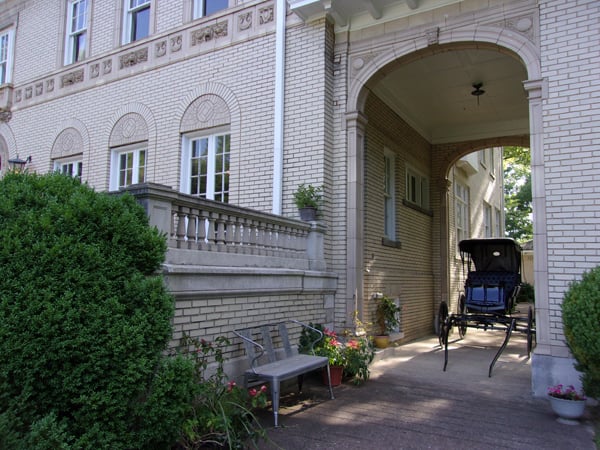
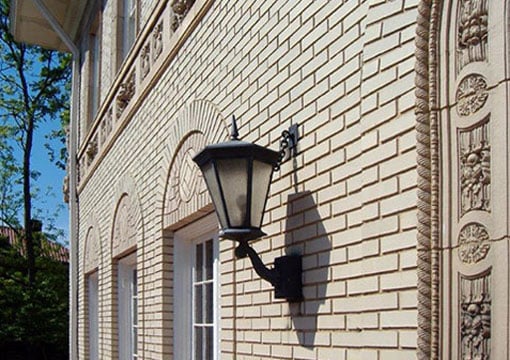
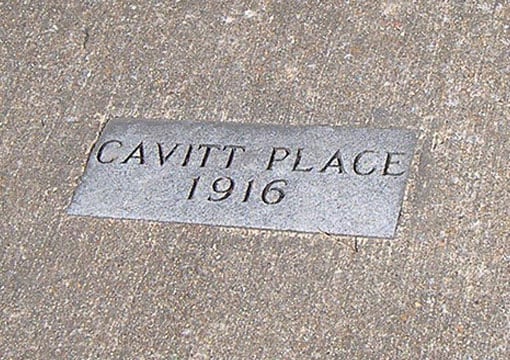
Well-Loved Heritage Site in Paris, TN


"So come make a little history with us at Cavitt Place, home of the Paris-Henry County Heritage Center, proudly serving Paris and the surrounding areas."

Column

Elegant Architectural Design
Cavitt Place Marker

Click to edit


Outlying Communities - Through the Years

The Wright Collection


James Brittain Wright Collection

Information given by Rosemary Papetti Leonard

My ancestors settled in Henry/Carroll County, TN in the early 1800s. My pioneer great-great grandfather was James Brittain Wright b. 1802 d. 1880, who was married to Martha "Patsy" Endsley b. 1803 d. 1892. They purchased a farm, which is located on what is now called Joy Sparks Rd, McKenzie, TN in the early 1850s. My grandfather was William Talmadge James Brittain Wright, b. 1892 d. 1971. (Yes, that was his complete name. He was named after his own father and grandfather, as well as a well-known minister who his mother admired.)

This property was still in our family until 2021. We have held on to many of the belongings of the Wright family and are happy to share them with the museum.

Surrey


Photo before repairs


Photo after repairs


My mother, Barbara Jeanne Wright Papetti, b. 1926 d. 2017. The surrey was used by her family as transportation during her childhood. It was bought in the early 1900s, before she was born, and was not new at the time of purchase, so I do not know the exact age. A beautiful black horse pulled the surrey when it was first bought. When the family first obtained the surrey, their mode of transportation would have been horseback, surrey or wagon. They later acquired automobiles, and during that time, they still used the surrey, especially, during the Depression. My grandmother, whose name was Mary Lucy Welch Wright, was a teacher before she was married, and she had a Ford Model T. During the Great Depression, my grandfather used the engine from her Model T to power a  sawmill. He sold the lumber from this sawmill to help supplement their income, since times were so hard. They were especially glad to still have the surrey and wagon to use for transportation. Mother and her sister, Martha Elizabeth Wright Wharton, talked about taking the surrey to church every Sunday. They said that sometimes “preaching” would last all day, and when they came home late, they would have to use an attached lantern to light the way.


In regard to the family surrey that we donated to the museum - Repairs were done to the surrey, before we donated it. We found an Amish buggy maker in Ethridge, TN who agreed to make repairs and a replacement top. The wheels were repaired by an Amish wheelwright, who was also in the area of Ethridge, TN. The cost was over $2,300. My husband and I paid for the repairs and have donated the W.T. Wright family surrey to the Paris-Henry County Heritage Center where it is now at home at Cavitt Place under the tall stately portico, in Paris, TN. The slender and stylish surrey is a perfect fit for this property and home.

Radios


The above radios belonged to my grandfather. The radios came from the family home in McKenzie. Mother told us many stories of listening to the radio while growing up. She remembered hearing about the bombing of Pearl Harbor on the radio.  I could always picture them sitting around the radio when the terrible news came. She also told of listening to the original broadcast of War of the Worlds. She said that their family knew that it wasn't a real attack but just a story. When she was young, she and her sister, Martha Elizabeth Wright Wharton, had many chores and work to be done around the farm. They always hurried to get finished before their favorite radio show was on, and they would run to the house and listen. My favorite story though, was that after the children went upstairs to bed, they could still hear their father listening to the radio below. Very late, every night, when the station signed off the air, it always played the National Anthem. Mother said that each night, she would get up out of bed and stand with her hand over her heart while it played.

Uniforms

The World War II Navy uniforms belonged to my father, Clarence James Papetti, b. 1920 d. 2011. My parents met after World War II, while taking classes at the University of Tennessee, in Memphis.


Cadet Nurse Corps Uniform

My mother, was in the External link opens in new tab or windowCadet Nurse Corps during World War II and had a lifelong career as a registered nurse. Due to a shortage of nurses at home and overseas during World War II, there was an effort by the federal government to recruit and educate nurses as well as expand and improve training.  A United States senator from Ohio, named Frances Payne Bolton, promoted a program that would help with this shortage of nurses. It became known as the Bolton Act, and the Cadet Nurse Corps was signed into law in 1943. In exchange for assistance for tuition and training, the Cadet Nurse program required that the recipients complete their education within 30 months and then work as military or civilian nurses. I left a book with you that includes much more about the history of the Cadet Nurse Corps.

I have two types of my mother’s uniforms and a nurse’s cap. Below is a picture of the type that we have. My mother is not in this particular picture. I found the photo on the internet, but hers was the exact same. Also, I believe I left the cotton summer uniform with you. The poster is an example of one of many recruitment posters that were used  to encourage young women to “Enlist in a Proud Profession.”

close lightbox